Samsung and Mousterian move ahead with floating datacenter for Texas
But bobbing bit barn may be becalmed by state governor's moratorium on connecting to the grid
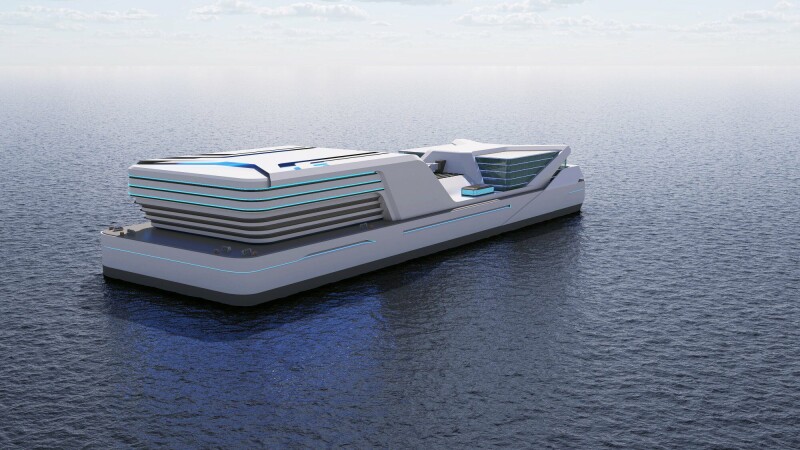
Samsung Heavy Industries and Mousterian Corporation have taken significant strides in developing floating datacenters for the US market, with an engineering contract now in place. Mohammed Corporation, a Dallas-based firm, intends to deploy its first such facility in Texas, with the partnership aiming to deliver 50 MW of critical IT capacity per moored bit barn.
Jointly, the companies will handle design, engineering, and production for these floating facilities, setting the stage for an EPC contract with the American Bureau of Shipping (ABS).
The floating datacenters offer several advantages, including the avoidance of competition for limited development land, potential for relocation, and the use of surrounding water for cooling. Mousterian Corporation states that its designs utilize non-evaporative cooling, which does not consume potable water or discharge into waterways, and eliminates the need for air-cooled chillers and fans, thereby minimizing noise pollution.
Samsung Heavy Industries, leveraging its expertise in shipbuilding and offshore engineering, began exploring floating server farms earlier this year, responding to the high demand for datacenters. The company has already signed an agreement with Supermicro for operational verification of AI server systems in river and offshore environments, with plans to operationalize its first facility by 2028.
This pilot project with Mousterian aims to demonstrate the speed and efficiency of floating data centers, particularly in proximity to existing power plants.
The pilot site is expected to be adjacent to a combined-cycle gas turbine (CCGT) power plant in Houston. Mousterian's chief executive, Min Suh, expressed optimism about the partnership, emphasizing the accelerated fabrication and construction timeline compared to conventional methods. Samsung Heavy Industries' CEO, Sung-an Choi, highlighted the company's commitment to delivering floating datacenters with the same quality and schedule precision that characterize its maritime construction legacy.
However, the collaboration may face challenges. Texas Governor Greg Abbott recently put a hold on approvals for datacenter projects seeking access to the Electric Reliability Council of Texas (ERCOT) grid until state regulators conduct a thorough audit of connection requests. ERCOT is processing over 474 GW of new connections, far exceeding the state's peak electricity demand.
Datacenters constitute 90 percent of these requests. Under the leadership of the Public Utility Commission of Texas (PUCT) and ERCOT, projects must comply with specific requirements regarding power generation, water consumption, and other parameters. Non-compliance could result in denied connections, potentially impacting the progress of these innovative floating datacenters.
Written by urgent.news from The Register Science's reporting — not their text. Machine-written — may contain errors; check the original before relying on it.