Researchers make air-stable, ultrathin superconductors, for more scalable quantum devices
A new technique produces wafer-scale samples, overcoming a major roadblock to using these materials in quantum technologies.
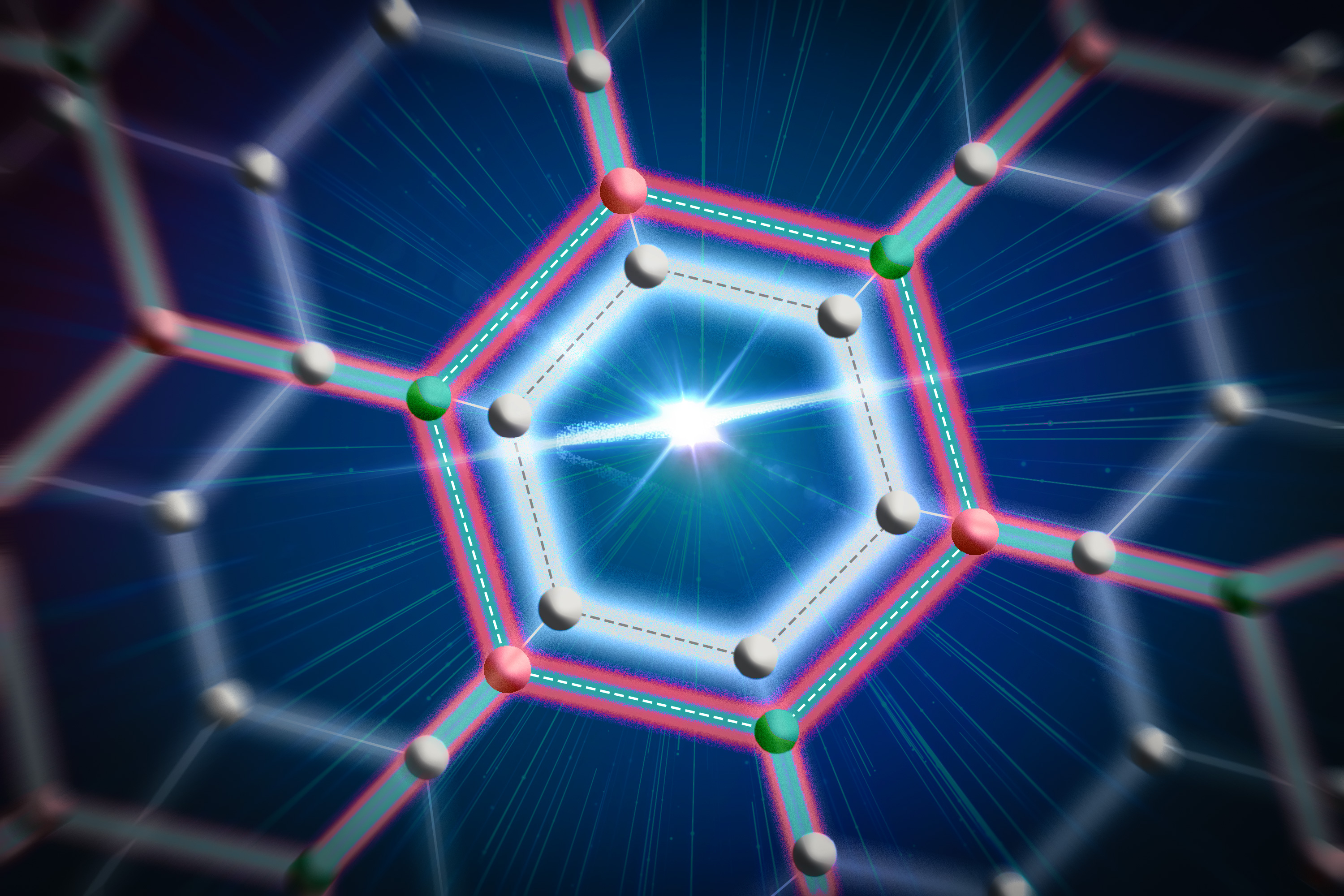
Researchers from MIT and other institutions have developed a method to produce air-stable, ultrathin superconductors, which could lead to more compact, scalable, and efficient quantum devices. Superconductors are materials that can conduct electricity without resistance, a crucial property for quantum devices. However, traditional superconductors degrade rapidly when exposed to air, making them difficult to study and manufacture.
The researchers grew the superconducting material, niobium diselenide, beneath a protective layer of graphene, an atomically thin carbon-based material. The graphene layer shields the fragile superconductor from oxidation, allowing it to grow in a smooth layer over a large wafer-scale area. This approach overcomes the challenges associated with traditional growth methods, which yield small flakes and struggle to achieve uniform monolayer thickness.
The air-stable superconductor was integrated into a superconducting microwave circuit, where it maintained its superconducting properties and exhibited high kinetic inductance. Kinetic inductance is a desirable trait in many quantum devices, as it allows for the storage of inductive energy in a small area. The researchers' breakthrough could enable the miniaturization of superconducting quantum computing hardware and the development of ultrasensitive quantum detectors for various applications, such as communications and cosmology.
Co-lead author Xudong Sheldon Zheng, an MIT graduate student, emphasized the potential impact of this discovery, stating that emerging superconductors with a monolayer thickness now have the opportunity to be studied, utilized, and applied in practical scenarios. The research findings were published in the journal Nature.
Written by urgent.news from MIT News Research's reporting — not their text. Machine-written — may contain errors; check the original before relying on it.
This story
This is one outlet's version. Read the fullest account.