Majority legislators cannot overrule will of political party: Supreme Court
Justice Joymalya Bagchi says the maturity of a democracy is measured by the constancy of political parties and their members to their ideology
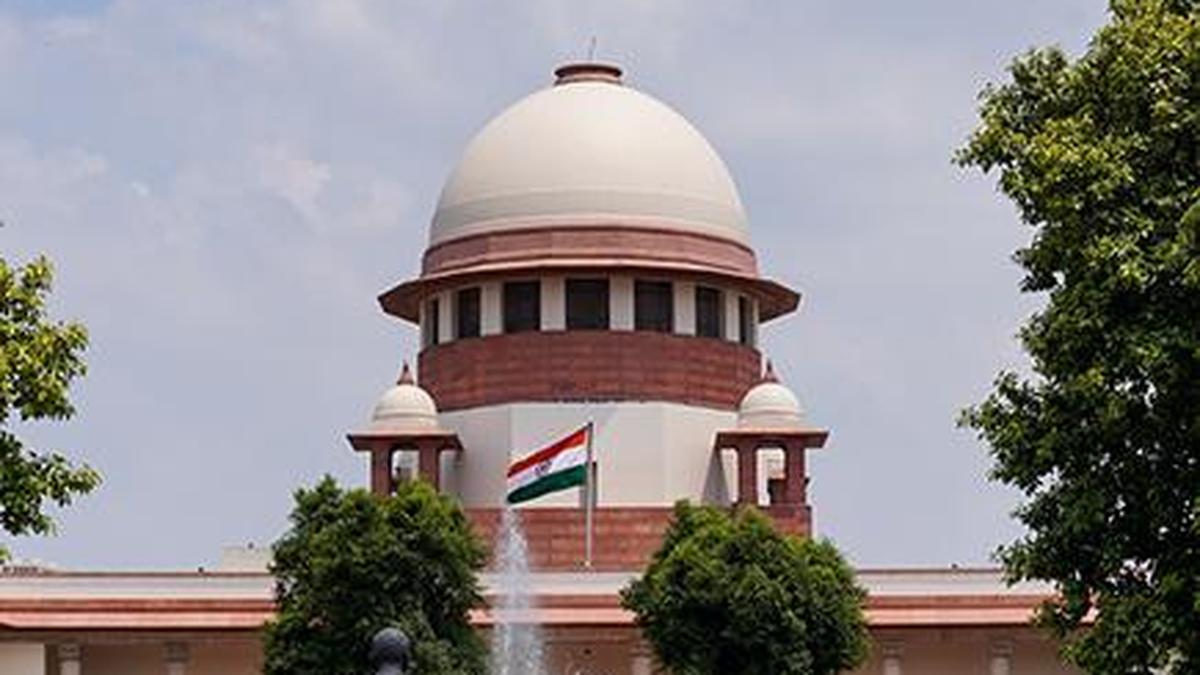
The Supreme Court emphasized on August 5, 2026, that a majority of legislators cannot overrule the official directives of their political party simply due to their numerical superiority. Chief Justice of India Surya Kant led a three-judge Bench, including Justice Joymalya Bagchi, stating that the health of democracy is reflected in the unity of political parties and their members with their ideology.
The case revolved around the Shiv Sena's internal dispute between factions led by Uddhav Thackeray and current Deputy Chief Minister Eknath Shinde, who had split after Shinde, supported by 40 out of 55 party MLAs, rebelled and left Thackeray's party. This led to the downfall of Thackeray's government, with Shinde subsequently forming a coalition government with the BJP.
The Election Commission later declared Shinde as the "real" Shiv Sena, granting his party the party symbol. Senior advocate Kapil Sibal, representing Thackeray, argued that such "mergers" orchestrated by factions of MLAs/MPs were not driven by democratic or ideological considerations but were an attempt to seize power. Sibal asserted that the control of a political party extends over its legislature party, and any valid decision of the political party should supersede the will of the majority of the legislature party.
He questioned whether a few legislators could unilaterally decide to merge with another party without the knowledge or consent of the parent party. The court aimed to strike a balance between the electorate's decision to elect a party and the individual representatives' right to express genuine dissent with the party's decisions.
Sibal contended that the Election Commission's decision was flawed, as it was based on which faction held the majority in the legislature party. The court also recognized the distinction between the original political party and the legislature party, as defined in the Tenth Schedule, which allows Members to defend a merger or split initiated by the original political party against disqualification actions.
Written by urgent.news from The Hindu's reporting — not their text. Machine-written — may contain errors; check the original before relying on it.
This story
This is one outlet's version. Read the fullest account.
- Asiedu Nketia claims credit for Supreme Court ruling on political party primaries myjoyonline.com
- Sybiha hails Swedish Supreme Court decision to transfer Russian ship to Ukraine english.nv.ua
- US refunds $100bn in tariffs struck down by Supreme Court, filing shows dailymaverick.co.za
- Lakhimpur Kheri violence case: Supreme Court refuses to further relax bail conditions of accused Ashish Mishra thehindu.com
- UK Supreme Court to hear appeal over Palestine Action proscription in November jpost.com
- ‘Will approach Supreme Court’: Ex-Tehelka editor Tarun Tejpal after conviction in 2013 sexual assault case hindustantimes.com