Magnetic molecules explain a puzzling material
Researchers have uncovered how a two-dimensional magnet reorganises itself into hexagonal magnetic clusters, producing an unusual quantum-disordered state The post Magnetic molecules explain a puzzling material appeared first on Physics World .
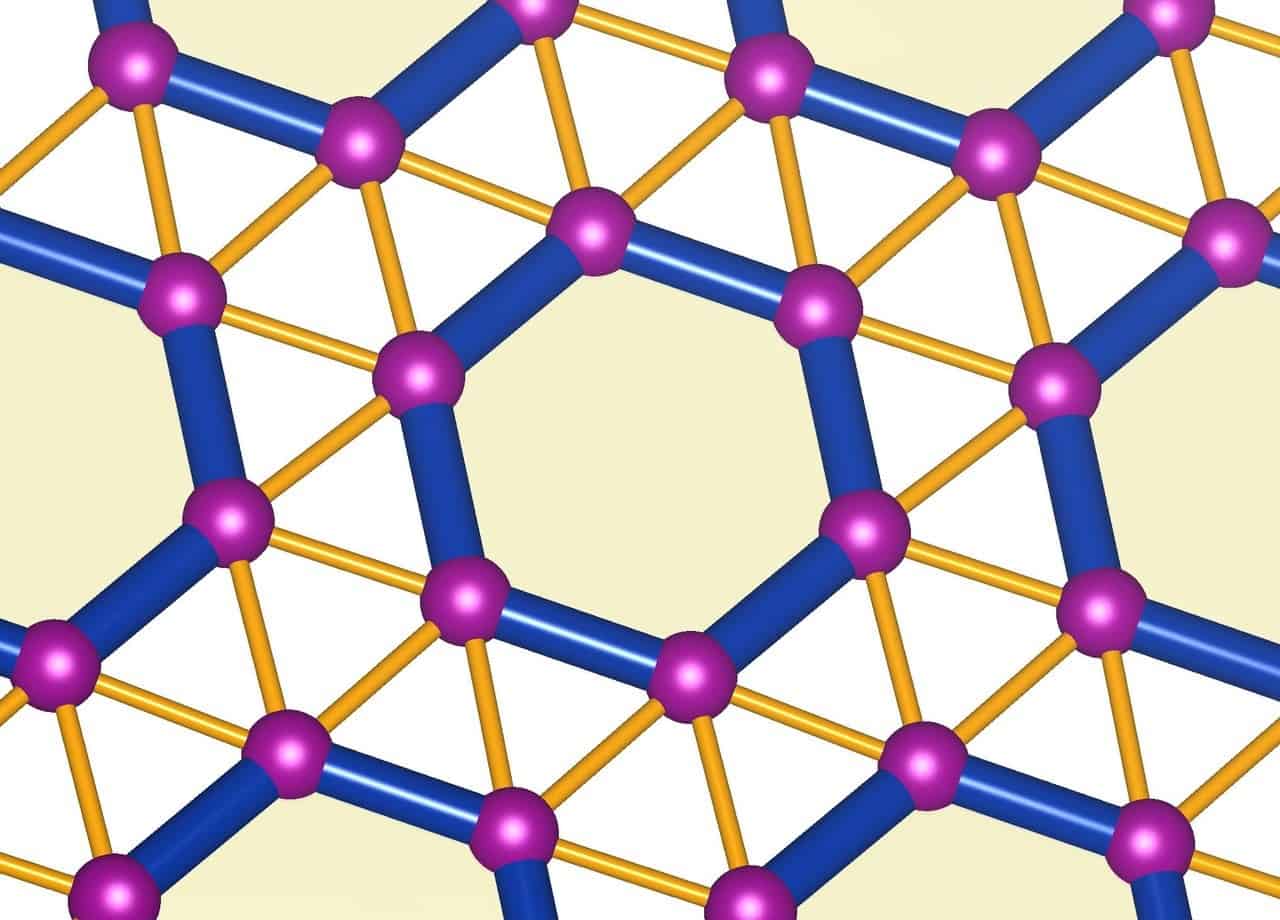
In a puzzling magnetic material, Na₂Mn₃O₇, researchers discovered magnetic molecules that challenge conventional understanding. This compound, composed of magnetic Mn⁴⁺ ions, exhibits strong magnetic interactions and minimal disorder, defying expectations. Despite containing relatively large spins, the material fails to develop long-range magnetic order at low temperatures. Instead, it displays two distinct magnetic crossovers around 110-120 K and 60-70 K, indicating complex internal reorganization.
The crystal structure of Na₂Mn₃O₇ organizes Mn spins into strongly correlated hexagonal units, connected by weaker and frustrated interactions. These hexagonal clusters function like magnetic 'molecules', with spins inside each hexagon becoming strongly correlated. However, interactions between different hexagons are weak and frustrated, preventing collective long-range magnetic order.
This unique behavior is a result of the crystal structure, which divides the magnetic lattice into these magnetic molecules. The hierarchical organization suppresses conventional magnetic order, leading to a molecularized two-dimensional magnetic state. This research highlights the potential of using crystal structure to engineer new magnetic states by arranging spins into strongly correlated clusters that suppress conventional magnetic ordering.
Written by urgent.news from Physics World's reporting — not their text. Machine-written — may contain errors; check the original before relying on it.