Industry leaders call for stronger value chains to sustain export growth
As more international buyers turn to Vietnam, industry leaders say future export growth will depend on quality, innovation and global standards rather than tariff advantages.
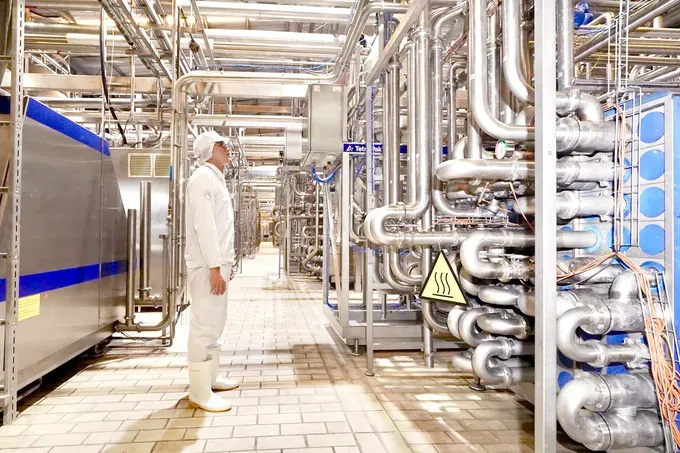
International trading magnates are advocating for enhanced supply chains to maintain export growth in Vietnam. These leaders assert that future export expansion hinges on quality, innovation, and adherence to global benchmarks rather than tariff benefits. CEO of Vinamilk, Mai Kieu Lien, emphasizes that Vietnamese firms must transcend price and scale competition by investing in technology, innovation, and production capacities.
Vinamilk, which operates 16 factories and 15 farms with over 130,000 cows, has exported to 65 countries, with Q1 2026 revenue growing 24.6% year-over-year to VND16.15 trillion. Similarly, Nafoods Group CEO, Nguyen Manh Hung, highlights significant investments in product traceability and food safety management, resulting in exports growing from US$20 million in 2015 to over US$200 million in the first quarter of 2026 alone.
Industry experts emphasize that businesses must now consider the entire production chain, from sourcing raw materials to product traceability, to compete effectively. Nguyen Ngoc Hoa, Chairman of the Ho Chi Minh City Business Association, explains that leading enterprises' mastery of technology, quality, branding, and market access not only boosts their value but also raises standards for supporting businesses.
Vietnamese wood industry Chairman, Nguyen Quoc Khanh, illustrates this model, noting that the sector's evolution from OEM to ODM/OBM has boosted exports from less than US$200 million in 1999 to approximately US$17 billion in 2025 to over 160 countries. Business leaders stress that robust corporate capabilities need to be complemented by favorable policies, such as aligning domestic standards with international requirements, establishing national databases for raw materials and traceability, and providing early alerts on sanitary and phytosanitary measures.
The government is urged to bolster infrastructure, institutions, and regulatory standards to enable Vietnamese products to integrate deeply into global supply chains. Minister of Agriculture and Environment, Trinh Viet Hung, urges a shift from a production-focused mindset to a market-driven agricultural economics approach, reorganizing the entire value chain to drive value rather than volume.
Deputy Minister of Industry and Trade, Phan Thi Thang, aims to reduce logistics costs to around 12 percent of GDP by improving transport infrastructure, digital transformation, and closer cooperation among logistics providers.
Written by urgent.news from SGGP English Edition Business's reporting — not their text. Machine-written — may contain errors; check the original before relying on it.