Investment: Financial advisor spills the beans: These are the worst mistakes Germans make when investing their money
For decades, Volker Looman has been telling the Germans what they should do with their money. Which tip would the financial analyst have paid for himself?
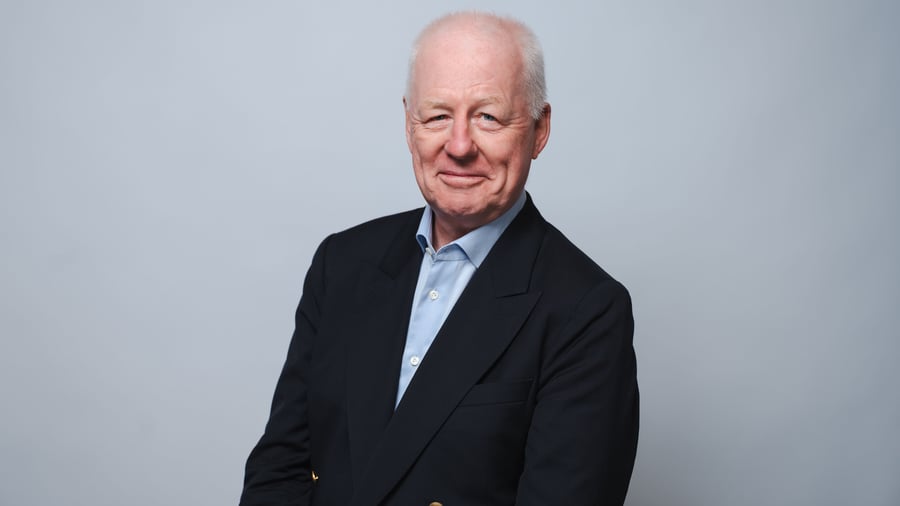
Mr. Looman, you've spent your entire career dealing with money. Does it make you happy or not?
No, it doesn't. Over the past 40 years, I've advised around 2000 people. Recently, almost only millionaires have come to me, with assets ranging from one to 100 million euros. The richer people were, the unhappier they were. Yesterday, an older man with 20 million euros in his account sat here. He recently received the diagnosis of having cancer and is now wondering what he was working so hard for over the past 40 years.
He said he's glad the money is there, but he's not happy. Well, he has cancer. Nobody would be happy in that situation, right?
That's clear, but I see it every day. The more money there is, the greater the fear of losing it all. People are afraid of a wealth tax, of expropriation. And when the stock market really crashes, like during Corona or the Ukraine war, people don't see the eight million that's still there, but the two million that's gone. They live in a state of constant alertness, can hardly enjoy life. Germans are often attributed a certain skepticism when it comes to stocks. Does that still apply?
Yes. Simply out of fear of losing money. If someone inherited 100,000 euros, I would advise them to invest it in stocks, provided there are no debts, preferably in two ETFs, one on the American S&P 500, one on the Euro Stoxx. With these two index funds, you have around 1200 stocks in your portfolio. Sounds quite reasonable.
But the immediate counter-reaction comes: They could all go down the drain! Seriously, if the American and German stock markets collapse - no Apple, no Microsoft, no Nvidia, no BMW, no SAP anymore - then we have a completely different problem in this world. The potential losses on the stock markets are perceived more strongly than the opportunities. That hasn't changed much. But it has changed with young people, right?
Yes, but they also make mistakes. If someone starts saving for an ETF at the age of 30, they should ask themselves why. If the money is needed in five years, for example, because they want to buy a house or start their own business, I advise against stocks - then it's better to opt for fixed-term deposits with three percent interest. It looks different if you know you won't need the money for the next ten years.
What other mistakes do people make?
Young people, i.e., those between 20 and 30 years old, take too much time with their education: an internship here, an internship there. By the time they start working, they're often already 30. They've already lost four or five years in which they could have earned money and laid a foundation. For women, there's something else added to that.
Oh. What is it?
Many make the mistake of not fighting for their money. They're in need of harmony, both in their job and in their family, and sell themselves short. If the fair starting salary for a female lawyer or business graduate is 60,000 euros, many are satisfied with 40,000. And if they've done good work for two or three years, very few of them ask for a salary increase. They avoid conflict. But that costs a lot of money over the course of their career.
Do many women come to you for advice?
90 percent of my clients are couples. And it's often shocking that the woman has no idea about their assets. I've had 60-year-old women tell me: I really didn't know that. 70 percent of the two million euros belong to me? Money is a taboo topic, even among couples. That's why I insist that the woman always comes along.
What advice do you give these women?
Men are not a reliable old-age pension. Around 40 percent of relationships break down, and women are often the ones who suffer. They themselves don't receive maintenance, only the children. And if they're well-educated but haven't worked for ten years or more after giving birth, they have a problem. How do you solve that?
If a woman decides to stay at home, the man should at least cover her pension insurance contributions. But very few women demand that. That's a structural problem, but it's slowly changing with younger generations.
Many couples invest all their money in their own home. Is that a good idea?
Grossly overestimated. Most people live in houses they can't afford. Around Berlin, a house costs at least 700,000 to 800,000 euros. With 100,000 euros in equity, you barely cover the ancillary costs, so you have to take on 700,000 euros in debt. But that doesn't add up anymore because many people buy a house at the age of 40. They have to pay off the loan far into retirement. That's rubbish. The belief that owning a home is a great investment - that doesn't apply in many cases.
How do you better prepare for old age?
The factor of time plays a big role. You have to start early. Here's an example: Last week, a man in his mid-50s sat here and told me he finally had to do something for his old-age pension. He earns around 200,000 euros gross per year, so around 100,000 euros net. What has he done with that? He's squandered his money. Now he has maybe ten to fifteen years left to take care of his old-age pension.
How much does he need to save to maintain his standard of living?
If he works until he's 65, lives until he's 85, and wants a monthly pension of 3000 euros, he needs around 600,000 euros in capital. With a return of three percent after taxes and 120 months until retirement, he needs to save around 4000 euros per month. That's a lot, but with a net income of around 8000 euros, without children, and as a single person, it's basically feasible. But it hurts.
Because he can't spend three times a year on...
Translated by urgent.news. Machine-written — may contain errors; check the original before relying on it.