Amid AI tumult, more Chinese investors seek haven in undervalued Hang Seng Index
Mainland Chinese investors bought more Hong Kong stocks than they sold for a second consecutive month in July, rotating into the undervalued market to take shelter from the tumult in artificial intelligence-linked shares. Onshore traders purchased a total of HK$62.9 billion (US$8.02 billion) worth of Hong Kong stocks through the cross-border Stock Connect programme last month, extending the…
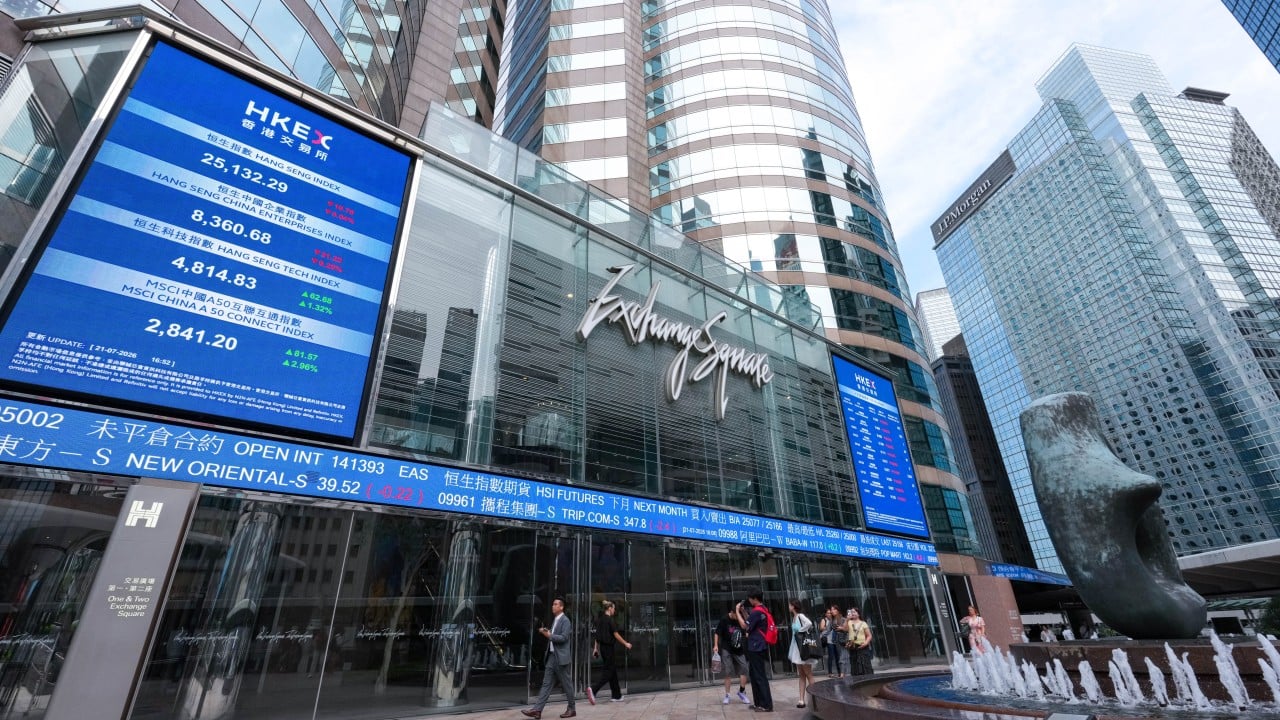
Mainland Chinese investors continued their trend of purchasing Hong Kong stocks in July, accumulating HK$62.9 billion worth of Hong Kong equities through the cross-border Stock Connect programme, adding to the HK$27.1 billion bought in June, according to Hong Kong exchange data. Stocks such as Z.ai, Alibaba Group Holding, and NetEase attracted the most inflows in July.
The AI-linked shares crisis in China negatively impacted the mainland's yuan-denominated stocks, particularly tech companies, prompting investors to seek safer assets. The Hang Seng Index is one of the cheapest global equity benchmarks due to its low exposure to the AI frenzy. The index rose 13% in July, while the tech-heavy Star Market 50 Index dropped 26%, marking the largest single-month decline ever.
Analyst Melody Lai of SPDB International in Hong Kong noted that risk-averse global funds were reallocating capital across markets and sectors, seeking refuge in Hong Kong stocks due to their relatively low valuation and reassessment of internet platforms. Despite rebounding, the Hang Seng Index remains undervalued at 12.2 times earnings, while the S&P 500 and CSI 300 Index have multiples of 25.8 and 14.2, respectively.
Z.ai was the top recipient of net buying from Chinese traders, followed by Alibaba and NetEase. Hong Kong stocks also benefited from a global market downturn in South Korea and Taiwan, where the Kospi and Taiex indices suffered declines of 22% and 6.5%, respectively. However, Hong Kong stocks have lagged major markets this year due to limited exposure to AI hardware companies and weak profit growth among Chinese internet platforms grappling with weak consumer spending and an e-commerce price war.
Written by urgent.news from SCMP Business's reporting — not their text. Machine-written — may contain errors; check the original before relying on it.
This story
This is one outlet's version. Read the fullest account.