From meeting audio to structured minutes in health settings
Most health services we talk to are drowning in meetings before they get anywhere near a patient. Clinical governance committees, quality and safety, credentialling, infection control, drug and therapeutics, plus multidisciplinary case conferences that can run through twenty patients in ninety minutes. Someone in the room is taking notes on a laptop while also trying to participate. The minutes…
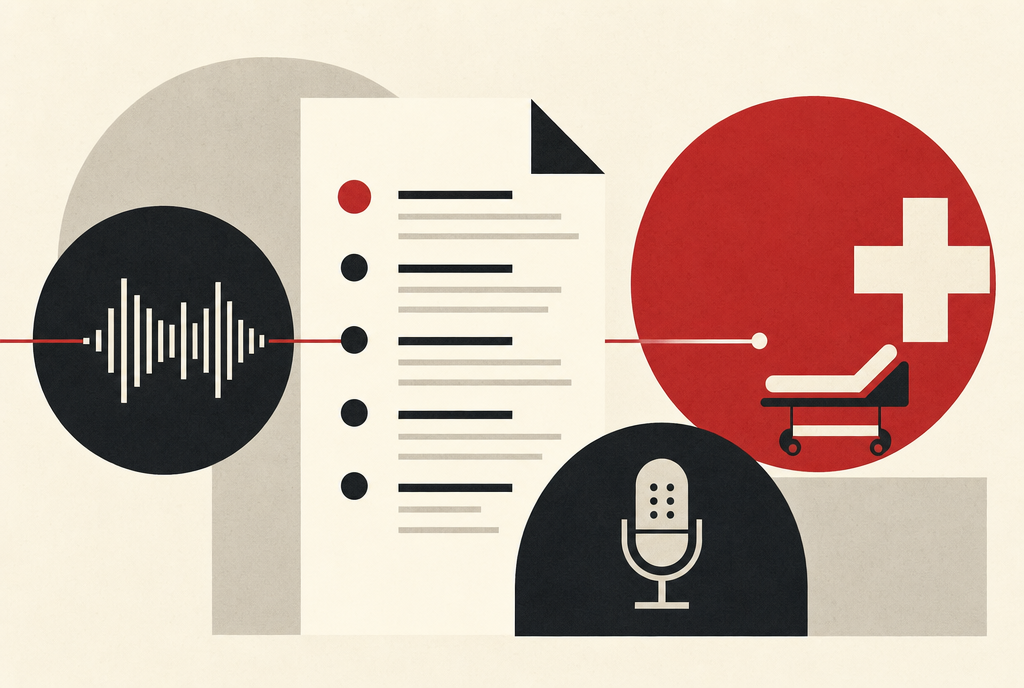
Health services often find themselves overwhelmed by numerous meetings before patient care can be provided. Various committees, quality and safety initiatives, credentialling, infection control, drug and therapeutics, as well as multidisciplinary case conferences, can run through multiple patients in a short period. While someone in the room typically takes notes on a laptop, the minutes are often not recorded until three weeks later, if at all.
This presents an opportunity for AI implementation, particularly in transcription and structured summarization for committees and case conferences, while preserving the integrity of the clinical record. The focus should be on producing minutes with attendance, agenda items, decisions, actions, and owners, without generating clinical notes or medical advice.
Regulatory considerations are crucial, as a digital scribe intended only for transcription and translation is not considered a medical device, but one that analyzes or interprets clinical conversations may fall under ARTG regulations. The implementation should involve clear prompt and schema constraints, ensuring the model records what the chair declared without adding any additional reasoning or filling in decision fields with plausible information.
The pipeline for this process involves capturing the meeting through a room device or Teams recording, followed by diarization and transcription to produce a timestamped transcript with speaker labels. Each speaker is then mapped to a real name, and the language model fills a fixed schema for structured extraction. This structured output includes details such as the meeting name, date, chair, attendees, decisions, actions with owners and due dates, and the confidence level.
The structured data can be easily integrated into the document management system and supports compliance with reporting requirements, such as accreditation evidence and overdue action reports. It is essential to consider state-specific privacy laws when implementing this technology, as recording conversations without consent can have legal implications in various states.
Additionally, the accuracy of the AI system should be evaluated against realistic performance metrics, as word error rates can vary significantly depending on factors such as crosstalk, speaker accents, and background noise.
Written by urgent.news from Dev.to's reporting — not their text. Machine-written — may contain errors; check the original before relying on it.