DR Congo is set to open its largest ever Ebola treatment facility
The DR Congo is set to open its largest Ebola treatment facility. Construction is nearing completion as health authorities race to contain an outbreak that the World Health Organization has described as intensifying at an "exceptional" pace. As of July 30, the WHO reported 3,605 confirmed Ebola cases and 1,587 deaths in the DR Congo. Officials hope the expanded treatment capacity will strengthen…
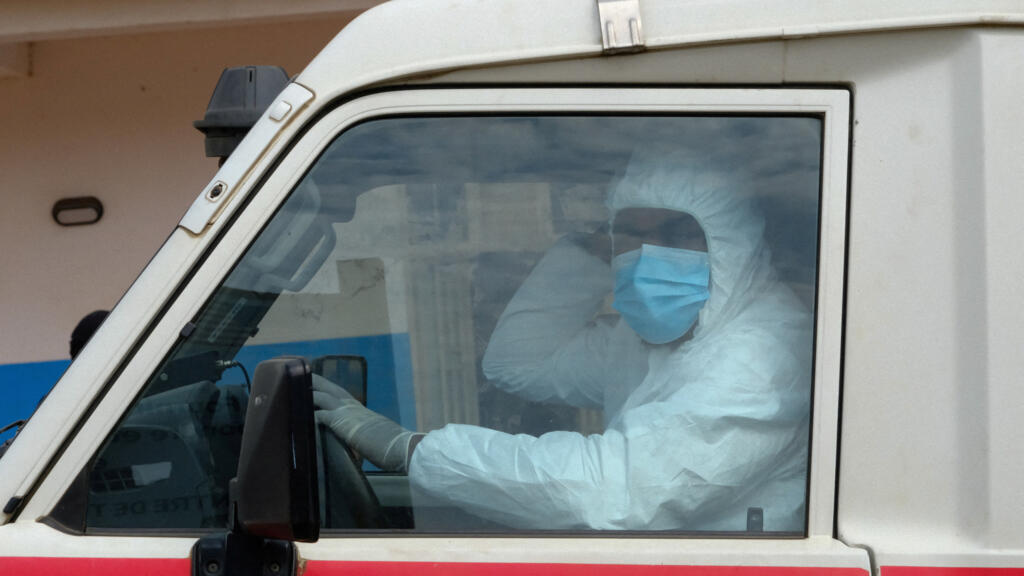
WHO Director-General Tedros Adhanom Ghebreyesus traveled to Kinshasa, Democratic Republic of Congo (DRC), on Wednesday amid an accelerating Ebola outbreak in the east of the country. He warned that the outbreak was spreading faster than the response scale-up. This marks the 17th Ebola outbreak in DRC's history, and it is both the fastest-spreading and the second-largest on record.
Tedros visited twice this summer since the public health emergency was declared in mid-May in the eastern Ituri province. The visit coincided with a health scare in the Maluku municipality of northeastern Kinshasa, where a passenger on a crowded ship died with Ebola-like symptoms. Authorities were rushing to isolate the deceased and conduct checks.
The barge, mainly transporting timber, had carried roughly 200 people from Kisangani, far to the east in DRC. Health and humanitarian partners met with Tedros to discuss challenges in the Ebola response. New cases were doubling in some hotspots within a week. To curb the spread, Tedros emphasized reaching every affected community despite insecurity and displacement, strengthening coordination, ensuring health workers have necessary protection and support, and accelerating access to care, surveillance, and safe burials.
Communities must be at the center of the response, he stressed. As of Monday, DRC's Ministry of Health had confirmed 3,874 cases, including 1,751 deaths. At least 717 patients were in isolation, and 749 had recovered. Over 90% of the cases were recorded in the eastern Ituri province. The US State Department pledged $242 million in funding for immediate response, preparedness efforts, and humanitarian assistance related to the outbreak.
The State Department also maintained its Travel Advisory status for DRC, Uganda, and South Sudan at Level 4 - Do Not Travel. Doctors Without Borders warned that the rare Bundibugyo strain was spreading alarmingly and at an unprecedented rate in a remote area of DRC with poor infrastructure. The response was expanding but still not reaching communities quickly enough to break transmission chains.
Many front-line health workers were on strike due to disputes over pay levels or lack of payment, further worsening already inadequate access to healthcare. Dr. Jean Kaseya, head of the Africa Centers for Disease Control, warned that contact tracing was ineffective, and cases were detected late, reducing survival chances. The rare Ebola strain has no approved treatment or vaccine; hurried trials of candidate vaccines and treatments have begun.
Early deaths in the outbreak were initially misdiagnosed as conditions like peritonitis. Local funeral practices involving open coffins and handling corpses contributed to the virus's spread.
Written by urgent.news from DW News's reporting — not their text. Machine-written — may contain errors; check the original before relying on it.
This story
This is one outlet's version. Read the fullest account.
- Ebola kills 1,700 in eastern Congo as the fastest-growing outbreak surges apnews.com
- Ebola deaths top 1,700 in eastern Congo thehill.com
- Ebola Kills 1,700 in Eastern Congo as the Fastest-Growing Outbreak Surges medpagetoday.com
- WHO's Tedros vists DR Congo as Ebola outbreak accelerates dw.com
- Moderna starts human trials for Bundibugyo Ebola vaccine as Congo's outbreak continues euronews.com
- Ebola kills 1,700 in eastern Congo as fastest-growing outbreak surges thehindu.com
- Ebola kills 1,700 in eastern Congo as the fastest-growing outbreak surges statnews.com
- Ebola kills 1,700 in eastern Congo as the fastest-growing outbreak surges phys.org