Cougars Lower the Risks of Car Crashes by Hunting Deer
A new study shows how the big cats cause deer to move away from roads and deeper into the forest, where they pose less of a hazard to motorists.
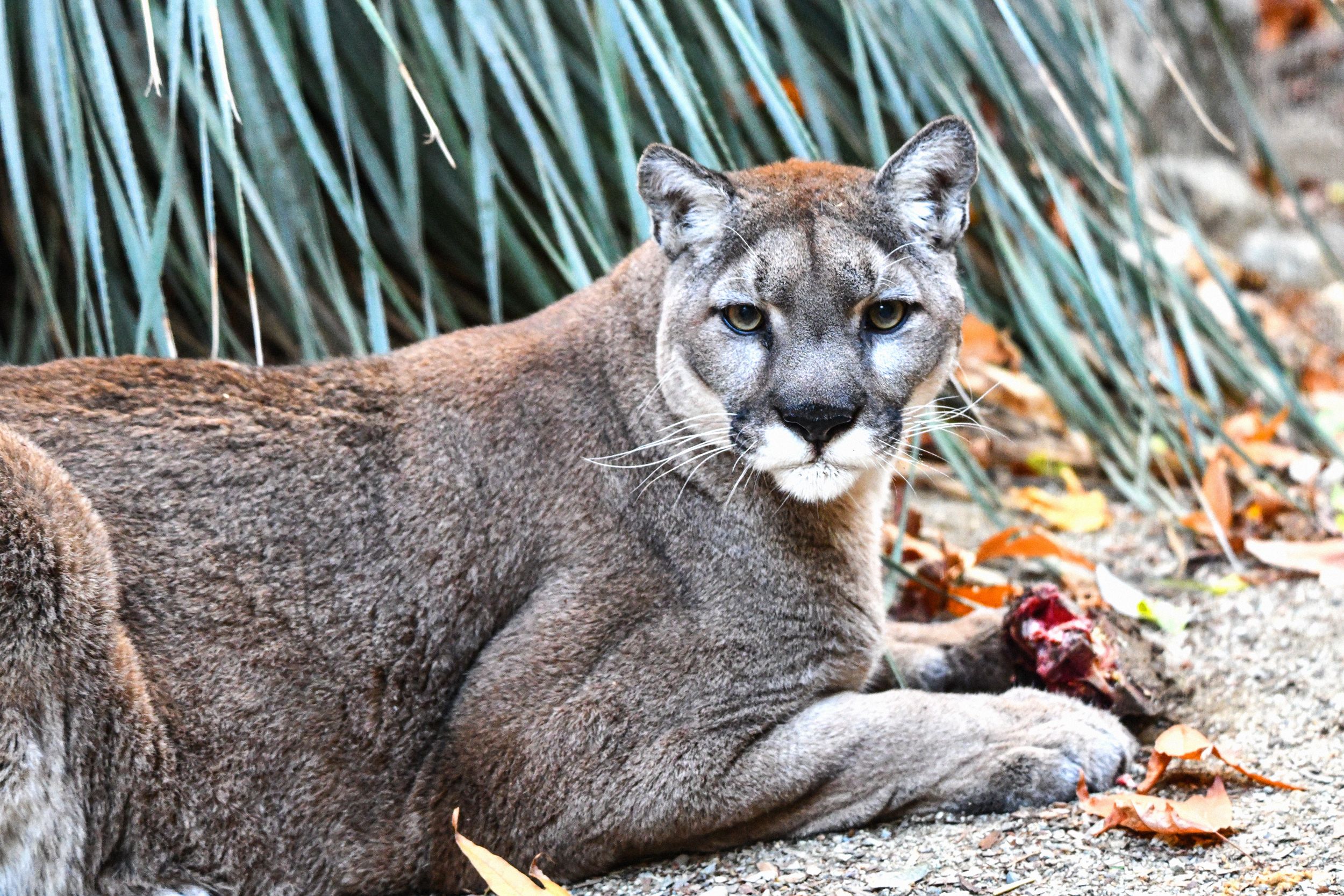
A study published in Current Biology suggests that car accidents involving deer in the US could decrease by up to 76 percent in areas with a thriving cougar population. Researchers discovered that the presence of cougars near roads running through forests or burgeoning developments led deer to avoid these areas, resulting in fewer accidents.
Cougars, also known as mountain lions, panthers, or pumas, were once widespread across North America, but their range shrank significantly after European colonization due to habitat loss and hunting. Today, cougars predominantly inhabit the western US and a portion of Florida. In contrast, deer populations have flourished due to the absence of natural predators and the clearing of land for agriculture.
Deer populations have expanded greatly over the past century, leading to a surge in traffic accidents. According to State Farm, there were 1.8 million insurance claims filed between 2022 and 2023 involving crashes with animals, with deer being the most frequent cause. The Insurance Institute for Highway Safety, a non-profit organization, has been tracking the rise in deadly vehicle collisions with animals since the 1970s; last year alone, over 200 people lost their lives in such accidents. Deer pose a hazard primarily due to their abundance and their tendency to forage on road shoulders.
The new research examines how cougars can act as traffic controllers, utilizing data collected on Washington's Olympic Peninsula, where a cougar monitoring program has been ongoing since 2018. The study, led by Justin Suraci of Conservation Science Partners, aimed to explore the "costs and benefits" of sharing coexistence with predators. While the economic impacts of predators killing cattle and other factors have been well-documented, the advantages have been less studied.
To understand the effect of cougars on deer behavior, the researchers compared data from more than 500 cameras across the peninsula with data from a year of car accidents involving deer. Cougars are ambush predators, favoring edge habitats like roads cutting through forests or lower-density developments near forests. These environments provide them with opportunities to conceal themselves and attack deer foraging just outside the forest.
Consequently, deer have started to avoid these edge habitats, moving deeper into the woods and away from roads and developments, thus minimizing exposure to traffic and collisions.
The researchers found that deer were 15 percent more likely to avoid areas with roads where cougars were known to hunt and 86 percent more likely to stay in wooded areas. They were also more active during the day. As a result, the number of collisions in a five-year period decreased by more than 76 percent compared to areas with a low cougar population.
Prior studies on how carnivore populations impact deer-related traffic accidents informed the researchers' methodology, including one modeling potential cougar expansion and another studying the reintroduction of wolves into parts of Wisconsin. These insights allowed the team to analyze deer behavior in areas where predators hadn't been newly introduced, ruling out the possibility that fewer accidents were due to a decline in deer numbers caused by cougars hunting them.
Laura Prugh, a professor of wildlife sciences at the University of Washington and co-author of the 2016 study modeling the impact of cougar recolonization on car accidents, praised the new research. She noted that it helps "fill some gaps" left by other studies. However, Prugh expressed curiosity about whether the behavioral effect of cougars would extend into the fall mating season (rut), when deer are more distracted and prone to accidents, seemingly less concerned about potential risks.
Written by urgent.news from Wired's reporting — not their text. Machine-written — may contain errors; check the original before relying on it.
This story
This is one outlet's version. Read the fullest account.