Cougars Lower the Risks of Car Crashes by Hunting Deer
A new study shows how the big cats cause deer to move away from roads and deeper into the forest, where they pose less of a hazard to motorists.
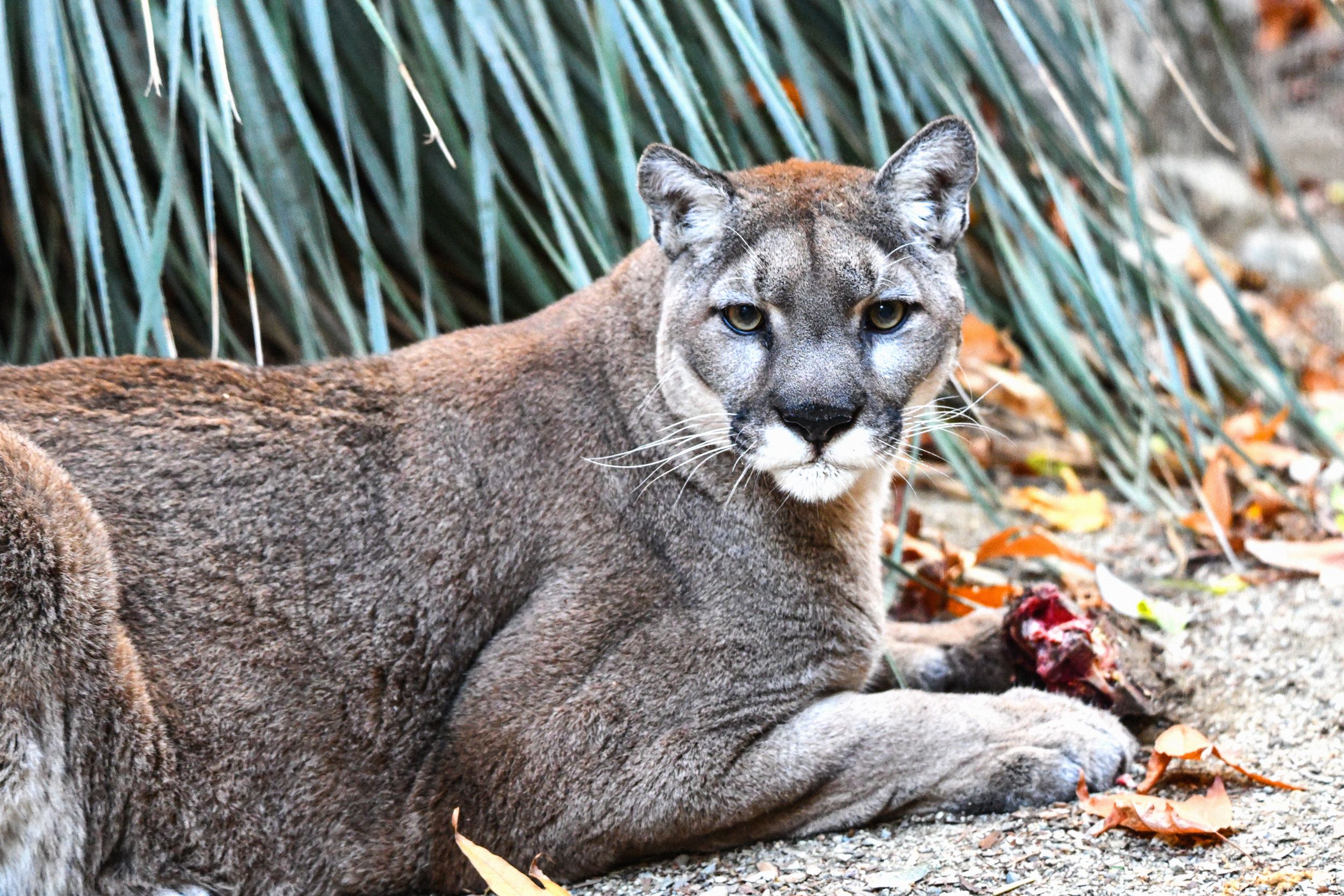
A study published in the journal Current Biology has found that the presence of cougars in the US could reduce car accidents involving deer by up to 76%. Researchers discovered that cougars, also known as mountain lions, panthers, or pumas, discourage deer from crossing roads cutting through forests or areas near developments. Native to the Americas, cougars' range in North America has significantly decreased due to habitat loss and hunting following European colonization.
Now primarily found in the western US and a small part of Florida, deer populations have expanded across the country due to fewer predators and land clearing for agriculture. As deer numbers have increased, so have traffic accidents, with State Farm reporting over 1.8 million auto insurance claims involving collisions with animals between 2022 and 2023, with deer being the most common cause.
The Insurance Institute for Highway Safety records that animal-car collisions have steadily risen since the 1970s, with over 200 people dying in such crashes last year alone. This new study examined the impact of mountain lions on deer behavior and car accidents using data from over 500 cameras across the Olympic Peninsula, where Panthera, a nonprofit organization, has been monitoring cougars since 2018.
The findings indicate that cougars prefer edge habitats, such as roads intersecting forests or lower-density development near woodlands. Deer have responded by avoiding these edge areas and moving deeper into forested regions, reducing their exposure to roads and traffic. This behavior change resulted in deer being 15% more likely to avoid areas with cougar presence and 86% more likely to spend time in woodlands.
Consequently, the number of accidents decreased by more than 76% compared to regions with fewer cougars. While other studies have explored the effects of predators on deer-related traffic accidents, this research fills gaps in knowledge regarding behavioral patterns in areas without newly introduced predators, helping to rule out accidents caused by a decline in deer numbers due to predation.
Nonetheless, Laura Prugh, a professor of wildlife sciences at the University of Washington, emphasizes the need for further research to understand the study's limitations, particularly when considering deer behavior during the fall mating season when accidents are more frequent.
Written by urgent.news from Wired Science's reporting — not their text. Machine-written — may contain errors; check the original before relying on it.