Coronagraph Systems
Masks and Optics Coronagraph masks block most of the glare from stars to reveal faint orbiting planets and dusty debris disks. The mirrors and lenses are finely polished to minimize additional glare or image distortions. Color filters will select which wavelengths of light to observe. Wollaston prisms will help measure the polarization of the light […] The post Coronagraph Systems appeared first…
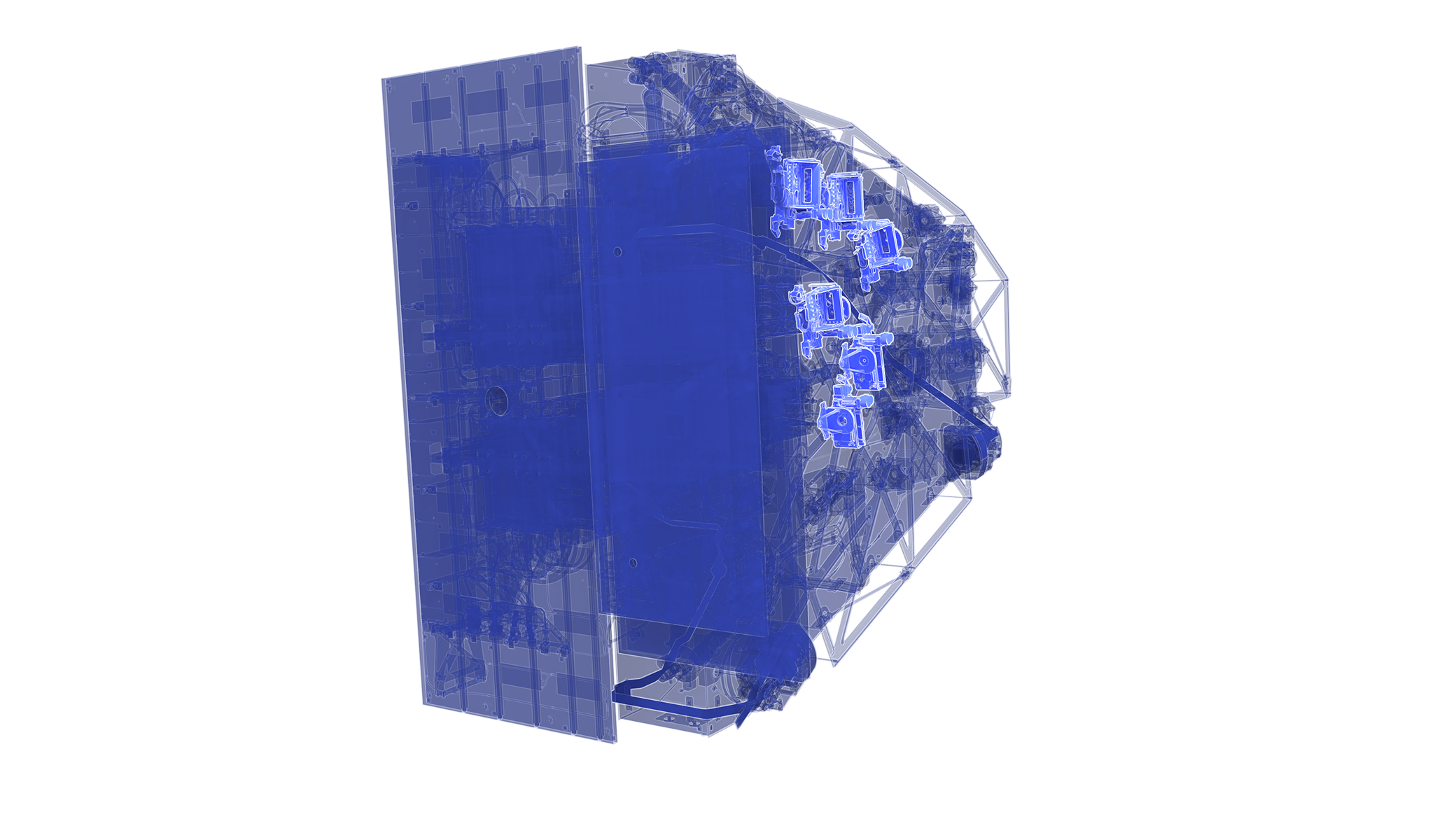
The Coronagraph Roman's Coronagraph Instrument showcases innovative technology designed to block the overwhelming brightness of a star's light, enabling astronomers to directly image planets orbiting distant stars. This achievement is made possible through a combination of advanced optics and cutting-edge technology.
The mask and optics system is a critical component of the instrument. It employs a series of finely polished mirrors and lenses to minimize additional glare or image distortions, ensuring that the faint light from orbiting planets and dusty debris disks can be observed. Color filters are also utilized to select specific wavelengths of light for observation, while Wollaston prisms help measure the polarization of the star's disk light, providing valuable insights into the properties of its dust grains.
A spectroscopy prism is another essential element of the system. It spreads the light from a planet into its constituent colors, allowing scientists to analyze the atmospheric composition of the exoplanet with great precision. To ensure the coronagraph masks are precisely aligned and effectively block the starlight, the instrument incorporates precision alignment mechanisms.
This groundbreaking technology was developed through a collaborative effort between NASA's Goddard Space Flight Center, NASA's Jet Propulsion Laboratory (JPL), the Japanese Aerospace Exploration Agency (JAXA), and Optimax Systems Inc. Their combined expertise has resulted in a powerful tool that brings us one step closer to understanding the diverse planetary systems that exist beyond our own.
Written by urgent.news from NASA Science's reporting — not their text. Machine-written — may contain errors; check the original before relying on it.