China's CXMT targets 30% DRAM memory market share by 2030 with sixth mega-fab — future plans bottlenecked by access to advanced chipmaking tools
ChangXin Memory Technologies (CXMT) began considering building its sixth DRAM fab in China to boost memory output in the coming years. If all announced projects proceed as planned, the company's production capacity could more than double in the mid-term future.
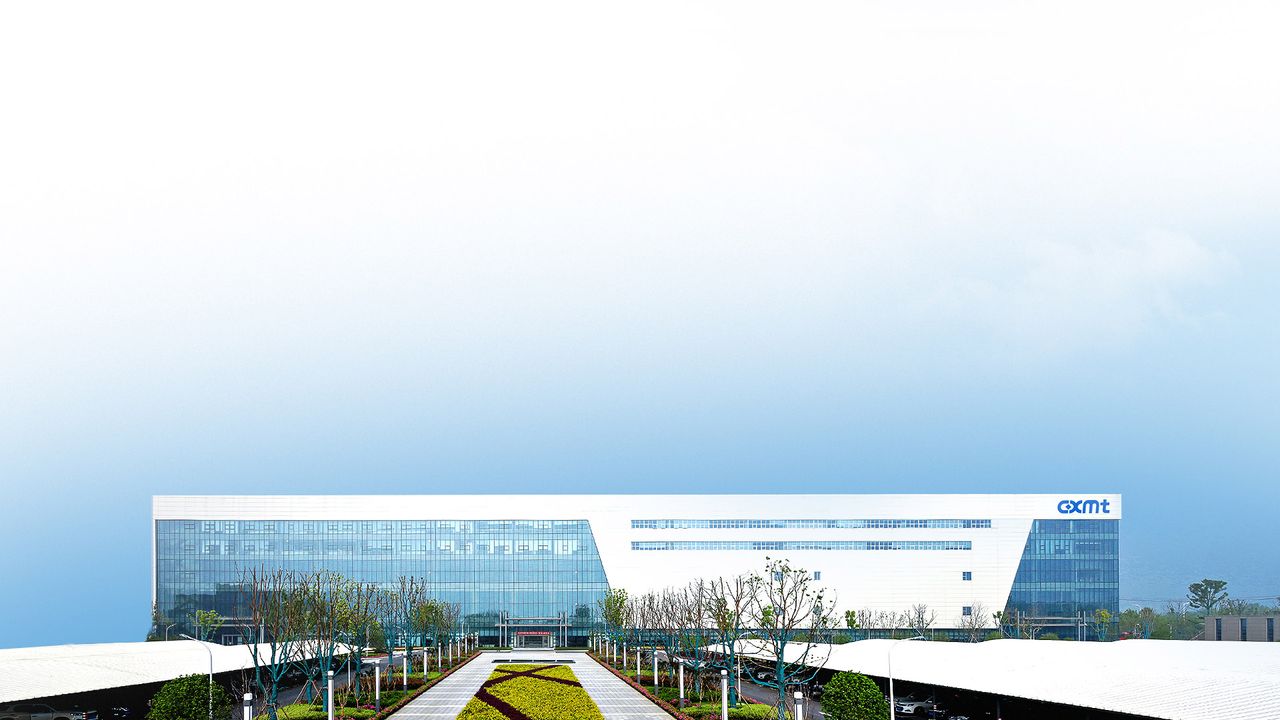
ChangXin Memory Technologies (CXMT), which recently completed a $8.6 billion IPO, is planning to build a sixth DRAM fabrication facility in China to bolster its memory production capacity in the near future, according to reports. If all announced projects move forward as scheduled, the company's production capacity could double in the medium term, the article claims.
Analyst Dan Niles from P Equity Research anticipates that China could secure 30% of the DRAM market by 2030. Currently, CXMT operates three 300-millimeter DRAM fabrication plants: two near Hefei and one in Beijing's Yizhuang district, each capable of processing around 100,000 wafers per month. The company is constructing additional fabs in Shanghai and Hefei, with the sixth facility slated for Beijing's Yizhuang area, adjacent to its existing factory.
Once operational, the company's total manufacturing capacity could surpass 600,000 wafer starts per month, approximately doubling its current output. According to Citrini Research, CXMT could achieve a capacity of 350,000 wafer starts per month by 2026, just shy of Micron's 2026 target of 375,000 WSPM. By 2030, the firm's production capacity could reach around 950,000 WSPM.
The construction of three large DRAM fabrication plants represents a significant financial and operational undertaking for Chinese companies, as they are typically built using government funds under the "Hefei model." Both Shanghai and Beijing have provided financial assistance and support to attract CXMT to their regions. CXMT's Beijing factory, managed by Changxin Jidian, attracted backing from E-Town Capital and Beijing E-Town Technology, both linked to the Yizhuang development zone.
The proposed new fab would be situated in Beijing's Yizhuang district, around 20 kilometers southeast of the city center, where CXMT already maintains a 300-millimeter DRAM manufacturing plant. The budget and financing details for the project have not been disclosed, but the facility is expected to cost over $10 billion. CXMT is seeking at least 60 million yuan ($8.9 million) in financial support from the Beijing Economic-Technological Development Area (ETDA) and other state-owned entities have shown interest in participating.
Although discussions are still in their early stages, the financing package structure remains undecided. From CXMT's perspective, this is an opportune moment to secure funding, as the company can sell all its DRAM output at favorable prices to various customers, including domestic PC and server manufacturers (e.g., Lenovo) and global brands such as Micron, Samsung, and SK hynix.
The latter prioritize their DRAM shipments to the AI sector, with Apple, Dell, and HP already testing CXMT's memory in their Chinese devices. Acer and Asus have also begun using CXMT's memory. If the company secures long-term supply contracts with leading PC makers, it is highly likely to sell out its entire output to these vendors, justifying the investments in expansion.
However, several challenges, both technological and political, may hinder or significantly slow down CXMT's and China's DRAM expansion efforts in the coming years.
Written by urgent.news from Tom's Hardware's reporting — not their text. Machine-written — may contain errors; check the original before relying on it.