AMD's results spotlight risks of putting all your AI eggs in too few baskets
The House of Zen's new Helios racks, Venice Epycs, may dent Nvidia's dominance — if the bubble doesn't pop first
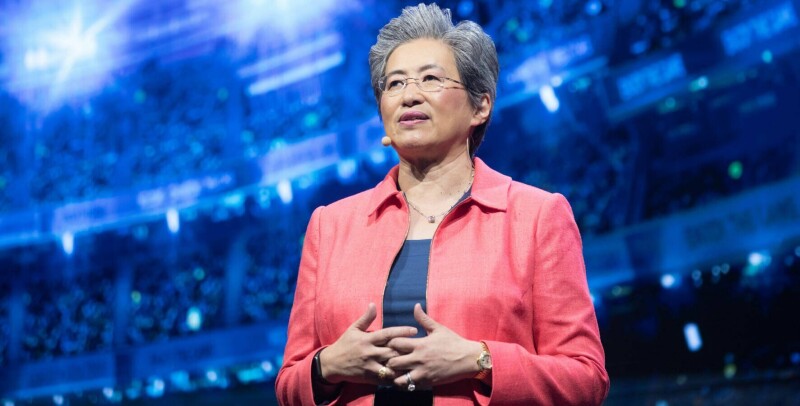
AMD reported robust second quarter earnings, projecting further growth once its Helios rack systems and Instinct MI400-series GPUs hit the market. CEO Lisa Su highlighted that AI deployments for Helios and MI450-series are expected to drive significant growth in the second half of the year, with revenue potentially doubling year-over-year by 2027.
However, despite the impressive financial results, AMD's shares declined by 10.5 percent following the earnings announcement, before stabilizing 8.7 percent below the opening price. This reaction is attributed to the company's heavy reliance on a few major AI players, including OpenAI, Anthropic, and Meta, for growth potential. While Su aimed to alleviate investor concerns, she acknowledged that most AI customers purchase Helios at a smaller, regular scale rather than at the gigawatt scale.
Large customers like Microsoft and Meta may not be buying in bulk. AMD remains confident in its future prospects, emphasizing its position as a credible alternative to Nvidia and its new AI-driven rack-scale compute platform, Helios. The company is also optimistic about its CPUs, Epyc sales, and embedded business, which are expected to benefit from AI tailwinds.
Nevertheless, AMD faces increasing competition from Intel, Nvidia, Arm, Qualcomm, AWS, Google, and Microsoft, as well as challenges in the gaming and client computing divisions due to factors such as the "RAMpocalypse." Despite these challenges, AMD's datacenter and AI sales teams will present the Q3 forecast, aiming for revenues of $13 billion plus or minus $300 million.
Written by urgent.news from The Register's reporting — not their text. Machine-written — may contain errors; check the original before relying on it.
This story
This is one outlet's version. Read the fullest account.