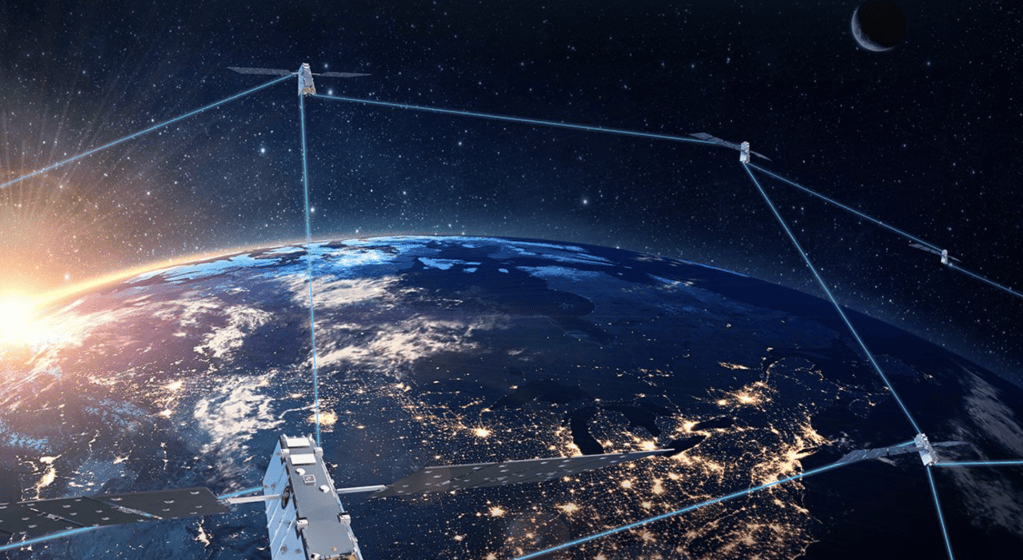
Space debris: Does part of SpaceX rocket hit the moon unplanned?
Last year, a SpaceX "Falcon 9" rocket brought two landers to the moon. Now, part of the rocket could hit the moon unplanned - but will the impact be visible?
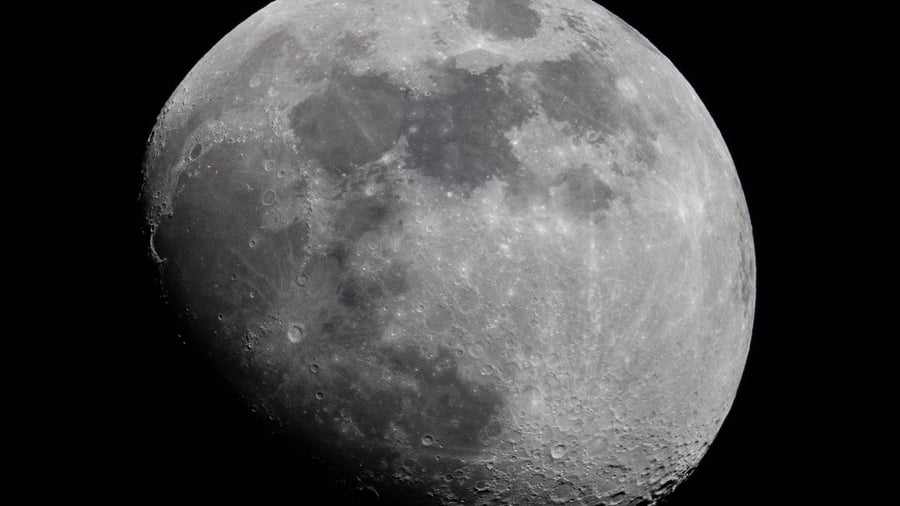
About a year and a half after its launch, a part of a SpaceX rocket could crash on the moon, scientists say, in an unplanned event. The impact was calculated to occur on Wednesday at 06:35 GMT, according to US astronomer Bill Gray and the US space agency Nasa. It involves the upper stage of the "Falcon 9" rocket from private space company SpaceX, owned by tech billionaire Elon Musk, which launched two landers to the moon in January 2025.
It is unclear whether the impact will be visible from Earth. "I think it will be very, very difficult to see, if not impossible," said William Cooke, a manager at Nasa. Astronomer Gray told the New York Times: "The object will hit at a point where there is at least a little hope that we can observe it."
It is still unclear when and how an impact could be confirmed. If a live observation is not possible, it could take several hours or even days to confirm a possible impact, as this would only be possible with the help of probes that send photos of a possible crater to Earth. For example, Nasa's "Lunar Reconnaissance Orbiter" is expected to fly over the expected impact site in a few days.
The "Falcon 9" rocket launched on January 15, 2025, with the moon landers "Blue Ghost" from US company Firefly Aerospace and "Resilience" from Japanese start-up ispace. "Blue Ghost" landed on the moon about two months later, while "Resilience" failed to land shortly afterwards, crashing into the moon. The lower rocket stage of the "Falcon 9" rocket returned to Earth.
SpaceX: "A mix of solar activity and gravitational forces"
The upper rocket stages in such missions often burn up in the Earth's atmosphere as planned, SpaceX manager Julianna Scheiman said at a press conference. "But for high-energy missions, we need to perform a different maneuver to ensure the upper stage is safe with the relevant rules and regulations." This was done in this case - "and what happened is a mix of solar activity and gravitational forces that brought it on a path towards the moon".
Although this was unplanned in this case, a crash on the moon is a recognized option for disposal, "which can provide a predictable, traceable and safer approach to the end of a mission," Nasa said. "There is no danger to Earth."
For scientific reasons, the whereabouts of the rocket stage and the impact site will be further observed. About four years ago, an unplanned collision of a rocket part with the moon became known. Nasa scientists assumed based on images from the "Lunar Reconnaissance Orbiter" probe that it was a part of an old Chinese rocket, likely the launcher of the "Chang'e 5-T1" mission, which was launched into space from Earth in 2014. However, China rejected these reports.
There have been several planned impacts on the moon for research purposes in the past.
Translated by urgent.news. Machine-written — may contain errors; check the original before relying on it.