Top Huawei chip scientist opens up on strategy, ‘blind arrogance’ and his war-hero mindset
When Liao Heng joined Huawei Technologies’ chip-design unit in 2016, he was sceptical about whether China could ever build world-class semiconductors. A former child prodigy who entered Beijing’s prestigious Tsinghua University in 1987 at age 14 before moving to Princeton University for postdoctoral research, Liao had spent over a decade in the United States watching what he described as a “long…
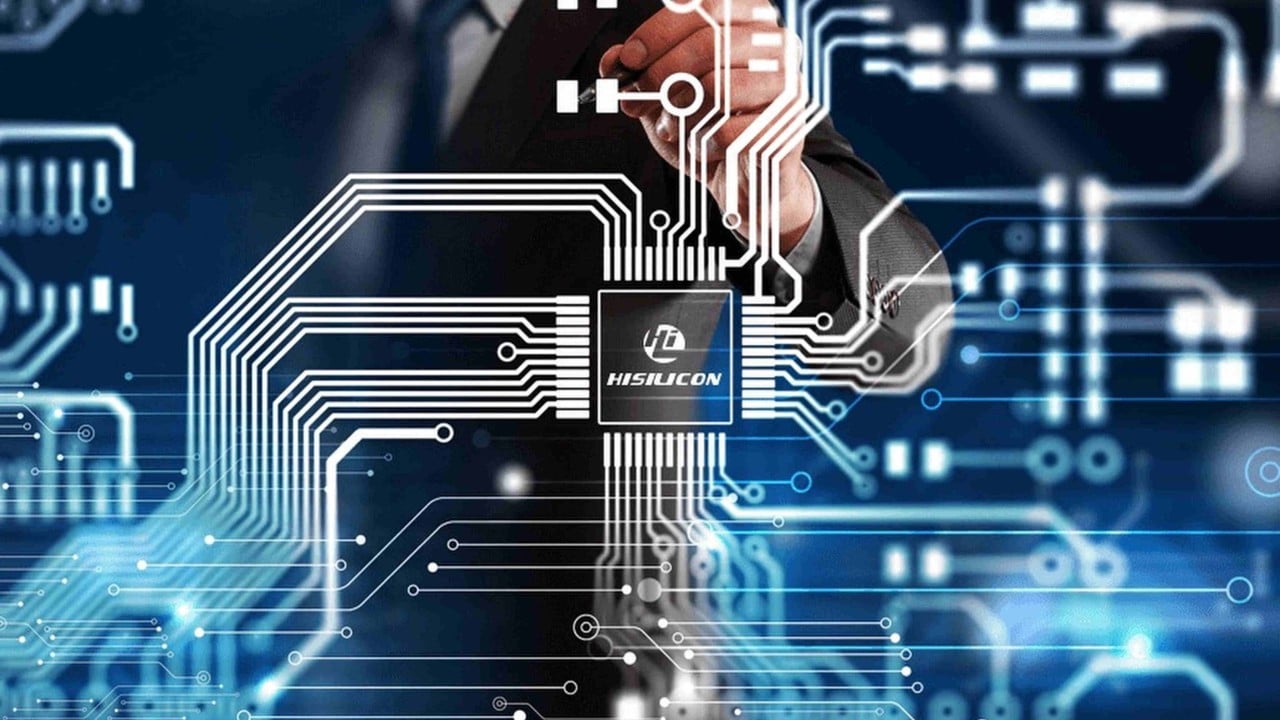
Huawei's top semiconductor scientist, Liao Heng, recently shared insights into his company's strategy to achieve technological self-reliance in the face of US sanctions. Liao, who joined Huawei in 2016, initially doubted China's ability to build world-class semiconductors. However, witnessing Huawei's success firsthand changed his perspective.
Liao highlighted the high hit rate of HiSilicon, Huawei's chip unit, in designing and mass-producing new chips annually without any failures. Today, Liao leads the development of Huawei's Ascend AI processors, a key component of China's push for self-sufficiency in technology.
Returning to China in 2008 at his wife's behest, Liao faced severe sanctions from the US in 2019 and 2020 that cut off access to crucial foundry and design software. Forced to adapt, Huawei shifted its focus to domestic solutions, developing the Ascend series of processors. Liao compared Huawei's resilience to that of a legendary Chinese war hero, Dong Cunrui, who sacrificed himself to destroy an enemy bunker.
Liao emphasized the importance of innovative problem-solving, particularly in the absence of advanced lithography equipment.
Huawei's approach involved system architecture, stacked dies, optoelectronic interconnects, and its open-source Compute Architecture for Neural Networks (CANN) software toolkit. These innovations led to the Tau Scaling Law, a design framework that aims to achieve transistor densities equivalent to a cutting-edge 1.4-nanometre process by 2031.
Liao acknowledged technical gaps between China and the US in semiconductors, specifically in software and energy consumption, but argued that China's abundant energy resources could compensate for some of these differences. He also pointed out that while global companies with access to advanced manufacturing equipment would retain an edge, the protective wall of the CUDA ecosystem, crucial for Nvidia and other competitors, is gradually disappearing.
Written by urgent.news from South China Morning Post's reporting — not their text. Machine-written — may contain errors; check the original before relying on it.
This story
This is one outlet's version. Read the fullest account.