These Ancient Sea Worms Have “Biometal” Jaws
Not as scary as a great white shark, but the science is fascinating The post These Ancient Sea Worms Have “Biometal” Jaws appeared first on Nautilus .
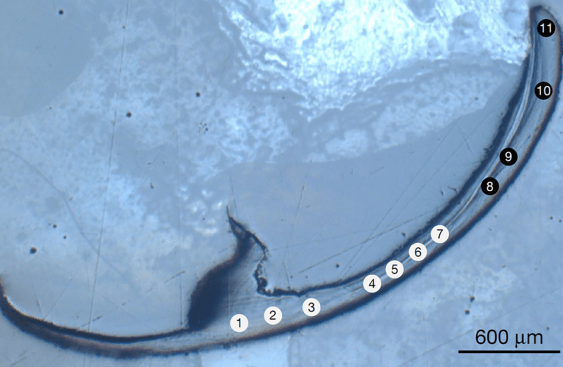
Ancient bristle sea worm Perinereis cultrifera possesses unique "bio-metal" jaws that scientists and engineers can study for inspiration. The jaws are composed of structural proteins and metal ions, allowing them to perform various functions such as holding, cutting, crushing, and chewing food, as well as serving as a defense mechanism.
A study in Biophysics Reviews revealed the bio-metal's hardness, strain mechanics, and ion-protein structure, with smaller parts of the material being harder to dent—a phenomenon called the Nix-Gao nanoindentation size effect. Unlike typical metals, the jaws also display unique elasticity that changes when indented, a feature more commonly found in glassy polymers.
Researchers are now exploring other bristle worm species to compare their bio-metal jaws and refining mathematical models to better understand the worm's genes responsible for producing these materials.
Written by urgent.news from Nautilus's reporting — not their text. Machine-written — may contain errors; check the original before relying on it.