The Danube River Has Fallen to Record-Low Water Levels, Revealing Nazi Warships, Bombs and Woolly Mammoth Bones In Its Channel
Residents and researchers are finding historic and prehistoric relics of the past as Europe's second-longest river dries
The Danube River, Europe's second-longest river, has recently experienced record-low water levels due to consecutive heatwaves and drought across the continent. This phenomenon has exposed various historical artifacts and remains that have been hidden beneath the river for decades. In Serbia, barge traffic has been severely impacted, with cargos limited to a fraction of their usual capacity due to the reduced water levels.
Nuclear power plants in Hungary and Romania face potential shutdowns from insufficient cooling water, raising concerns about energy shortages across the region. A cruise ship in Bulgaria even ran aground, forcing officials to evacuate passengers. Amid these challenges, locals and researchers have taken advantage of the low water levels to interact with the Danube in a new way: uncovering remnants from its past.
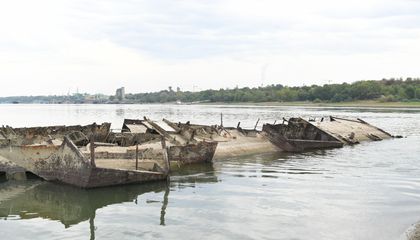
Near Prahovo, Serbia, a graveyard of WWII-era Nazi warships and roughly 200 boats is now visible above the water line. These ships were sunk by the Nazis in 1944 to block Soviet Red Army advances. About 80 years later, Serbia and the European Investment Bank are working to remove 21 of these sunken vessels, costing the country around $5.75 million annually in trade and transport disruptions.
In Opatovac, eastern Croatia, a ship that may have sunk as early as 1937 has also resurfaced. Meanwhile, divers have discovered a woolly mammoth jaw, tusks, a shoulder blade, and possibly a rib in Bulgaria, marking an important archaeological find for scientists. Authorities have had to close a bridge in Budapest after a remaining bomb from World War II was exposed in the riverbed, highlighting the potential dangers of these unexpected archaeological discoveries.
Written by urgent.news from Smithsonian's reporting — not their text. Machine-written — may contain errors; check the original before relying on it.