South Korea mulls hiking taxes on rich homeowners
South Korea has proposed property tax changes that would impose higher duties on wealthy homeowners to stabilize a red-hot housing market.
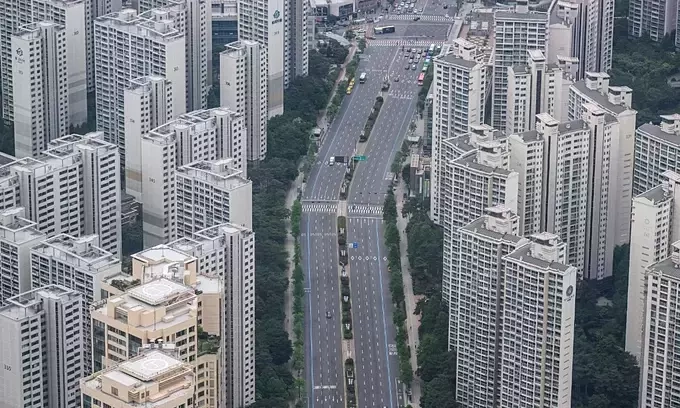
President Lee Jae Myung convened a confidential gathering on Monday to deliberate on the domestic stock and property markets, as the government seeks to alleviate public discontent over soaring house prices and market volatility. Finance Minister Koo Yun-cheol announced that the government plans to reform real estate taxes in a "reasonable manner" to establish a "residence-oriented housing market" under the belief that a home is for living, not buying.
The finance ministry's annual tax code revisions revealed several changes, including raising property tax exemptions for homeowners who reside in a single house, while simultaneously lowering exemptions for those with multiple properties or expensive houses. The proposed increases in real estate holding tax rates could reach up to 2.3 percentage points, contingent on the house price, and other adjustments that would increase the tax burden for multiple homeowners and costly properties.
For residents owning one property, the tax burden would decrease if the house's value remained under 3 billion won (approximately US$2.1 million). The tax would be raised in increments for properties valued between 3 and 4 billion won, and normalized for homes between 4 and 5 billion won, as Koo explained. In late June, South Korea's property market experienced its 13th consecutive month of price increases, with the most significant rise since November 2021.
Following the meeting, Lee's administration organized several public forums on property market policies, driven by the persistent surge in house prices. Lee's approval ratings plummeted to a one-month low of 51% in a Gallup Korea survey conducted on July 24, with housing market policy cited as the primary reason for negative views for the first time since his administration began in June 2025.
The Bank of Korea, concerned about the soaring earnings in the chip industry leading to inflation and house prices, raised interest rates last month for the first time in three-and-a-half years and warned of further hikes. In addition to the proposed tax changes, the ministry intends to introduce tax exemptions for domestic production in key sectors such as solar energy, wind energy, rechargeable batteries, semiconductors, key materials, and AI robots. The ministry plans to present the proposal to parliament by September 3.
Written by urgent.news from VnExpress Business's reporting — not their text. Machine-written — may contain errors; check the original before relying on it.
Also reported by 1 other outlet
- South Korea vows to soothe stock market volatility as ETF boom slows channelnewsasia.com