Solving the solvent problem
By focusing on electrolytes, MIT scientists are making sodium-metal batteries a more practical energy storage option.
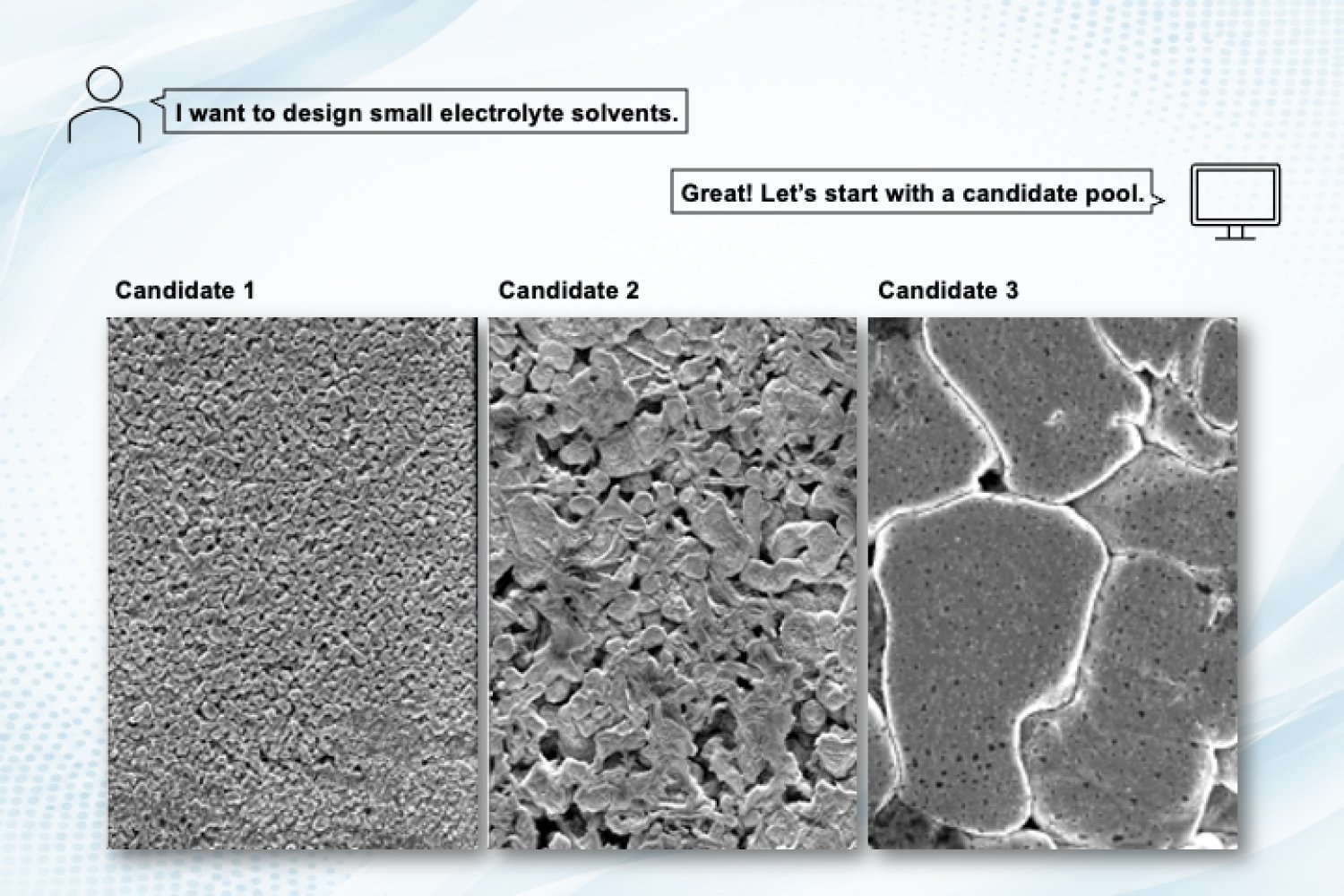
The ongoing push for low-cost, resource-abundant, and fast-charging energy storage systems has driven researchers at MIT, led by Ju Li, to explore sodium-metal batteries as a viable alternative to traditional lithium-ion batteries. Sodium is abundant and cost-effective, but the primary challenge is sodium metal's high reactivity, which makes achieving both long-term stability and fast cycling difficult.
The key to overcoming this challenge lies in finding the right electrolyte for sodium-metal batteries. The electrolyte, a crucial component of a battery, facilitates the movement of electrically charged ions between the negative and positive electrodes. In most electrolytes, unwanted chemical reactions with the electrodes can lead to stability issues and reduced battery life.
In a paper published in Joule, a team of 15 MIT researchers, including lead authors Weiyin Chen and Jinhyuk Lee, have made significant progress in addressing this issue. They discovered a "sulfonamide" molecule, called DMTMSA, which proved to be stable at both electrodes in lithium batteries. Building on this discovery, the team searched for similar molecules that could improve sodium batteries' stability and enable fast charging and discharging.
The researchers used an AI-guided algorithm to design 100,000 candidate molecules, narrowing down to 200 candidates based on technical criteria. After extensive testing, they found DMFSA to be the smallest and best solvent, solving the trade-off between ion transport speed and electrolyte stability. This breakthrough addresses a persistent challenge in battery research and paves the way for lower-cost, higher-performance batteries.
Written by urgent.news from MIT News AI's reporting — not their text. Machine-written — may contain errors; check the original before relying on it.
This story
This is one outlet's version. Read the fullest account.
- Solving the solvent problem news.mit.edu