'Significant areas of Mars may have once been covered by water': Scientists find hidden clue in Spirit rover data
A new analysis of decades-old data from NASA's Spirit rover has uncovered overlooked traces of crystalline hematite and altered magnetite, adding to growing evidence that liquid water once played a major role in shaping the Red Planet.
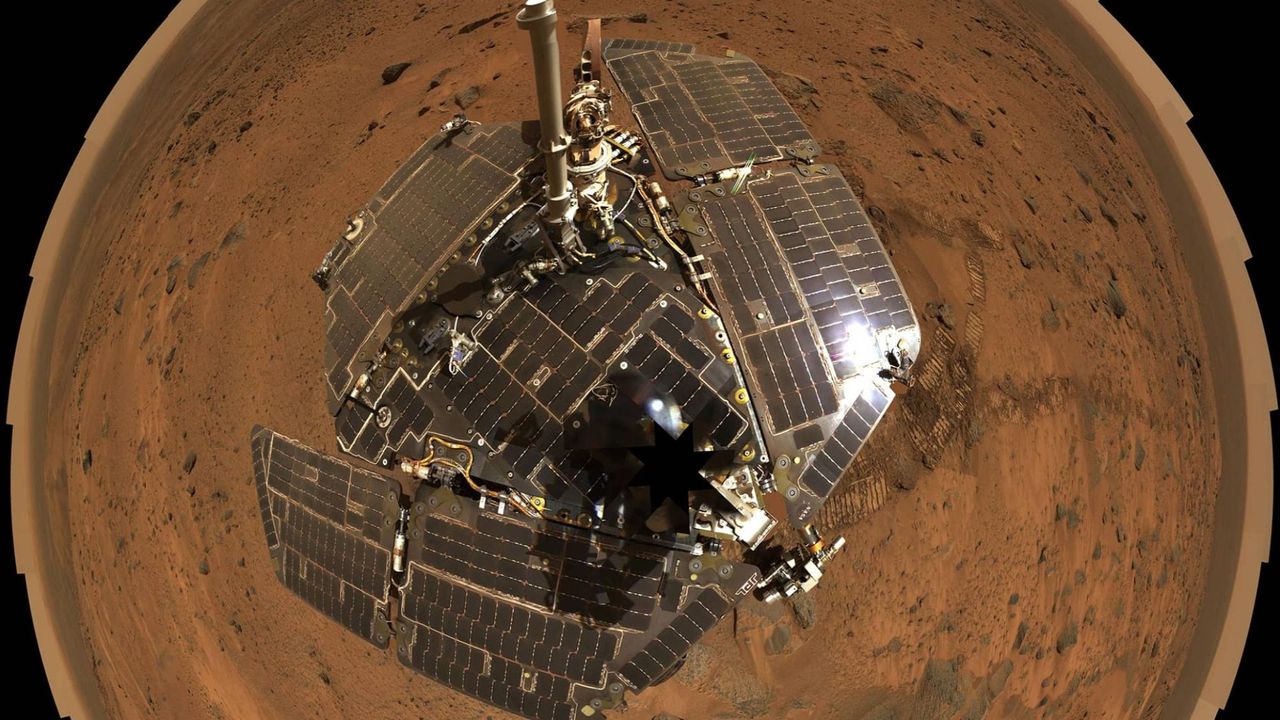
More than two decades after NASA's Spirit rover commenced its exploration of Mars, scientists have unearthed a concealed clue within the rover's archived data that bolsters the growing body of evidence suggesting the Red Planet was once abundant in liquid water. By reexamining measurements collected by Spirit between 2004 and 2010, researchers identified extensive traces of crystalline hematite and altered magnetite in typical Martian soil, iron-rich minerals indicative of ancient chemical modifications resulting from interactions between water and rock.
According to Edith Cowan University (ECU) in Australia, these findings imply that liquid water may have been more extensive across Mars than previously believed, as stated in a university statement. The team amalgamated hundreds of individual measurements from 32 undisturbed soil sites within Gusev Crater, the landing site of Spirit in January 2004, constructing the most comprehensive iron-mineral profile for typical Martian soil to date.
Lead author Paulo de Souza, a professor at ECU, remarked on the significance of discovering crystalline hematite in ordinary Martian soil, which is one of the most robust mineral indicators of past water on Mars. While it can also originate from volcanic or hydrothermal activity, crystalline hematite typically forms when iron-bearing rocks interact with liquid water.
This discovery is particularly noteworthy as earlier assessments had concluded that crystalline hematite was largely absent from Spirit's landing site. The researchers were able to discern the mineral's signature amidst the background noise by integrating thousands of spectra gathered throughout the mission. The presence of both altered magnetite and crystalline hematite provides fresh proof that water played a substantial role in reshaping Mars' surface.
Moreover, given that a similar dust and soil blanket covers vast portions of Mars, the findings could have implications beyond Gusev Crater, pointing towards water-related chemical processes potentially being more widespread across the planet than previously hypothesized. The outcomes contribute to a mounting collection of evidence suggesting Mars was once considerably more habitable than it is presently.
During its mission, Spirit identified water-modified rocks and minerals in the Columbia Hills, while NASA's Curiosity rover later unearthed evidence that Gale Crater had once housed enduring lakes. Recently, the Perseverance rover has been investigating the remnants of an ancient river delta inside Jezero Crater, where scientists aspire to ascertain whether the environment could have once supported microbial life.
Apart from unveiling another chapter of Mars' watery past, the research underscores the enduring scientific value of spacecraft data long after a mission's conclusion. "This work demonstrates that significant discoveries are not always made by collecting new data," de Souza noted in the statement. "At times, they emerge from examining existing data with renewed perspectives and advanced analytical methods." Their findings were published on June 26 in the journal Interactions.
Written by urgent.news from Space.com's reporting — not their text. Machine-written — may contain errors; check the original before relying on it.