Siapa sebenarnya menang di Negeri Sembilan?
Kembalinya politik identiti dalam PRN Negeri Sembilan menunjukkan Malaysia masih terperangkap dalam politik kaum.
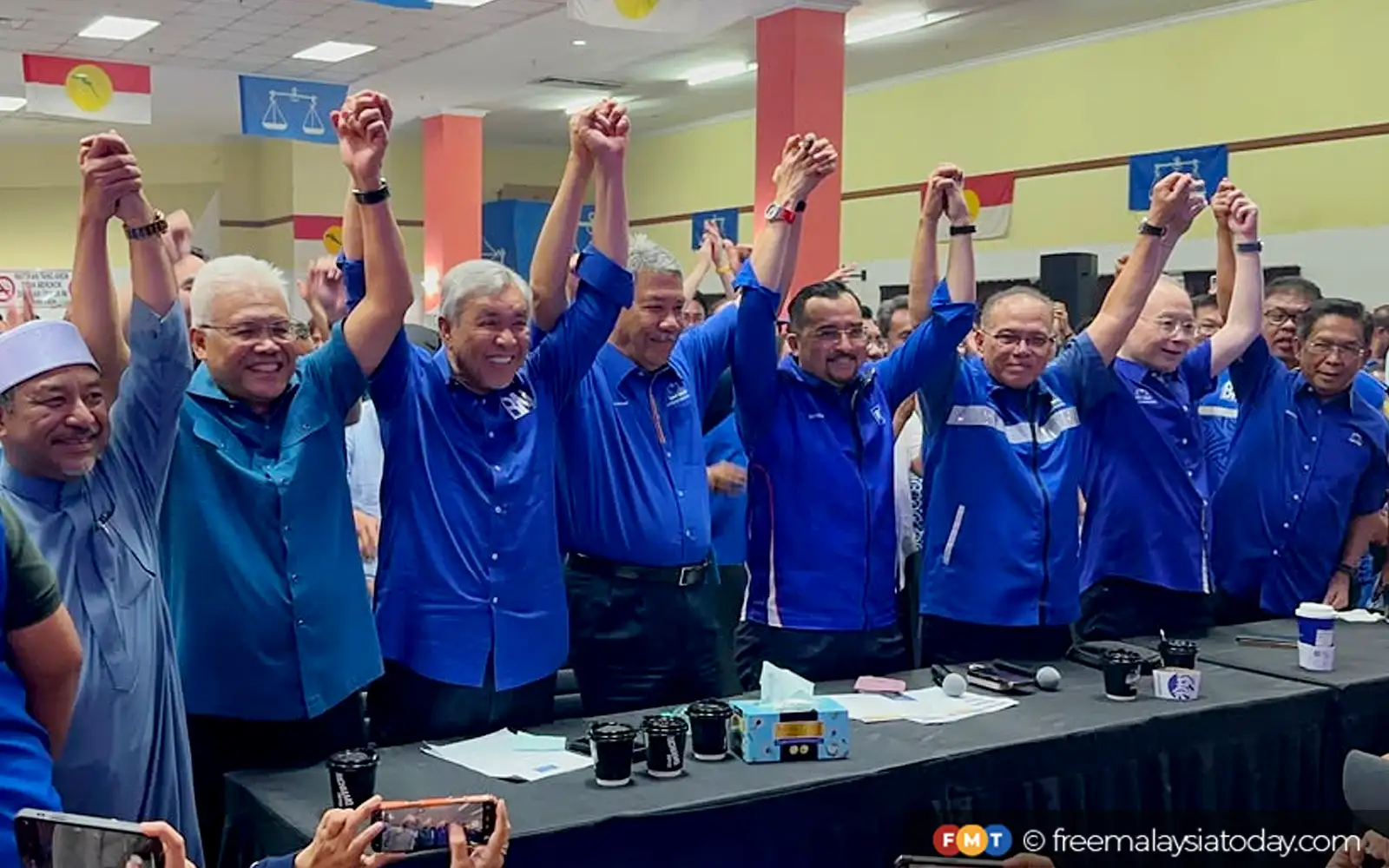
The critical question in Malaysia's Negeri Sembilan PRN remains: who truly won and who actually lost? After scrutinizing the Barisan Nasional (BN) performance, it is evident that the coalition only secured 18 seats, falling just short of the majority needed to form the state government. BN requires seven seats from Perikatan Nasional (PN) to determine the formation of the government.
However, this also means BN now depends on another coalition that can dictate its terms. Indirectly, BN must accept the reality that an unhappy PN can bring down their state government, just as the coalition helped establish it. From the total votes, how many came from BN's own supporters or urban absentee voters, and how many votes shifted from PN supporters, particularly PAS?
The understanding reached between BN and PN shows that support for Umno and BN is not comprehensive. Thus, BN should not be overly complacent with its achievements. Chinese voters pose another question. Are non-Malay voters, particularly the Chinese community, returning to BN? The answer is no. The Democratic Action Party (DAP) still dominates the majority of Chinese voters.
If not, the party may face a comprehensive defeat, similar to what happened in Sabah. Chinese voters may be infuriated by PN's Chairman Sanusi Nor's statement about "Malay Land," pushing them to boycott voting. However, Sanusi's statement, along with President PAS Abdul Hadi Awang's call for Malay unity, may contribute to increased voter turnout among Malays.
The PH position Now, let's examine Pakatan Harapan (PH). Is the coalition truly defeated if we consider its current circumstances? Firstly, PH is competing independently without a coalition. In the previous PRN, PH worked with BN under a unity government concept at the federal level. PH and BN jointly governed the state until Umno's 14 Adun (deputies) withdrew support for Aminuddin Harun, who was then the Chief Minister.
PH has never actually ruled the state outright and has had to depend on support from what they consider "enemies." Ironically, the same situation now faces BN after the recent polls. Although PH's seats decreased from 17 to 11, the coalition has not lost Negeri Sembilan because PH never had a strong grip on the state from the beginning.
Winners and losers Next, we look at non-Malay voters. I predict Chinese voters will severely punish DAP, but this did not happen. Instead, voter turnout increased. Therefore, who truly won and who lost? In my view, the clear winners are PN, PAS, and Wawasan. The leadership of Hamzah Zainudin's party won three out of four seats in their debut performance under the PN banner.
Wawasan's victory provides a lesson that Bersatu's Rafizi Ramli should heed. Who was the true loser? In my opinion, the Malaysian people and this country. Unfortunately, we are returning to politics based on ethnicity and identity. According to PH Returning Officer Amirudin Shari, racial rhetoric during the election campaign is too strong, especially among Malay-Islam political power.
Malay voters seem more interested in the idea of Malay political power than the billion-ringgit loss reported by Tabung Haji, which is managed by Malays. Malay voters also seem to overlook the development that PH has brought or is working on. They seem more comfortable with old thinking from six decades ago. Don't misjudge the situation.
This is the reality of Malaysian and Malay politics for the future. This article reflects the writer's opinion and does not necessarily represent FMT.
Written by urgent.news from Free Malaysia Today's reporting — not their text. Machine-written — may contain errors; check the original before relying on it.
Also reported by 1 other outlet
- Negeri Sembilan exco swearing-in ceremony tomorrow freemalaysiatoday.com