‘Nobody feels good, nobody’s learning’: How high temperatures disrupt Philadelphia’s school days
For nearly two years, teacher Isabelle Ouyang and her colleagues have dealt with the presence of construction workers, shuffling between classrooms, stress over schedules, and a host of disruptive renovations. Ouyang has, essentially, pardoned all that dust, because Philadelphia’s Kensington High…
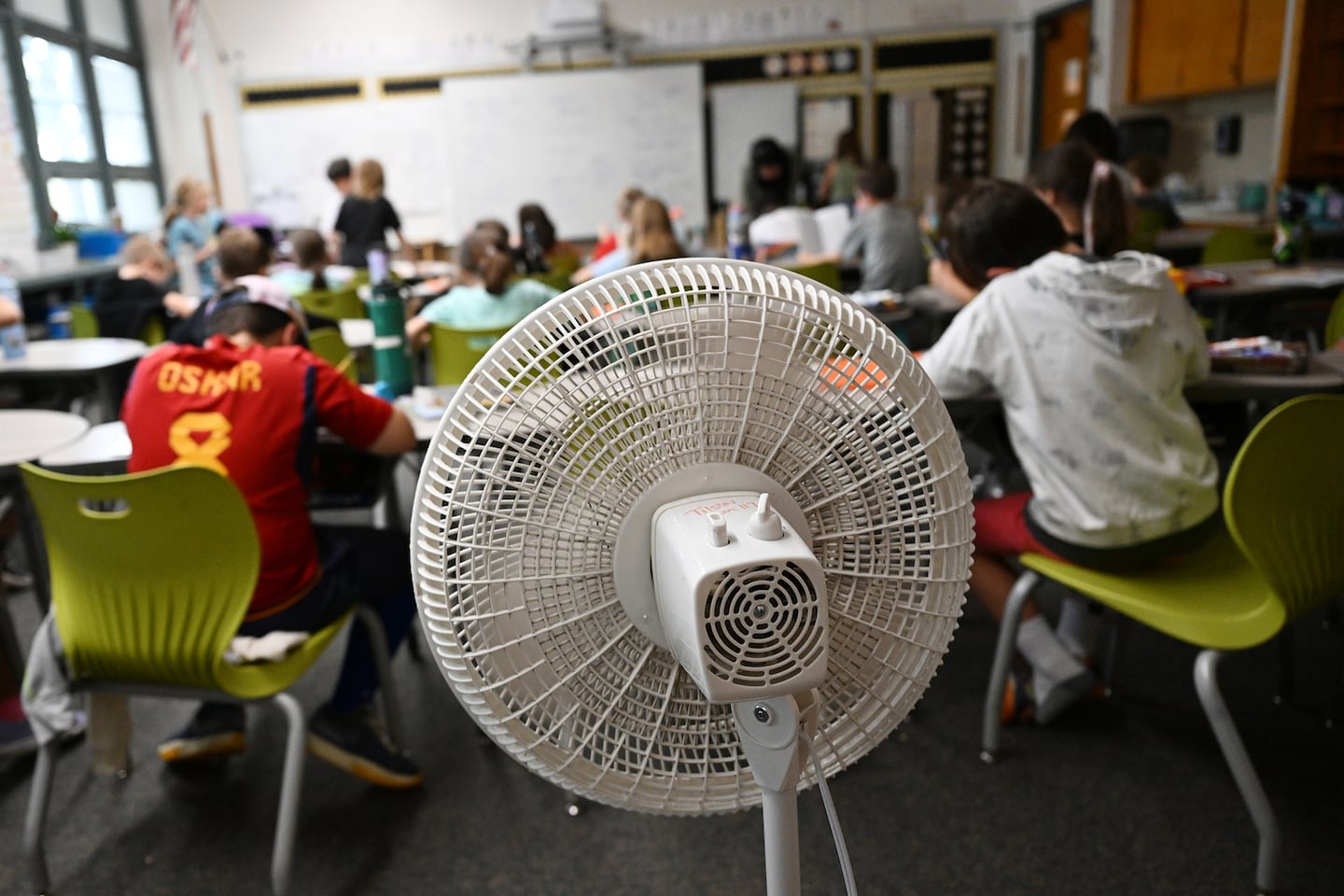
Philadelphia's high schools are grappling with the challenges of extreme heat, as more schools lack proper air conditioning to keep students safe and comfortable during the summer months. Teacher Isabelle Ouyang, who teaches at Kensington High School, expressed gratitude for the recently installed air conditioning, but still worries about potential disruptions in the upcoming school year.
Research consistently shows that high temperatures negatively impact student learning, attendance, and behavior. Currently, around 50 Philadelphia schools, nearly one-quarter of the district's schools, do not have adequate cooling systems for the upcoming school year, despite progress made in recent years.
The Philadelphia school district has made efforts to address the issue, spending COVID relief funds on HVAC upgrades and receiving a $200,000 donation from football star Jalen Hurts. However, they have fallen short of their goal to air condition all buildings by 2027, with the cost and complexity of adding cooling to older buildings posing significant challenges.
The district has an official plan in place for extreme heat, which includes remote learning for students at schools without adequate cooling when temperatures reach 85 degrees or above before 9 a.m. In the previous school year, this protocol was implemented twice, affecting approximately 50 schools.
Superintendent Tony Watlington emphasized the importance of the district's 10-year facilities plan, which aims to close 17 schools, reshape several others, and modernize nearly 170 buildings. This plan includes adding air conditioning to key areas of Patterson Elementary School, which currently lacks adequate cooling. The district is shifting its approach from separate, immediate renovations to integrating cooling upgrades into the broader, long-term modernization projects planned over the next decade.
However, funding constraints remain a major hurdle, as the district does not yet have the necessary funds to complete the upgrades slated for renovation under the 10-year plan.
The process of upgrading cooling systems at old schools can be lengthy and costly. For example, Kensington High School's HVAC upgrades involved replacing aging systems and updating ductwork, while a geothermal system could potentially be a more sustainable solution. However, the local utility, Philadelphia Gas Works, expects to release a study on the feasibility of a geothermal system in the coming weeks, which could cost around $19 million without tax incentives.
This means that, for the upcoming school year, McCloskey Elementary School, another school without adequate cooling, will continue to rely on remote learning for students if temperatures become too high.
Written by urgent.news from Chalkbeat's reporting — not their text. Machine-written — may contain errors; check the original before relying on it.