Lack of long-term plans to mitigate rain-inducted calamities worrying for Kerala
CM blames IMD for delay in relaying weather forecast. However, experts point out that IMD’s 125-year rainfall dataset, covering 110 weather stations across Kerala from 1901 to 2025, has shed enough light on the State’s most vulnerable regions during monsoon and the government need not wait for weather alerts before initiating preparedness measures
The Kerala government has come under scrutiny for its slow response to recent rain-induced calamities in the state. While the administration blamed the India Meteorological Department (IMD) for delays in relaying accurate weather forecasts, experts argue that the absence of long-term mitigation plans exacerbates the issue. Chief Minister V.D.
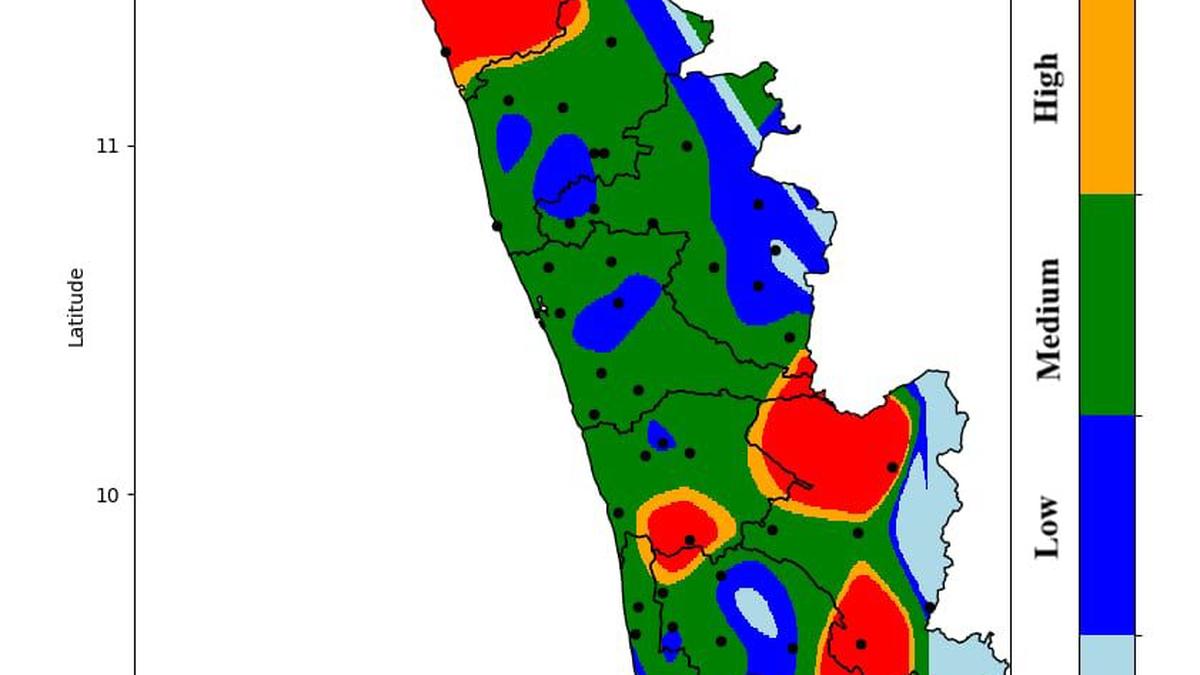
Satheesan stated that the flooding was caused by an extreme rainfall event, with some regions receiving over 350 mm of rain. However, the IMD's warning only reached authorities around midnight, leaving little time for large-scale evacuations. The IMD's 125-year rainfall dataset, covering 110 weather stations, reveals vulnerable regions during monsoon season, including regions prone to extreme rainfall.
This data, combined with machine learning and Geographic Information System (GIS) techniques, has created a rainfall vulnerability map highlighting disaster-prone areas. Many parts of north Kerala, Idukki, and Pathanamthitta, especially areas along the Western Ghats, are marked as highly susceptible to extreme rainfall events. The map categorizes the state into different color-coded zones based on rainfall intensity, with red zones experiencing extreme rainfall events repeatedly over the past 125 years.
Notably, recent events in Idukki, Pathanamthitta, and Kottayam, as well as a debris slip in Wayanad that claimed eight lives, occurred in red zones. Experts suggest that these regions are particularly vulnerable during offshore trough extensions, making them highly susceptible to heavy and very heavy rainfall due to their geographical characteristics and prevailing monsoon conditions.
Thara K.G., a geologist and disaster management expert, emphasized that the state needs a long-term disaster mitigation strategy, rather than merely relying on rainfall alerts. She highlighted that Kerala's biggest challenge is the lack of such a comprehensive plan, which is further compounded by the absence of effective land-use planning.
A senior official from the Kerala State Disaster Management Authority acknowledged the difficulty of implementing major policy reforms in a densely populated state like Kerala, citing resistance to enforcing land-use regulations and removing accumulated silt, sand, and soil from waterbodies. They emphasized the need for strong policy-level intervention to bring about meaningful reforms in the sector.
Written by urgent.news from The Hindu's reporting — not their text. Machine-written — may contain errors; check the original before relying on it.