Konflikt mit Israel: Weitere Gespräche zwischen Israel und Libanon in Rom
Die Spannungen zwischen Israel und der Hisbollah halten an. Doch gleichzeitig gehen direkte Gespräche zwischen beiden Ländern weiter. Worum geht es dabei?
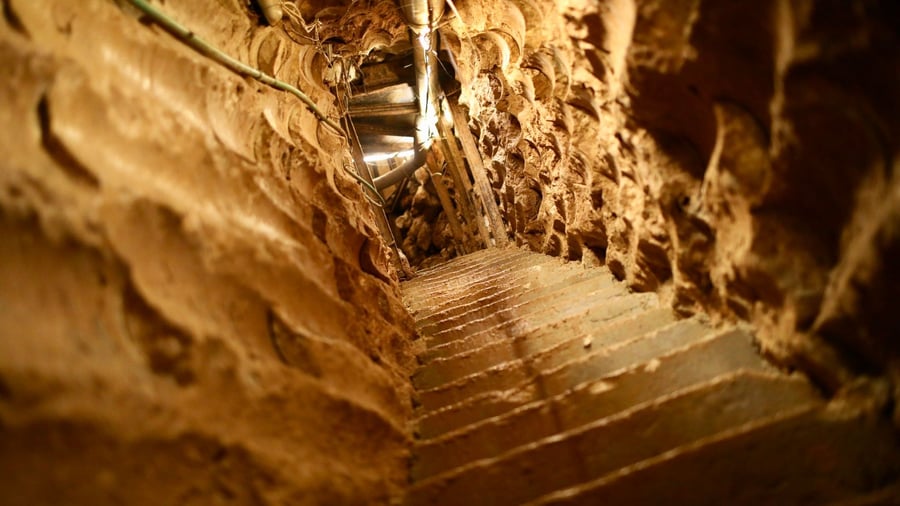
In recent political talks between Israeli and Lebanese government representatives in Rome, the parties are focusing on the implementation of their security agreement. A central topic, according to Lebanese government sources, is the extensive underground tunnel system used by Hezbollah. Recent Israeli military actions, reported by the Lebanese news agency NNA, have caused significant destruction in various locations, including the destruction of tunnels.
Hezbollah, supported by Iran, has built a complex underground military infrastructure, including command centers, weapons storage, firing positions, supply corridors, and protected connections that allow fighters to move unnoticed beneath the earth. The tunnels span across multiple regions of Lebanon, extending into the northern Bekaa Valley.
The network is not connected end-to-end. Israel has repeatedly warned of the threat of Hezbollah fighters, including its elite unit Radwan, launching large-scale attacks on northern Israel, similar to the Hamas assault on October 7, 2023. A Hezbollah representative was quoted by The Washington Post in 2019, stating that the elite Radwan unit was formed for offensive operations, including cross-border attacks on Israel.
The shift of military infrastructure underground has fundamentally changed the battlefield, according to Lebanese military expert Munir Schehadeh. Israel is considered superior to Hezbollah, which possesses an air force, satellite reconnaissance, drones, electronic surveillance, and precision-guided weapons. The Hezbollah underground warfare strategy aims to protect fighters, weapons, and command centers while maintaining operations during intense aerial assaults.
Over the years, Hezbollah has significantly invested in its underground warfare, achieving many of its intended goals, despite Israel's inability to prevent Israeli forces from infiltrating southern Lebanon and causing substantial damage to the organization's military infrastructure. Satellite imagery has shown that Israeli demolition and destruction operations in several southern Lebanon villages have caused massive destruction.
Israel has repeatedly destroyed tunnels in Lebanon, including some that extended into Israel, often damaging residential buildings. The UN peacekeeping forces in Lebanon also discovered a large tunnel network in southern Lebanon in summer 2025. Israel has destroyed tunnels in Lebanon for several years, with one incident in the Beaufort area reportedly involving 700 tons of explosives, with no damage to the Burg itself.
The Lebanese news agency reported that the 1,200-meter area south of the Burg was "completely devastated" by the explosion. The UN reports that the area was "completely devastated" by the blast. Talks in Rome are the first direct political discussions between the two neighboring countries in decades, mediated by the United States.
Hezbollah is not participating in the talks. Despite the ceasefire, Israeli military forces remain stationed in southern Lebanon and continue airstrikes. Hezbollah has not launched any attacks on Israel since the beginning of the ceasefire. Israel's continued presence in the region is contingent on progress in disarming Hezbollah, while Hezbollah demands Israeli withdrawal as a precondition for cooperation.
The Lebanese government also depends on Israeli progress for disarming purposes, but the government's ability to implement Israeli demands is limited. The Lebanese armed forces are significantly weaker than Hezbollah, and the government seeks to avoid internal political tensions by refraining from open conflict with the militia.
Written by urgent.news from Handelsblatt's reporting — not their text. Machine-written — may contain errors; check the original before relying on it.