Israel restricts targeted killings in Gaza amid dispute over withdrawal, Hamas disarmament
Troops may now strike only immediate threats, while broader operations require approval from the IDF chief and political leadership; the Board of Peace says any pullback beyond the yellow line will follow full disarmament of weapons and tunnels
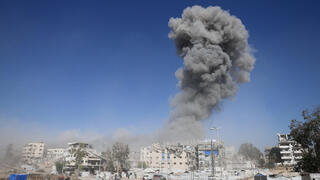
Israeli authorities in the Gaza Strip issued new guidelines on Tuesday, restricting military operations to only those necessary for neutralizing immediate threats. Targeted killings, previously carried out at the discretion of Israeli forces, will now require authorization from the IDF Chief of Staff and the political leadership. This change followed a day when senior IDF officials stated they had not received a directive to cease operations.
On Monday night, a vehicle in Gaza was struck, resulting in the death of two individuals, following a period of approximately 24 hours without Israeli attacks. The softened strike policy was prompted by discussions between Prime Minister Benjamin Netanyahu and Nikolay Mladenov, the Board of Peace Director-General. Mladenov requested a two-week ceasefire to facilitate negotiations with Hamas.
Subsequently, Qatar, Egypt, and Turkey jointly condemned Israel's ongoing violations in Gaza and urged the country to honor its commitments.
Simultaneously, a dispute has emerged regarding the terms of withdrawal under the proposed agreement with Hamas, specifically focusing on the extent of disarming required from the militant group. The framework for the agreement encompasses the gradual disarmament of Hamas and other terrorist organizations in Gaza, concurrent with the full Israeli exit from the Strip.
This disarming process is slated to happen incrementally, with the IDF initially returning to the yellow line established in a previous cease-fire agreement and then progressively receding as Gaza's control is reclaimed. The Israeli stance insists that withdrawal should commence solely after Hamas has completed disarming entirely.
However, ministers Bezalel Smotrich and Orit Strock contend that the Cabinet received misleading information about the plan, suggesting that the withdrawal should commence even as Hamas surrenders portions of its weaponry. They maintain that the proposed disarming is not genuine, arguing that the weapons will be handed over to Palestinian control instead of being destroyed.
Following this disagreement, the Board of Peace released a statement referencing Mladenov's meeting with Netanyahu, emphasizing their shared aspiration for complete disarmament in Gaza and the transition from rule by weapons to civilian governance. They affirmed that the subsequent steps would be delineated in the forthcoming phase and that the IDF would withdraw beyond the yellow line only after Hamas has fulfilled its disarmament commitments.
This disarmament encompasses light weapons, heavy weaponry, and tunnel networks, all subject to monitoring by an international stabilization force and an oversight committee comprising the United States and the Board of Peace. Initially, the Board had used the term "full withdrawal," but later amended its statement by eliminating the word.
Written by urgent.news from Ynetnews's reporting — not their text. Machine-written — may contain errors; check the original before relying on it.