Deepfake bosses are crashing video calls, and researchers are trying to expose them
Fraunhofer researchers are developing a real-time warning system for deepfake video meetings, targeting scams where AI-generated bosses and coworkers pressure employees into costly decisions.
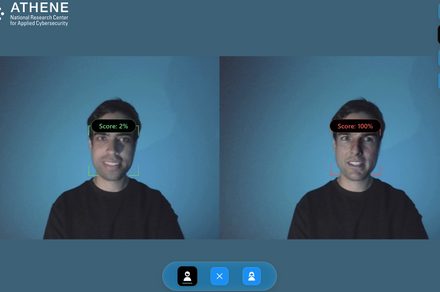
In today's corporate environment, the security of video conferences is facing a new threat in the form of deepfake technology. Researchers at the Fraunhofer Institute for Secure Information Technology SIT are developing a real-time warning system to detect fraudulent activities during these meetings. This system aims to identify suspicious behavior before it can cause harm, such as identity theft and financial scams, by exploiting the trust people place in familiar faces and voices.
The challenge with deepfakes is that they don't necessarily exhibit the classic "uncanny valley" effect or a single face that appears out of sync. Instead, criminals have managed to create convincing AI-generated voices and manipulated videos with the help of internal video material. In a notable incident in Hong Kong, an employee was tricked into transferring nearly 24 million euros to a fake executive after speaking with what seemed like their real boss.
Human intuition alone is insufficient to protect against such convincing setups. A study conducted in 2025 revealed that students could not distinguish manipulated videos from reality using an open-source real-time face-swapping tool. In 74% of the cases, participants failed to recognize the alteration even after being told about the manipulation. As familiar faces appear together in a video conference, their presence can reinforce the illusion, making an unusual request seem legitimate.
Fraunhofer's existing media-forensics research employs deep learning and signal processing techniques to search for signs of manipulation, such as blurred facial structures or inconsistencies between image regions. However, researchers have cautioned that automatic deepfake detectors might produce errors that could cause confusion during live calls. The system being developed by Fraunhofer could serve as a crucial warning before someone acts on an urgency and an AI-generated face that appears genuine.
Interestingly, the installation of a recent macOS update addressed a serious screen sharing flaw, but new evidence suggests that hackers have already exploited unpatched Macs, hijacking them for cryptocurrency mining. The Federal Communications Commission (FCC) has a history of using its Covered List to limit the presence of Chinese technology in the American market, and now, robots are the latest target.
Foreign-made humanoids, quadrupeds, and even robot vacuums are now required to be primarily manufactured in the U.S. to sell within the country.
Written by urgent.news from Digital Trends's reporting — not their text. Machine-written — may contain errors; check the original before relying on it.