Carbon markets alone won’t keep Southeast Asia’s forests standing, study says
Lush, leafy and luxuriantly diverse, tropical forests are home to an immense array of plants, animals and fungi. They also provide humanity with water, clean air and flood protection, and lock vast amounts of carbon in their tree trunks, roots and soils. Yet, forest conservation often loses out to extractive industries and agribusiness when valued […]
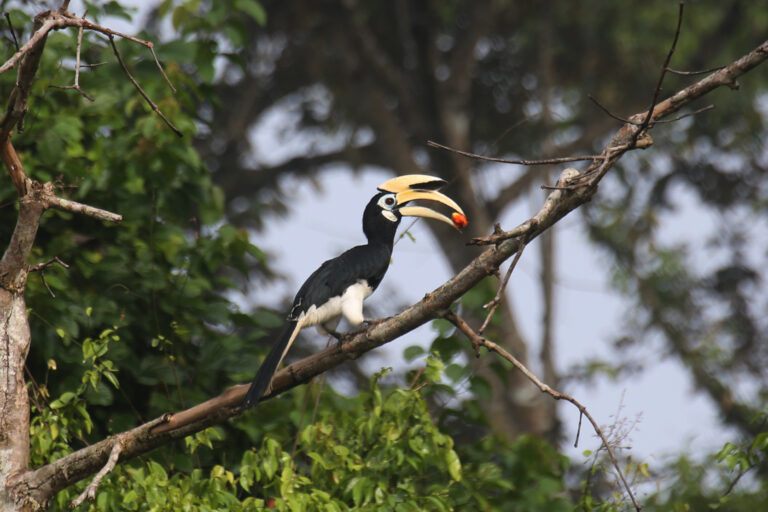
Tropical forests, teeming with diverse life forms, play a vital role in maintaining the planet's ecological balance. They offer essential resources such as water, clean air, and flood protection, while also sequestering large amounts of carbon. However, economic priorities often take precedence over forest conservation, leading to widespread deforestation driven by extractive industries and agribusiness.
In Southeast Asia, an alarming 68 million hectares of forest were lost between 2001 and 2023, primarily due to logging, plantation development, and agricultural expansion.
Despite the apparent devastation, a recent study reveals a hidden conservation potential within commercial concessions across the region. Analyzing satellite data from 3,754 logging, oil palm, timber, and rubber plantation concessions in Cambodia, Indonesia, Malaysia, and Myanmar, researchers identified vast untouched forest areas. These concessions hold approximately 42 million hectares of intact forest — an area larger than the entire country of Malaysia.
If these forests were to be cleared, the consequences would be dire. The study predicts that the loss of these forests could result in emissions equivalent to 1.2 gigatons of carbon dioxide over the next three decades. This amount is comparable to the total industrial carbon dioxide emissions released by all 11 ASEAN countries between 2000 and 2023.
The study underscores the significance of protecting forests within production landscapes. By incentivizing concession holders to prioritize forest preservation over land conversion, there lies a substantial opportunity for effective conservation. The study, published in Nature Communications, emphasizes the urgent need to recognize and harness the untapped potential of commercial concessions in preserving Southeast Asia's precious forests.
Written by urgent.news from Mongabay's reporting — not their text. Machine-written — may contain errors; check the original before relying on it.