APOD: August 4, 2026 – Curious Cometary Knots in the Helix Nebula
APOD Science APOD APOD: August 4, 2026 –… Today’s APOD Archive Submissions Index Search Calendar RSS Education About Discuss APOD Astronomy Picture of the Day Discover the cosmos! Each day a different image or photograph of our fascinating universe is featured, along with a brief explanation written by a professional astronomer. Curious Cometary Knots […]
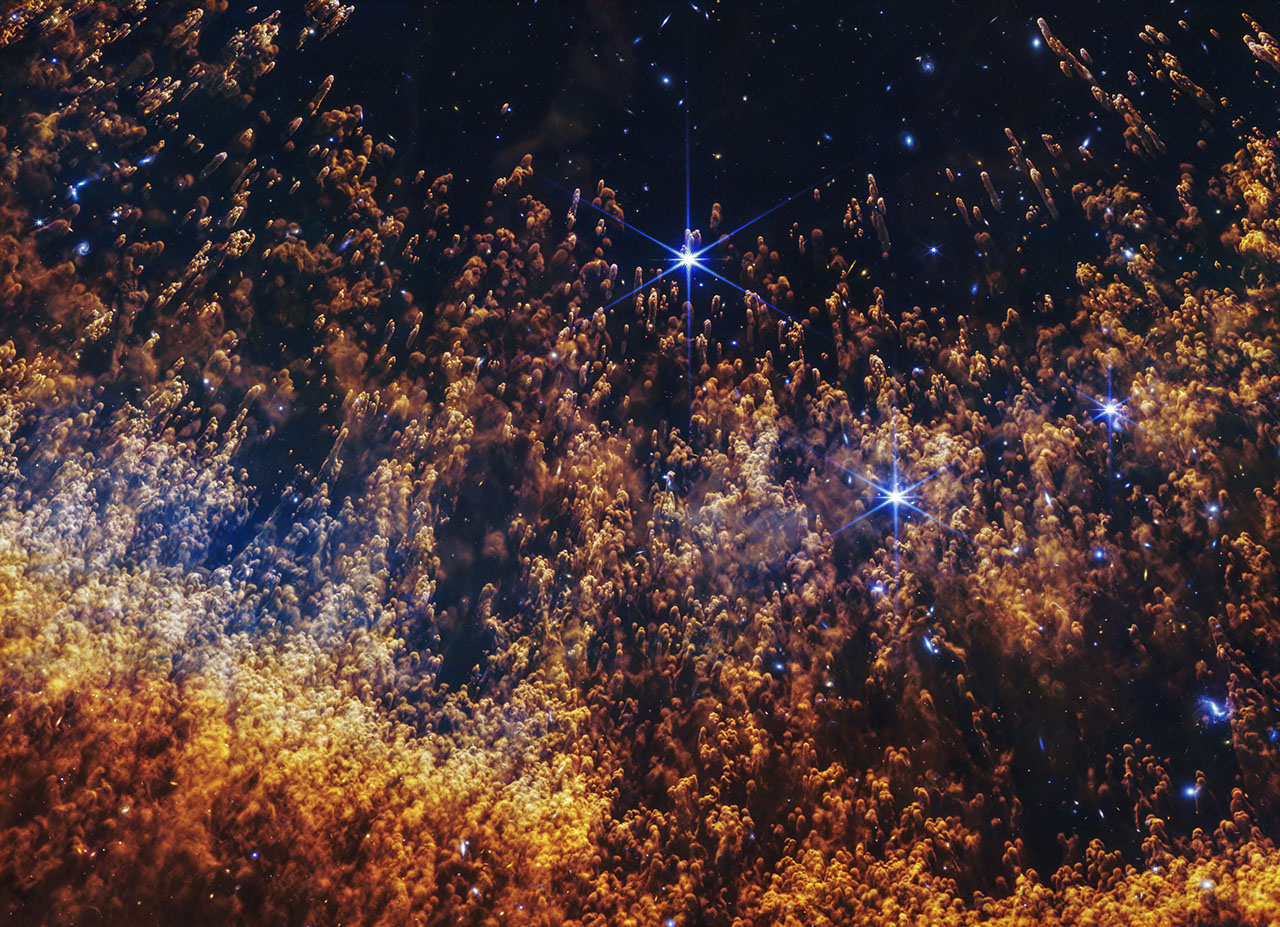
On August 4, 2026, the Astronomy Picture of the Day showcased an intriguing image of the Helix Nebula captured by the James Webb Space Telescope. The image revealed curious cometary knots composed of gas and dust, a phenomenon previously unanticipated in planetary nebulas, including the Ring Nebula, the Dumbbell Nebula, and NGC 2392.
The knots, with masses akin to Earth and sizes several times the orbit of Pluto, have puzzled astronomers due to their mysterious origins. One proposed explanation suggests that existing gas is expelled by a less dense but highly energetic stellar wind from the central evolving star. The Helix Nebula, designated NGC 7293, is a nearby planetary nebula in the constellation of Aquarius, located approximately 650 light-years away.
The image, taken in infrared light, offers a detailed view of the intricate structure of these cometary knots, providing astronomers with valuable insights into the complex processes that occur during the final stages of a Sun-like star's life.
Written by urgent.news from NASA's reporting — not their text. Machine-written — may contain errors; check the original before relying on it.
This story
This is one outlet's version. Read the fullest account.
- APOD: August 4, 2026 – Curious Cometary Knots in the Helix Nebula science.nasa.gov