Why Silicon Valley is divided over China’s powerful, cheap AI models
Low-cost Chinese open-weight models are splitting tech executives and Washington over national security and competitiveness.
The growing presence of powerful, open-weight AI models from China has ignited a heated debate in Silicon Valley and Washington, with some arguing these models threaten U.S. national security while others view them as vital components of the expanding AI economy. Entrepreneurs and politicians have formed opposing alliances, issuing open letters and engaging in social media clashes.
While American AI giants have maintained closed-source models, Chinese labs have been releasing increasingly potent open-weight models to attract global customers. Moonshot's open-weight model, Kimi K3, recently ranked fourth on Artificial Analysis' intelligence index, trailing only Anthropic’s Opus 5 and Fable 5, and OpenAI's GPT-5.6 Sol.
The increasing adoption of Chinese models in the U.S. has drawn criticism, with some accusing Chinese companies of utilizing smuggled chips and distillation techniques—utilizing outputs from American models to train their own. Others warn of the security risks associated with these powerful, freely available models. The divisive issue has become a major rift within the U.S. tech industry.
Chinese open models are cost-effective, as they are free to download, though running them incurs computational costs. Many users access them through developers or third-party cloud providers, while some U.S. companies and developers are redirecting simpler tasks to Chinese models to save money. Chinese models also offer an opportunity for AI infrastructure providers and companies seeking affordable AI services.
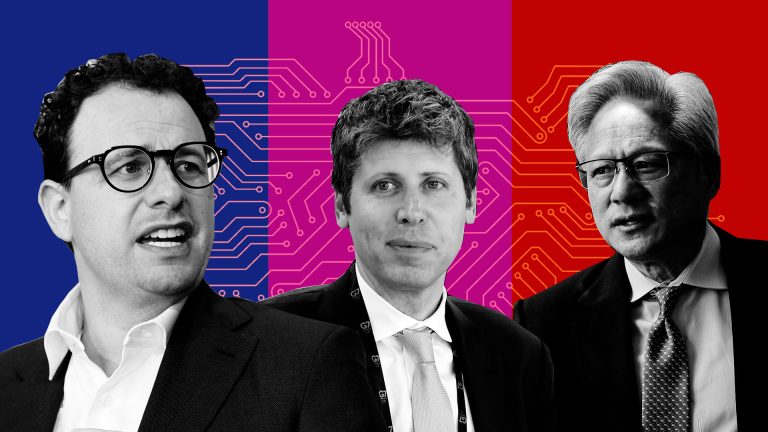
Nvidia has emerged as a leading advocate for open-weight models, with CEO Jensen Huang stating on X that open models broaden access to the AI economy. Microsoft, Google, Meta, and OpenAI have also signed an open letter supporting open models. OpenAI, which has released smaller open-weight models, joined the letter, with CEO Sam Altman expressing a desire for the U.S. to excel in both open and proprietary AI models.
A group of 179 Silicon Valley startups sent a letter to the Trump administration, urging officials to protect access to open models. Anthropic, on the other hand, has called for stricter regulations on Chinese AI to safeguard America's lead, citing potential military and cyber threats. Critics warn that open-weight models are difficult to control and could be exploited for malicious purposes due to challenging guardrails.
Some tech policymakers within the Trump administration have advocated for stricter measures against Chinese AI, while others like David Sacks argue that such restrictions could hinder the competitiveness of U.S. companies utilizing these models.
U.S. officials have expressed concerns over Chinese censorship and potential "backdoors" in Chinese models. While no documented security backdoors exist, post-training techniques could mitigate censorship behaviors. Both open and closed models pose cyberattack risks; in July, an AI agent powered by OpenAI models breached Hugging Face's infrastructure, after which Hugging Face turned to the Chinese open model GLM-5.2 for analysis.
Professor Hussein Abbass suggests developing systems to evaluate and regulate open model safety risks instead of implementing a blanket ban. Proponents argue that open models can help defend against attacks, while adversaries contend that a global community should devise methods to assess and regulate open models' safety. China has positioned itself as a champion of an open, inclusive global AI order, with President Xi Jinping emphasizing China's commitment to AI development at an AI conference.
Written by urgent.news from Rest of World Tech's reporting — not their text. Machine-written — may contain errors; check the original before relying on it.