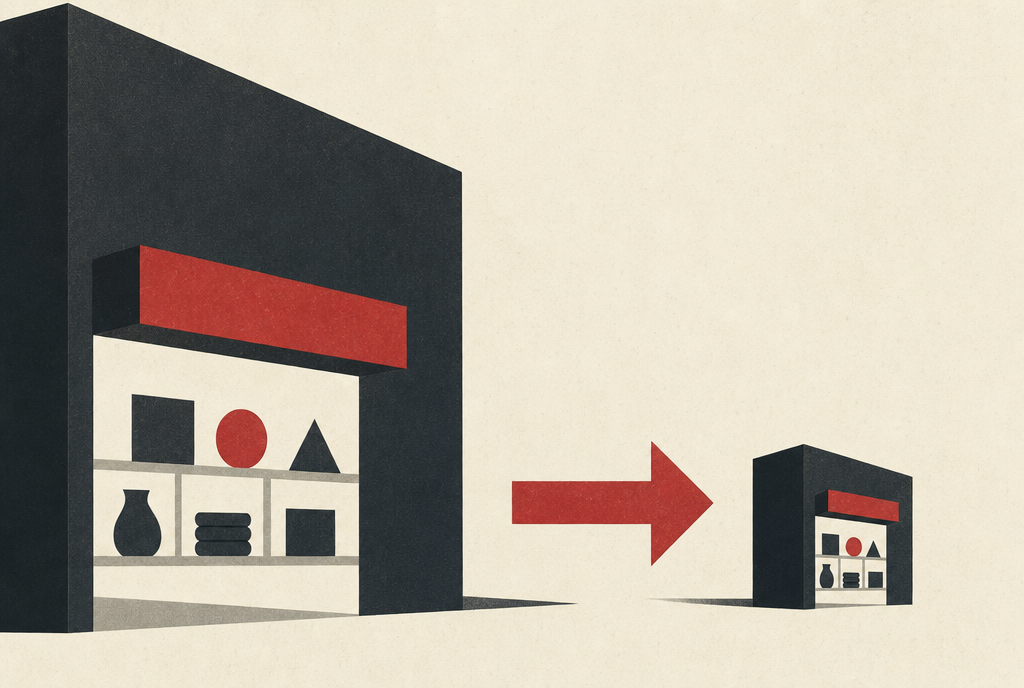
wants the retailer to go smaller.
Best Buy is currently at a pivotal moment as it seeks to rejuvenate its performance under new CEO Jason Bonfig, who will assume leadership from current CEO Corie Barry this fall. The electronics retail giant has experienced declining sales in recent years, attributed to reduced consumer confidence, fewer technological innovations, and a sluggish housing market.
To address these challenges, Bonfig has outlined four key priorities: establishing Best Buy as a retail and technology conglomerate, expanding its reach, elevating the customer experience, and positioning the company as a human-centric brand.
Bonfig is exploring opportunities in artificial intelligence (AI) and capitalizing on the current boom in the sector. This week, the company inaugurated two new stores in Arkansas and Massachusetts, underscoring Bonfig's strategy of adopting smaller-format stores to enhance reach and cater to markets that are unsuitable for traditional-sized Best Buy outlets.
These new stores, ranging from 12,000 to 28,000 square feet, contrast with the medium-format stores, which span 20,000 to 25,000 square feet, and the largest locations, exceeding 40,000 square feet.
Bonfig believes that smaller stores facilitate greater customer interaction, as proximity to customers not only increases in-store visits but also their digital engagement. The Jonesboro store, for instance, symbolizes Best Buy's return to a town where customers are receptive to the brand, despite the lack of a market supporting a larger store.
The second opening in Cape Cod, while slightly larger than usual, exemplifies the retailer's strategy of identifying the optimal size for each location. While acknowledging that small-format stores do not replace larger stores, Bonfig emphasizes that they augment Best Buy's existing model, enabling the company to penetrate new markets and engage a broader customer base.
Over the past five years, Best Buy's stock has plummeted by approximately 20%, trading at $138 per share, down from its peak of $138 in late 2021. For the current fiscal year, the retailer anticipates a slight decline or slight increase in comparable sales. Recent performance, including reduced net income and the impact of tariffs and soaring memory chip prices, has contributed to stagnation.
Bonfig attributes this to a post-pandemic consumption pattern where demand initially surged but has since lapsed. He attributes Best Buy's ongoing challenges to a reset in the technology lifecycle, driven by consumer behavior shifts during the pandemic.
Despite these setbacks, Bonfig is optimistic about the company's prospects, emphasizing customer experience improvements, including enhanced TV selections and tailored customer support for existing TV replacements. He also highlights the company's strategic investment in AI-driven products, such as Meta's smart glasses, and collaborations with AI platforms like OpenAI and Google.
Bonfig envisions AI as an augmentation to the human expertise that defines the Best Buy experience, reaffirming his belief in the company's core strengths despite recent stagnation.
Written by urgent.news from CNBC's reporting — not their text. Machine-written — may contain errors; check the original before relying on it.