Three AI Reviews Passed. One Real Legal Case Broke the System.
I had a system that looked ready. One AI model designed the architecture. Another implemented it. Additional models reviewed the output, checked the logic, and produced validation documents. Synthetic legal cases passed several internal checks. Then I tested the system with documents from a real legal case. It confused the parties. It misread the meaning of monetary figures. It mixed opposing…
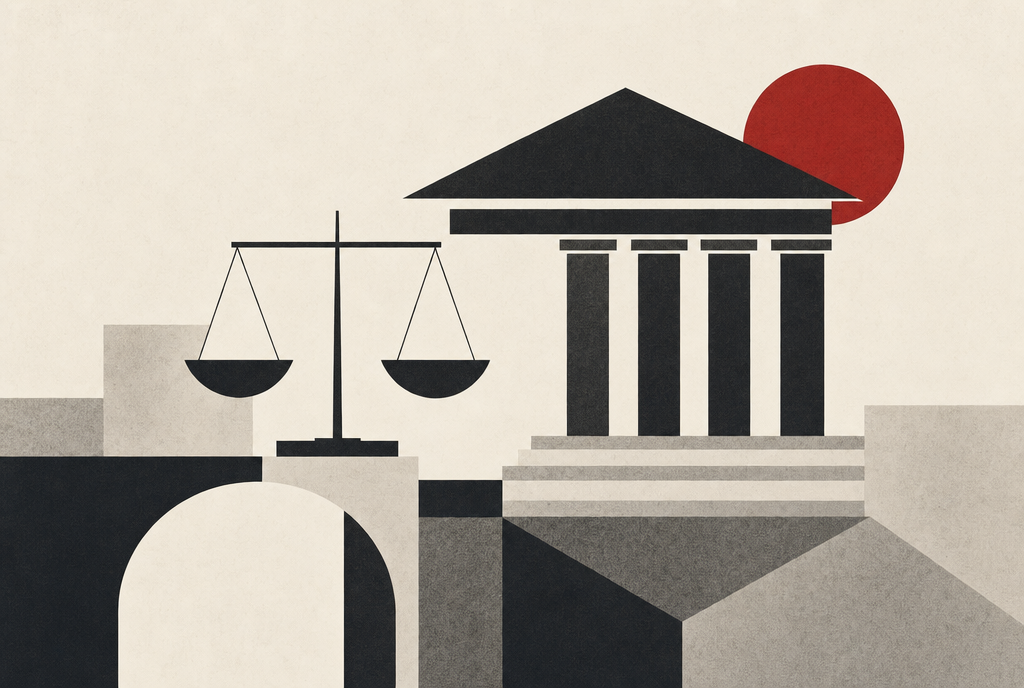
The CHIMERA SYSTEM is a multi-model AI workflow that assigns different responsibilities to various models and keeps a human in control of the process. This approach combines parts from different AI models, much like a chimera, to ensure more robust validation than relying on a single model. The system comprises several components, including a human-defined objective, architecture AI, execution AI, adversarial review AI, validation AI, real-world data test, and human judgment.
Each model specializes in a particular task, and the human makes decisions regarding objectives, handoffs, and final judgment.
The CHIMERA SYSTEM is not a novel concept in AI development, as many existing techniques like role separation, evaluator-optimizer patterns, shared memory, orchestration, and human-in-the-loop workflows already exist. Moreover, this system is not a fully autonomous multi-agent system, as it does not rely on custom orchestrators or complex API integrations.
Instead, it functions as a human-directed, document-based multi-model system, relying on Google Drive as a shared memory, handover channel, decision log, error record, version trail, and recovery point for the project.
Google Drive serves multiple purposes in this system. It enables models to leave documents for subsequent participants, allowing them to review, revise, or reject previous outputs. The human can monitor the entire workflow trail, crucial for accessing and understanding earlier decisions that might be lost or misinterpreted in other systems.
This approach is inspired by Anthropic's observations in their article on building a multi-agent research system, which emphasizes the importance of specialized agents writing persistent artifacts outside of coordinators to minimize information loss.
The author tested the CHIMERA SYSTEM using synthetic legal cases before moving on to real legal documents. The AI system performed well in synthetic cases, demonstrating its capability to organize information and validate outputs based on structured requirements. However, the system faltered when confronted with real legal documents, revealing its limitations and the importance of human oversight.
In real-world legal cases, the system struggled with party attribution errors, monetary meaning errors, claim merging, and unsupported inferences. These issues significantly impacted the system's ability to accurately represent the source material, highlighting the necessity of human intervention when dealing with complex legal documents.
The practical value of the CHIMERA SYSTEM lies in its accessibility and simplicity, allowing non-developers to operate a multi-model AI team without initially building a custom agent platform. By using Google Drive as a shared memory and decision log, the system offers transparency and easy accessibility for users who may not have extensive technical knowledge.
However, the success of the CHIMERA SYSTEM ultimately hinges on maintaining transparency, explicit roles, and real-world testing to avoid overreliance on AI consensus.
Written by urgent.news from Dev.to's reporting — not their text. Machine-written — may contain errors; check the original before relying on it.