"This photo captures the first full Milky Way arch ever taken at this location," revealing the night sky over Argentina's UNESCO site, a landscape shaped over 200 million years and home to Earth's only complete Triassic record
Award-winning astrophotographer captured the first-of-its-kind astrophotography image at UNESCO World Heritage Site in Argentina, an irreplaceable geological landscape
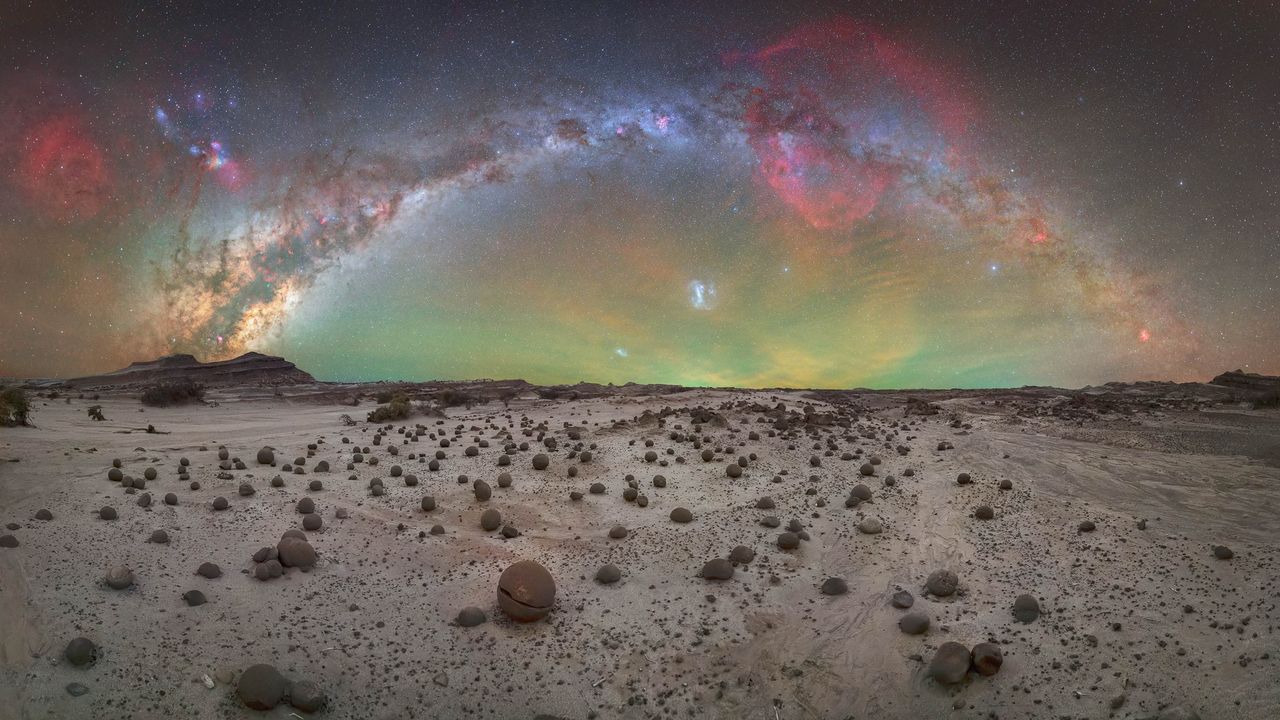
Photographer Gonzalo Javier Santile captured the first ever full Milky Way arch in the unique landscape of Ischigualasto, also known as Valle de la Luna in San Juan, Argentina. This achievement places him among the ranks of exceptional night-sky photographers as his image was chosen for Capture the Atlas' 2026 Milky Way Photographer of the Year collection.
The landscape, a UNESCO World Heritage Site, is notable for its geological significance as it preserves the only complete Triassic Period record on Earth, a sequence of geological events dating back 200 million years. Santile's successful capture required specialized equipment including an astro-modified Nikon D750, a Tamron wide-angle lens, and a star tracker.
The process involved careful planning and execution with a 20-frame panorama technique, utilizing a ground-based star tracker for sky exposures. Santile emphasized the importance of this moment, describing it as not just a technical feat, but a profound connection to the planet's deep past. He expressed a deep sense of responsibility towards preserving this irreplaceable environment, highlighting the need for careful and deliberate action when dealing with such fragile landscapes.
Written by urgent.news from Digital Camera World's reporting — not their text. Machine-written — may contain errors; check the original before relying on it.