Rhine falls to record low levels as drought strains Europe's rivers
Low water levels in the Rhine, Danube and Po have curtailed the transport of goods and reduced electricity output.
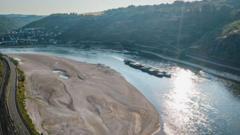
The River Rhine has plummeted to unprecedented low levels in Germany and the Netherlands, a consequence of an ongoing heatwave sweeping across Europe. Measurements in Cologne, Germany, and Lobith, where the Rhine flows between Germany and the Netherlands, have registered levels lower than any recorded since data collection began.
Similar record lows have been observed in other significant European rivers such as the Danube, stretching through ten countries, and Italy's Po river. According to the EU's Drought Observatories, drought conditions are persistent and dire in most of Europe, with a sharp escalation in central-western Europe in mid-July.
Heatwave conditions are anticipated to persist for another week, with temperatures forecast to surpass 40C in many central and southern European nations. In response to the crisis, Germany's Low Water Information System (NIWIS) reported that 44% of Rhine monitoring stations and 78% of those on the Danube recorded "extremely low" water levels by the end of July.
The Rhine, one of Europe's busiest shipping routes, has prompted concerns over the potential economic repercussions of restricted navigation and shipping. On Friday, the navigable depth at Kaub, a critical point on the Rhine, hit a 2018 record low of 25cm, only to slightly recover on Monday. Martin Wolters from the Rhine Waterways and Shipping Authority indicated that while total cessation of shipping is unlikely, measures will be necessary, including distributing cargo among more vessels to reduce weight. This tactic could lead to increased transport costs and supply disruptions, Wolters warned.
The Danube, a crucial waterway flowing through ten countries, has recorded its lowest levels in three decades in Serbia and Romania, compelling Hungary to halt its nuclear power plant operations. Prime Minister Peter Magyar expressed hope for the prompt restart of the plant once favorable rainfall arrives. This Danube drought is also disrupting power supplies in the region, with Serbia reducing output from coal-fired plants due to insufficient water for cooling purposes, and Romania executing a controlled explosion near the Danube to boost water flow to the Cernavoda nuclear power plant.
Italy's longest river, the Po, hit a historic low near Cremona in late July, prompting authorities to raise the drought alert to "high" across the entire Po Valley. Experts have warned of potential impacts on the drinking water supply. Moreover, reduced river flows at the Po's mouth have led to saltwater intrusion, threatening the ecosystem and agricultural irrigation.
A recent study by the World Weather Attribution group found no clear trend of decreasing rainfall in Europe over the long term, but attributed the current drought to climate change-induced higher evaporation rates from elevated temperatures. The drought has also exacerbated wildfire activity, contributing to higher than average carbon emissions according to the EU's Copernicus climate service.
Written by urgent.news from BBC Science's reporting — not their text. Machine-written — may contain errors; check the original before relying on it.