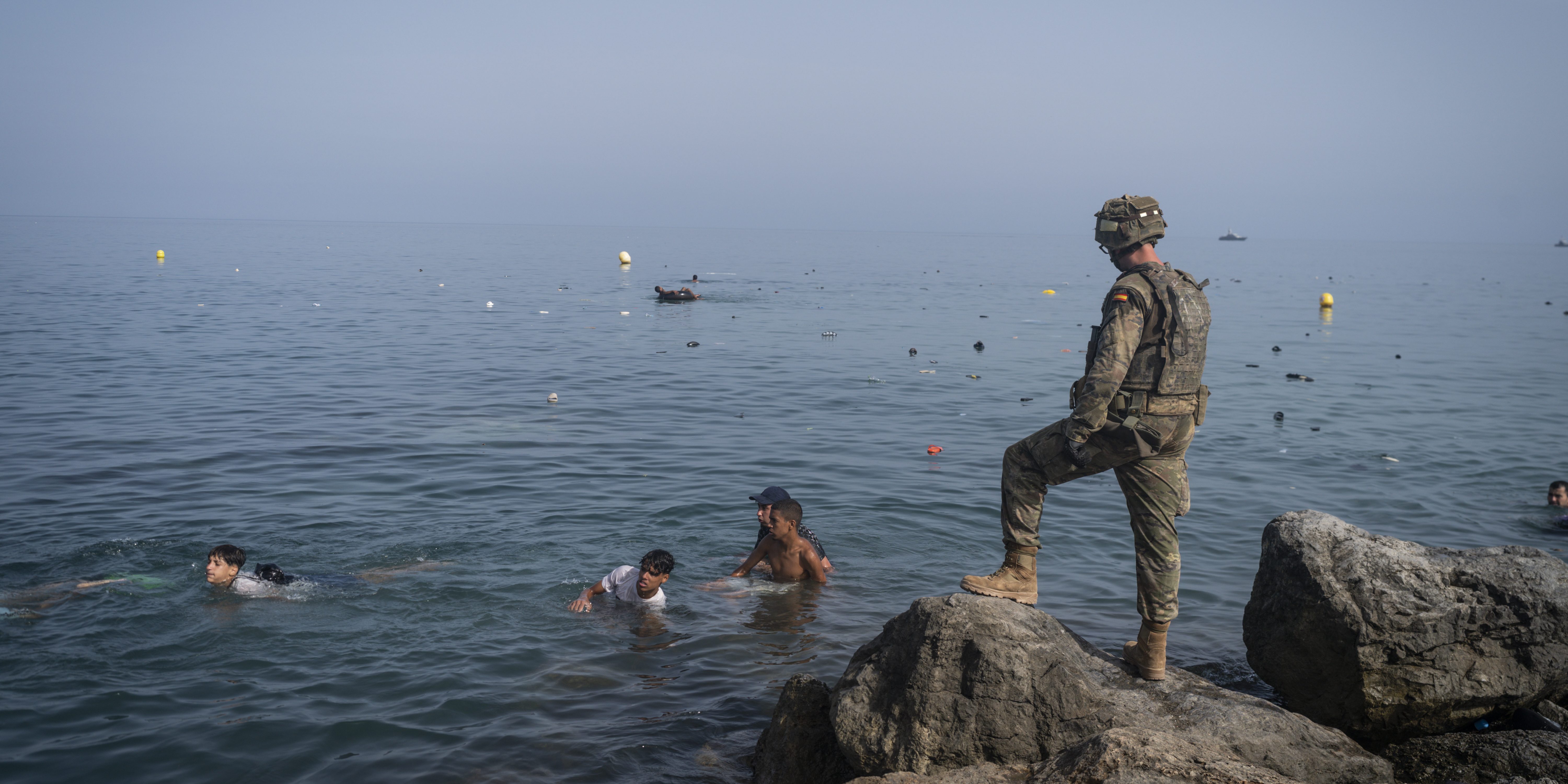
Marruecos niega “presiones y chantajes” en la crisis de Ceuta y culpa a la sentencia del Supremo
El Gobierno de Rabat achaca el éxodo migratorio a “la desactivación del elemento disuasorio” de la expulsión en caliente por la justicia española
Morocco denies allegations of "pressure or blackmail" in the Ceuta migrant crisis and claims to have acted as a "reliable ally" of Spain. Rabat attributes the exodus of tens of thousands of irregular young migrants to the Spanish side, citing the "deactivation of the deterrent element" of immediate expulsion for sea crossings in a recent Spanish justice ruling. The Moroccan Ministry of Foreign Affairs conveyed both messages during a meeting with foreign news agencies on Monday evening.
Morocco says it had warned Spain days before the crisis about the Spanish Supreme Court's July decision limiting in-theater expulsions at illegal sea entry points, weakening a crucial element of migratory cooperation, which it described as "a shared responsibility." The senior diplomat summed it up as: "If you arrive by sea, you are no longer subject to the border return procedure, but enter the expulsion judicial process, a lengthy one.
This is the inflection point, and people have understood this ruling. If you can bypass the security device, you have reached 'El Dorado.'"
Rabat assumes its responsibilities and does not act under pressure, blackmail, or countermeasure, the source emphasized, noting that Moroccan migration policy rests on two pillars: preventive, based on security deployment, and a deterrent, which was weakened after the Supreme Court ruling, making repatriations more difficult. "The deterrent element was deactivated on July 8.
There was a paradigm shift," the diplomatic spokesperson explained the deterrent deactivation, amplified by social media and human trafficking mafias. "There has been a call effect," he added, "and it is not Morocco that should have anticipated a surge in Ceuta arrivals."
During the same meeting, Morocco also expressed its "disappointment" with some Spanish politicians' reactions and comments, accusing them of "politicalizing the crisis for electoral purposes," while coordination with the Spanish government has been "perfect." For Morocco's Ministry of Foreign Affairs, security deployment "never will be enough" to manage migratory flows.
"If there are 40,000 people, how many security forces will be needed?" the source questioned. It stressed that Morocco has deployed around 20,000 personnel to control its coastline and asked, "Who protects our southern (Sahel) or eastern (Algeria) borders instead of us?" The senior diplomat said Morocco allocates about €500 million annually to migration control, while receiving €145 million from the European Union. "It is not a question of money, but of strategy and shared vision," the spokesperson stressed.
Written by urgent.news from El Pais's reporting — not their text. Machine-written — may contain errors; check the original before relying on it.