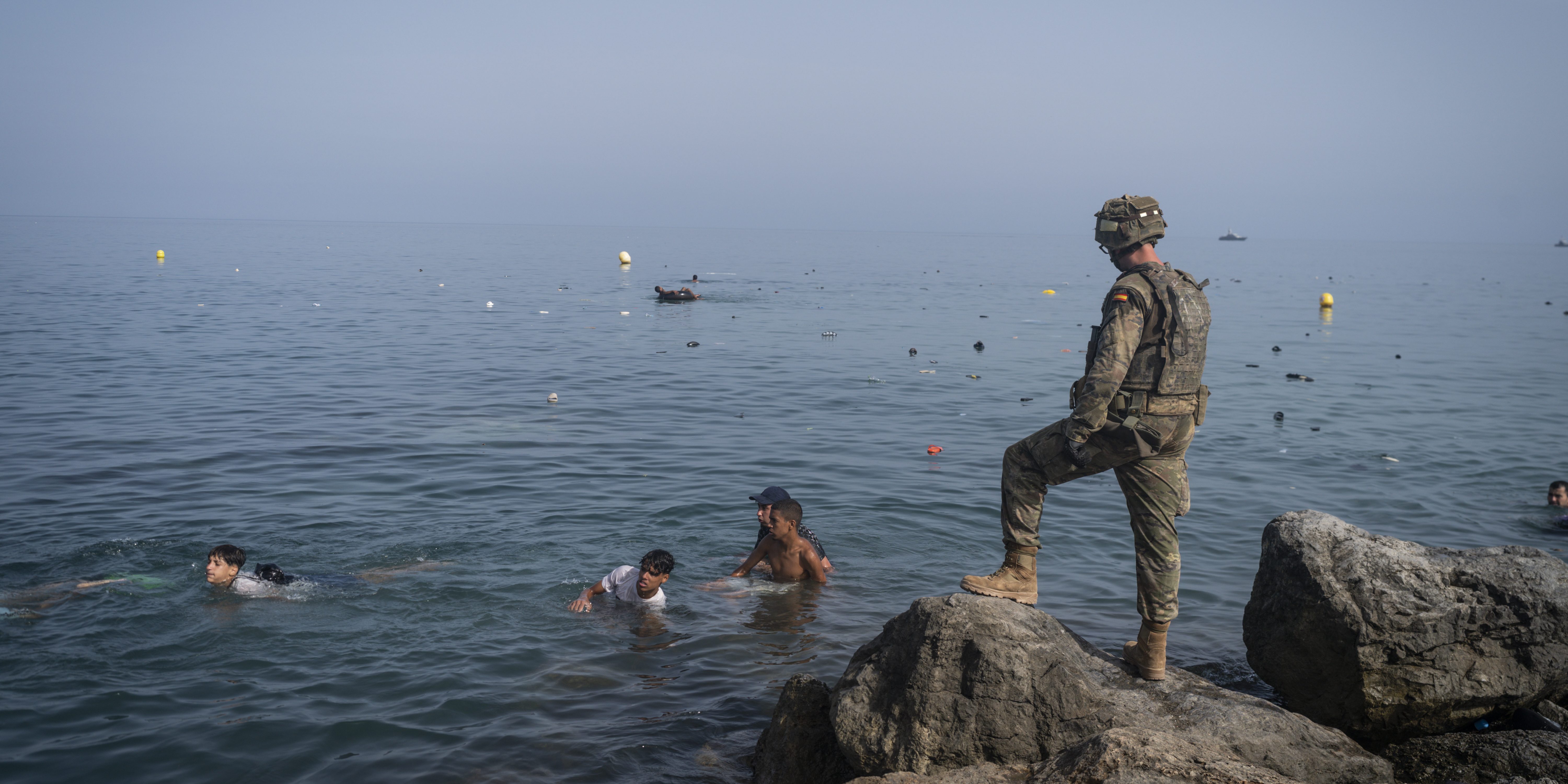
Morocco denies 'pressure and blackmail' in Ceuta crisis and blames Supreme Court ruling
The Rabat Government blames the migratory exodus on "the deactivation of the deterrent element" of hot expulsion by Spanish justice.
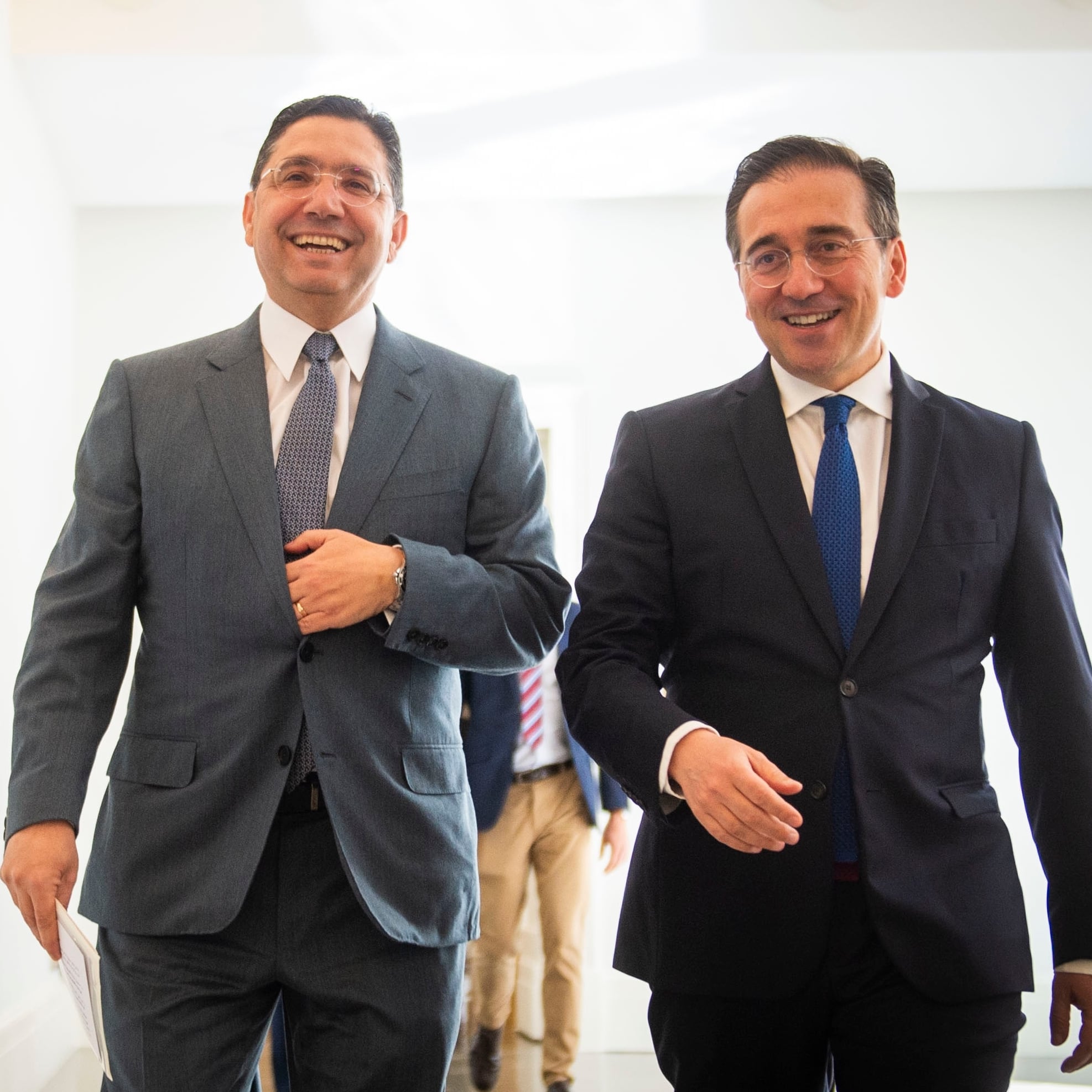
Morocco denies having acted under "pressure or blackmail" in the Ceuta migration crisis and assures that it has acted as a "reliable ally" of Spain. Rabat also blames the Spanish side for triggering the exodus of tens of thousands of irregular migrant youths due to "the deactivation of the deterrent element" of hot expulsions for sea arrivals in a recent Spanish court ruling.
The Moroccan Ministry of Foreign Affairs transmitted both messages in a meeting with foreign news agencies on Monday evening. Morocco claims to have alerted Spain days before the crisis in Ceuta that the Spanish Supreme Court's decision in early July - which limited hot expulsions in illegal sea arrivals - weakened a crucial element of migration cooperation, an issue whose management is "a shared responsibility".
The senior diplomat summarized it as follows: "If you arrive by sea, you are no longer subject to the border procedure [of hot return] but enter the scope of expulsion, in a lengthy judicial process. This is the turning point and people have understood this sentence. If you manage to bypass the security device, you have reached 'El Dorado'".
Rabat "assumes its responsibilities (…) and does not act under pressure, blackmail, or counterparty", the aforementioned source specified, adding that Moroccan migration policy is based on two pillars: preventive, based on security deployment, and deterrent, which was weakened after the Supreme ruling, making returns more difficult.
"On July 8, the deterrent element was deactivated. There was a change in paradigm", the diplomatic official stated regarding the deactivation of deterrence, which was "amplified by social networks and human trafficking mafias".
"There has been a calling effect", he concluded, "and it is not Morocco that should have anticipated a surge in arrivals to Ceuta".
In the same meeting, it was also transmitted that Morocco is "disappointed" by the reactions and comments of some Spanish politicians, whom it accused of "instrumentalizing the crisis for electoral purposes", while coordination with the Spanish Government has been "perfect".
For the Rabat Foreign Ministry, the security deployment "will never be enough" to manage migration flows.
"If there are 40,000 people, how many security forces will be needed?", the aforementioned source asked.
He assured that Morocco has mobilized around 20,000 personnel to control its coastline.
"Does someone protect our southern borders [Sahel] or eastern borders [Algeria] instead of us?", he asked aloud.
Morocco allocates around €500 million per year to migration control, the senior diplomatic official assured, while the funding it receives from the European Union amounts to €145 million.
"It is not a matter of money but of strategy and common vision", he specified, however.
Morocco maintains that its security forces could not face the crowd advancing towards the Ceuta border, as damage was to be avoided.
The Foreign Ministry denies, however, that there was "relaxation" on the part of the authorities in controlling the borders with the Spanish autonomous city.
It insists that Rabat maintains its commitment for years to accept the return of those who cross them irregularly.
But "the security deployment is doomed to failure if not combined with development and return measures", the ministerial source stated.
"Migration management", he warned, "is a shared responsibility, and each one must assume their responsibilities".
Translated by urgent.news. Machine-written — may contain errors; check the original before relying on it.