KI-Prozessoren: Rechner mit KI-Kick: Gut investiertes Geld oder unnötig?
Künstliche Intelligenz macht sich in Smartphones und Computern breit - und mit ihr ein neuer Name: die Neural Processing Unit, kurz NPU. Was steckt dahinter? Und muss ein neuer Rechner das haben?
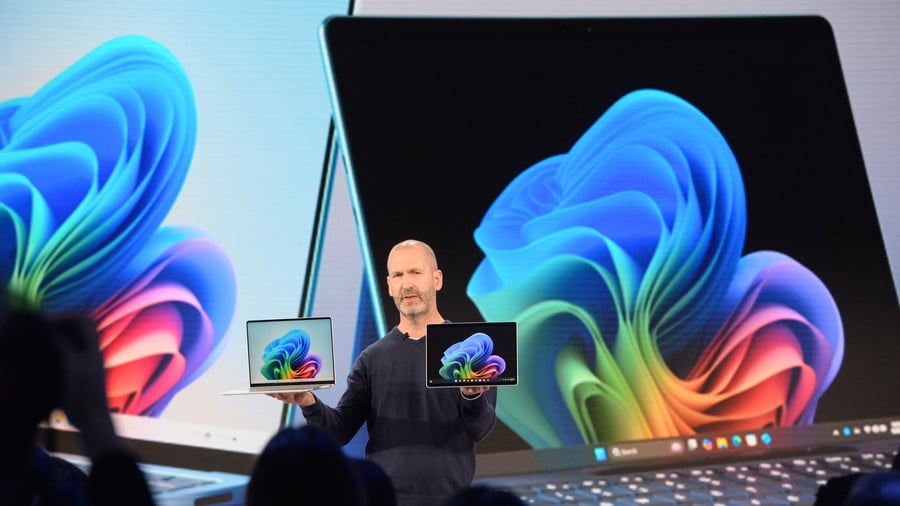
Specialized KI (Artificial Intelligence) processors, known as Neural Processing Units (NPUs), are increasingly being integrated into both mobile devices and traditional computers such as laptops. These NPUs are designed to run artificial intelligence tasks directly on the device, providing quick response times and minimal energy consumption.
Unlike a dedicated graphics card (GPU) or central processing unit (CPU), the NPU is a specialized processor that is integral to the main processor and primarily focuses on tasks related to neural networks. These tasks include matrix multiplication and addition, which are essential for neural network computations. The primary advantage of NPUs lies in their efficiency, as they operate with lower computational accuracy, typically using 4 to 8 bits instead of the usual 32 or 64 bits.
This reduced accuracy is sufficient for many AI applications and significantly saves energy. The rise of NPUs is closely tied to the current AI boom, as many applications, from image processing and speech models to assistants, rely on neural networks. Traditionally, services like ChatGPT or Gemini have been run in large data centers, but with the advent of NPUs, it becomes possible to run local AI models directly on smartphones or PCs.
This shift not only saves time but can also enhance privacy, as sensitive data no longer needs to leave the user's device or network. Moreover, running AI applications locally makes them less dependent on an internet connection, as exemplified by Microsoft's Copilot+ PCs, which are designed with local AI capabilities, including a feature called Recall that continuously records and analyses screen content for searchable data.
Currently, the practical benefits for everyday users are relatively limited, as there are only a few programs that utilize NPUs. Many applications still rely on conventional processors or cloud services for AI features. The lack of standardization across different manufacturers, each using their proprietary solutions, further complicates things.
This adds complexity for developers and makes it difficult for users to benefit from many functions unless hardware and software are perfectly synchronized. The impact of NPUs on day-to-day use largely depends on the specific tasks being performed. For instance, NPUs can significantly enhance the performance of tasks such as automatic image enhancement, faster video editing, and real-time language translation.
Basic functions like web browsing, office work, or streaming may not benefit much from NPUs at present. Nonetheless, the availability and integration of this technology are expanding, with operating systems like Windows increasingly incorporating AI functionalities, and various software programs for image, audio, and video editing leveraging NPUs for acceleration.
Long-term, the NPU may achieve a similar level of ubiquity as the GPU, which revolutionized graphics processing. However, it's important to note that the NPU is typically a fixed component of the processor and cannot be upgraded, unlike other hardware components. Therefore, it is usually specified in the device's specifications and is not something that can be added later.
NPUs are primarily found in newer, higher-end devices, while budget laptops often still use older processors without this feature. The cost of purchasing a laptop with an NPU is justified only if the device will be used extensively for tasks that can leverage this technology, and if the user plans to upgrade their equipment in the near future.
The current market is in a transitional phase, with experts like Jörg Geiger suggesting that those looking for future-proof devices should opt for laptops with NPUs.
Written by urgent.news from Handelsblatt's reporting — not their text. Machine-written — may contain errors; check the original before relying on it.