Identifying the Root Cause of Electronics Failures With Simulation Apps
This article is brought to you by COMSOL . In pursuit of improved range, greater reliability, and faster charging, electric vehicles are driving the demand for high-voltage electronics. Other applications driving this demand include wind farms, data centers, and server farms, to name a few. As the interest for high-voltage electronics increases, the risks associated with their sudden failure must…
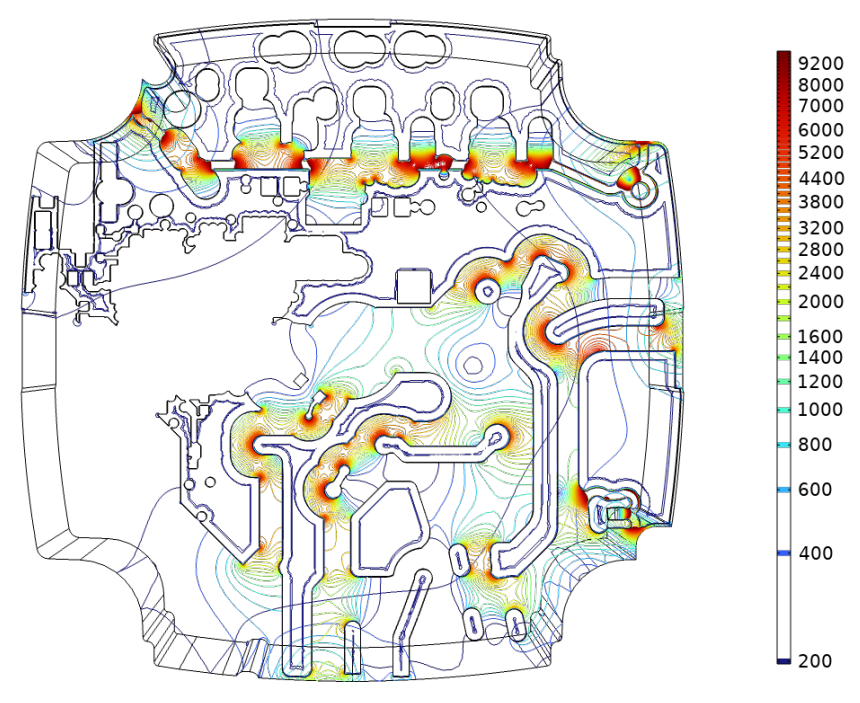
High-voltage electronics are increasingly in demand due to the growth of electric vehicles, wind farms, data centers, and server farms. However, these systems face risks of sudden failure, particularly when exposed to high humidity. One of the main culprits behind electronic malfunctions is condensation leading to corrosion, which can result in stray leak currents and short circuits via Electrochemical Migration (ECM).
To combat this issue, the Centre for Electronic Corrosion (CELCORR) at the Technical University of Denmark (DTU) is working with industry partners to develop simulation apps that aid in designing more robust electronics capable of withstanding humid conditions.
Dr. Rajan Ambat, a professor at DTU and manager of CELCORR, explained that electronics are involved in various stages of the energy chain, making them vulnerable to moisture-induced failures. These failures can even lead to fires in high-voltage applications. Due to the absence of visible signs of corrosion when moisture dissipates, identifying the root cause of failures remains challenging.
CELCORR aims to address this issue by employing multiphysics simulation, a tool that helps partner organizations predict humidity-related issues at the design stage.
Researchers at CELCORR utilize COMSOL Multiphysics software to create virtual models of electronic systems, analyzing the effects of moisture and variations in design elements on corrosion development. By introducing different layout, geometry, electrode distance, and water film thickness and conductivity, the team can identify which design modifications improve the device's anticorrosion robustness.
Ultimately, the research aims to provide solutions that help manufacturers build electronics capable of operating in humid environments, reducing the risk of failures caused by humidity exposure.
Written by urgent.news from IEEE Spectrum's reporting — not their text. Machine-written — may contain errors; check the original before relying on it.