High-altitude variant of China’s C919 jet completes first test flight in Shanghai
China’s first high-altitude variant of the C919 narrowbody jet has completed its maiden test flight at Shanghai Pudong International Airport, marking a step forward in the home-grown aircraft’s challenge to Boeing and Airbus. Derived from the standard C919 platform, the specialised variant features a shortened fuselage and enhanced systems engineered for operations in high-altitude regions, the…
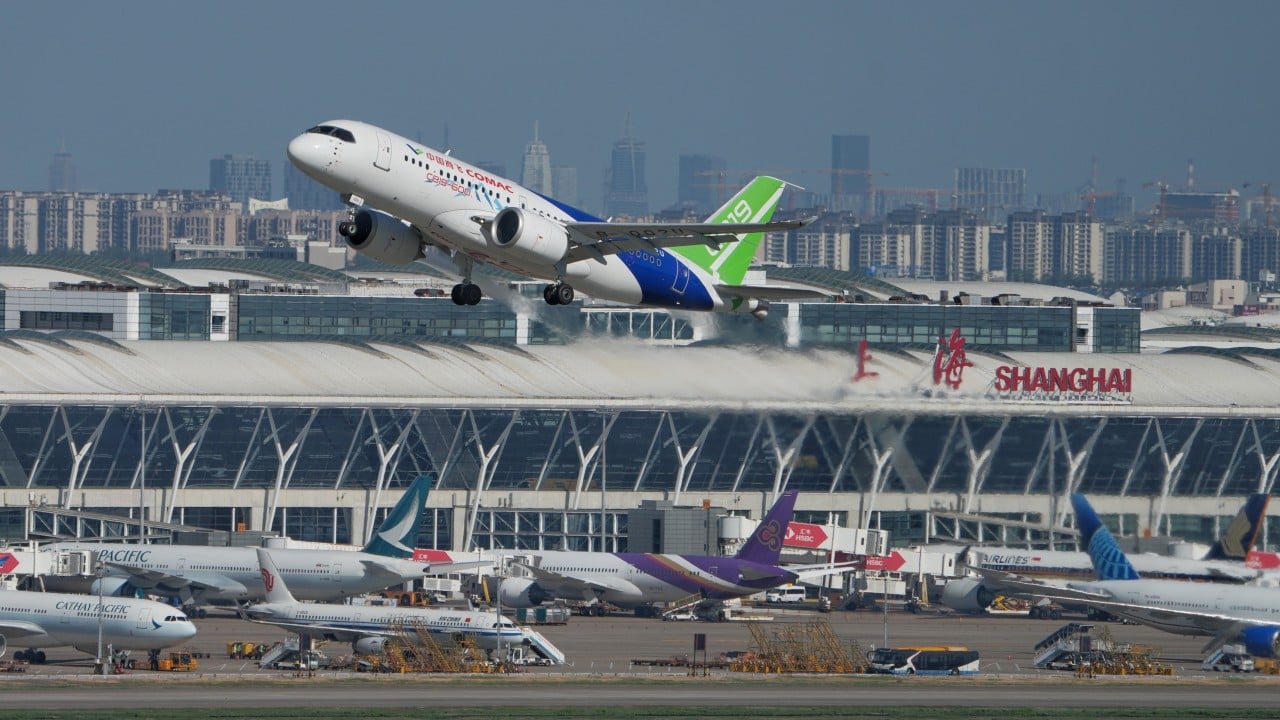
China's C919 narrowbody jet, equipped with a specialized high-altitude variant, successfully completed its inaugural test flight at Shanghai Pudong International Airport. This development signifies progress in the home-grown aircraft's quest to challenge industry giants Boeing and Airbus. The enhanced variant, derived from the standard C919 platform, boasts a shorter fuselage and upgraded systems for high-altitude operations.
According to China's People's Daily, the plane will undergo rigorous airworthiness and environmental adaptability trials at various high-altitude airports before entering commercial service. Comac, the plane's manufacturer, signed a framework agreement with Tibet Airlines in 2023 and later committed to producing 40 high-altitude C919 variants.
Shanghai Jiao Tong University researcher Tian Linchuan highlighted the significance of offering a dedicated high-altitude variant alongside the standard C919, stating that it would help alleviate capacity constraints on western high-plateau routes. Comac has been actively expanding the C919 fleet, unveiling plans for stretched and high-altitude variants in 2023.
The company has delivered 41 C919s to Chinese airlines as of last month, with the standard C919 commencing commercial flights in May 2023. By the end of June 2024, Comac reported that the jet had transported over 5 million passengers and served 23 destinations. Additionally, Comac is collaborating with China Eastern Airlines on a stretched C919 variant tailored for high-density, long-haul routes.
The C919 is slated to debut on an international route, connecting Beijing to Ulaanbaatar, Mongolia, on August 12.
Written by urgent.news from South China Morning Post's reporting — not their text. Machine-written — may contain errors; check the original before relying on it.