Flock cameras are everywhere. Here's how they track cars.
Flock Safety's license plate readers are raising privacy concerns and igniting a surveillance debate. Here's what you need to know.
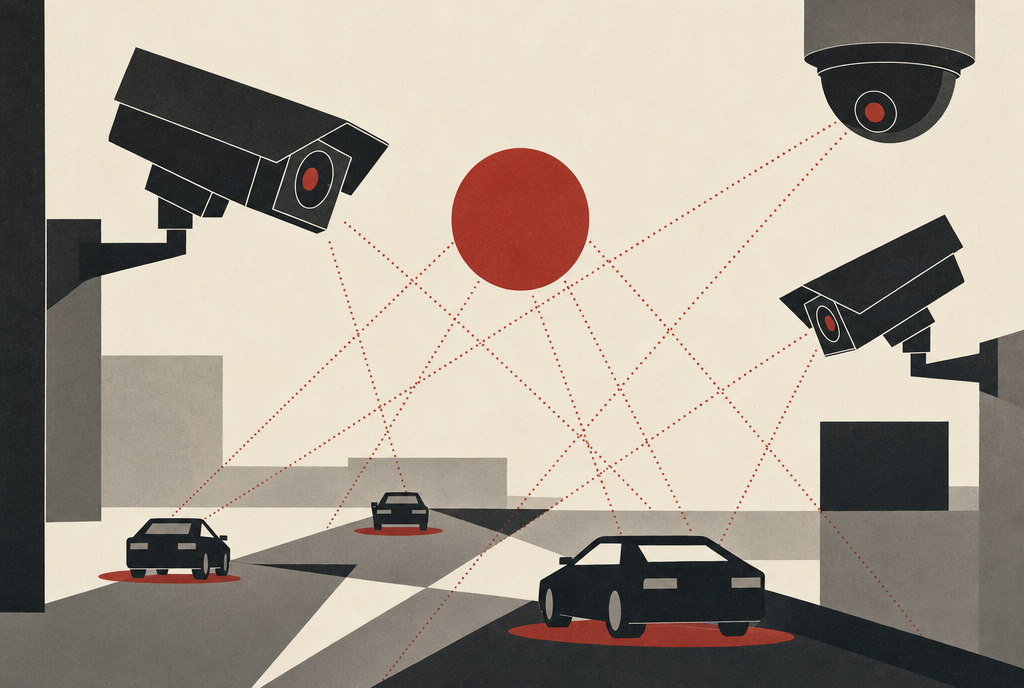
Flock cameras, manufactured by the Atlanta-based company Flock Safety, have become ubiquitous across the United States. These automated license plate readers (ALPRs) are installed along roads, at intersections, and near private properties to capture images of passing vehicles and read their license plates using machine learning technology.
Flock Safety's CEO, Garrett Langley, founded the company in 2017, driven by the need to address rising crime rates involving vehicles in his Atlanta neighborhood. Since its inception, Flock Safety has deployed approximately 120,000 cameras across 49 states, generating annual service fees for each camera.
Critics argue that Flock cameras enable mass surveillance and raise concerns over privacy and civil liberties. The Electronic Frontier Foundation (EFF) and the American Civil Liberties Union (ACLU) have voiced concerns that the widespread deployment of these cameras can reveal intimate patterns of vehicle movements, potentially compromising individuals' privacy and enabling misuse by law enforcement.
For instance, Flock cameras can lead to wrongful detainment when they misread license plates, as seen in cases where drivers were stopped and jailed following incorrect matches.
Despite these concerns, Flock Safety maintains that its license plate readers do not use facial recognition and that customers control access to and sharing of the collected data. However, the company's cameras are often installed without public knowledge, making it difficult for residents to identify their presence. Local government records and community-run projects like DeFlock can provide some insight into the locations of Flock cameras in specific areas, but a comprehensive public map is not publicly available from the company itself.
For those seeking to determine whether Flock cameras are near them, utilizing resources like DeFlock or reviewing local government records may offer some clarity, though the lack of transparency from Flock Safety itself remains a point of contention.
Written by urgent.news from Business Insider's reporting — not their text. Machine-written — may contain errors; check the original before relying on it.