Economist Steve Hanke says AI won't destroy most jobs because it costs more than hiring humans
Steve Hanke, a professor of applied economics at Johns Hopkins University and a former senior economist on President Ronald Reagan's Council of Economic Advisers, doesn't buy into a lot of the AI hype – both the good and the bad. Read Entire Article
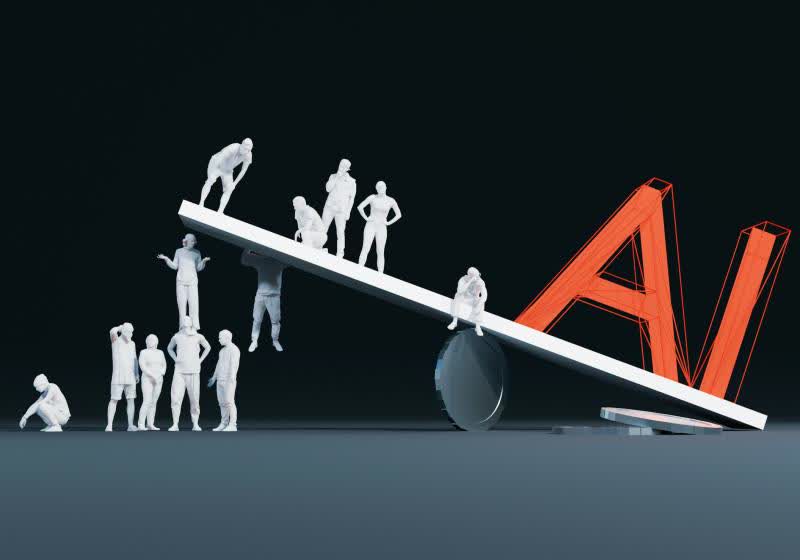
Economist Steve Hanke has made a bold claim about artificial intelligence (AI) and its impact on the job market. In a recent interview with Business Insider, Hanke, a professor at Johns Hopkins University, dismissed the notion that AI will wipe out most jobs, stating that the expense of employing AI would be far greater than hiring human workers.
According to Hanke, the idea that AI will become a freely available miracle machine that renders money obsolete is a fantasy. He attributes this belief to a "disconnect from reality" and "idiotic economic reasoning." Hanke emphasized that AI is incredibly costly, requiring massive amounts of water, power, and physical capital to function.
Furthermore, Hanke criticized some AI visionaries, labeling them as "charlatans and hucksters," for comparing AI to software, which continues to incur no additional costs for customers after development. He argued that AI, on the other hand, is continuously resource-intensive, making it an entirely different proposition.
The professor's views contrast with those of AI advocates like Nvidia CEO Jensen Huang, who have argued that AI's costs will decrease as efficiency gains are made. However, Hanke is convinced that the cost of scarce resources consumed by AI will ultimately decide the extent of the AI revolution. As billions are being poured into AI infrastructure, companies like Google, Tesla, and SoftBank are experiencing negative cash flows, highlighting the financial risks associated with the technology.
Despite these concerns, Hanke cited recent signs that suggest the worst may not be as dire as some predict. Companies like Ford and Klarna have recently rehired laid-off workers, revealing that systems replaced by AI have sometimes performed worse than their human counterparts. This suggests that employers may be overestimating AI's productivity gains and cost savings, or at the very least, regretting their decisions.
Written by urgent.news from TechSpot's reporting — not their text. Machine-written — may contain errors; check the original before relying on it.
This story
This is one outlet's version. Read the fullest account.