Ancient bullets reveal where a Roman camp hid in the Pyrenees of Spain before being ambushed
Researchers found the remains of a Roman camp from 39 B.C. that was ambushed by locals in what's now Catalonia, Spain.
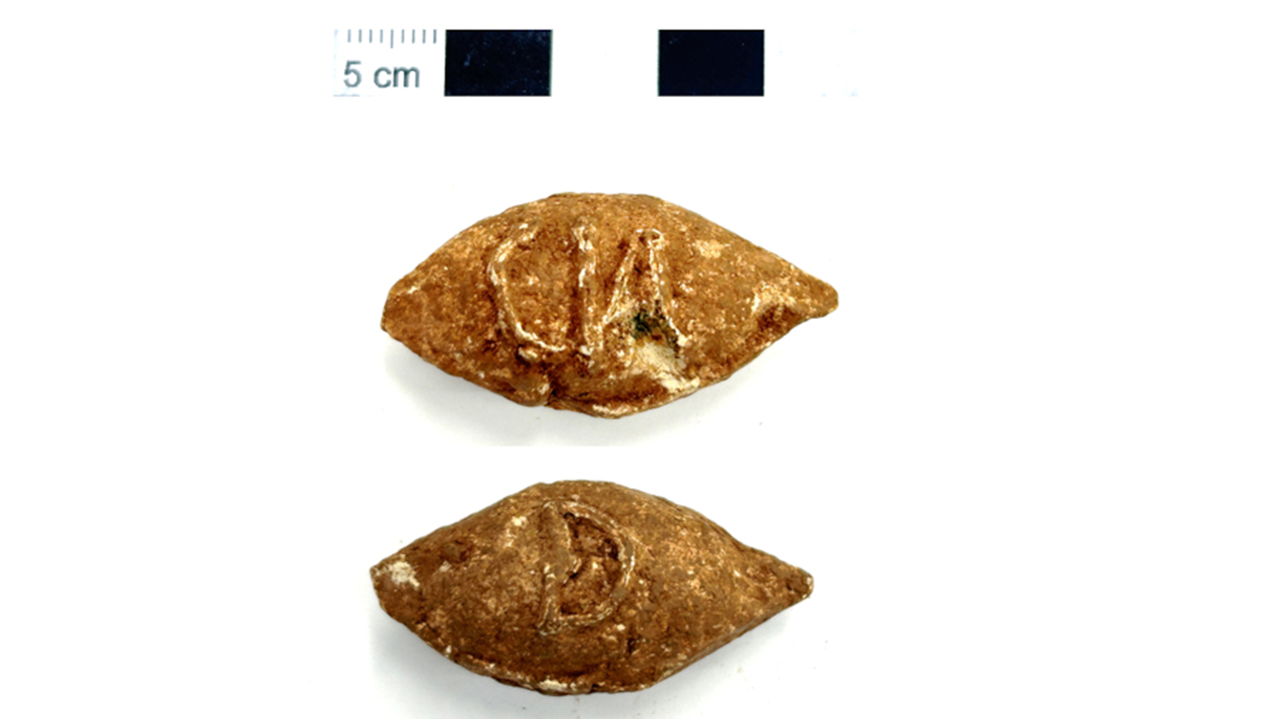
Recent archaeological discoveries in northeastern Spain may shed light on a local uprising against Roman rule during the first century B.C. The lead sling "bullets" unearthed near Collet de Jovell, an alpine pass in the eastern Pyrenees, suggest these ancient conflicts were far from peaceful. According to researchers from the Autonomous University of Barcelona, the findings bolster the notion that Roman conquest of the Iberian Peninsula was a drawn-out and violent process, rather than a swift and bloodless event.
The sling bullets, which were likely fired by Roman soldiers, were discovered among the remains of a Roman military camp. The letters "CND" inscribed on two of the bullets identify the Roman governor of Hispania at the time, Gnaeus Domitius Calvinus. This dating mechanism precisely places the ambush in 39 B.C., the same year Cassius Dio, a Roman historian, claimed the Ceretani revolt took place, although it was previously thought to have occurred further west.
The archaeological team also unearthed Roman legionaries' sandals with iron studs, called clavi caligae, as well as fibulae, or brooches used for fastening clothing, and various Roman coins. These artifacts further support the dating of the site. The Romans' expansion into Iberia began in 218 B.C., during the Second Punic War with Carthage, but they faced stiff resistance from Indigenous peoples such as the Ceretani.
Despite their prolonged struggle, the Ceretani revolt in 39 B.C. ultimately failed to dislodge the invaders, leading to severe Roman retribution against the local population. The new discoveries paint a vivid picture of a complex and turbulent period in ancient Iberian history.
Written by urgent.news from Live Science's reporting — not their text. Machine-written — may contain errors; check the original before relying on it.