Two dead after firefighting helicopters crash in Greece
Both crew members from one of the two firefighting helicopters that collided in Greece died in the incident, the country's fire service said.
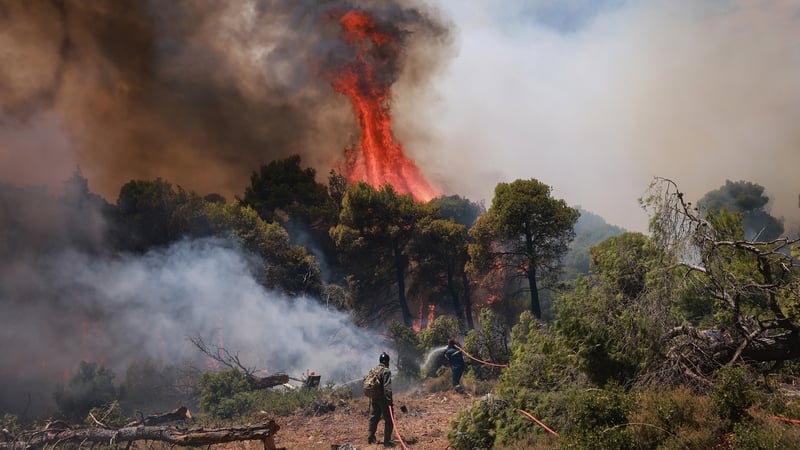
Two crew members from a pair of firefighting helicopters tragically perished after their aircraft collided while combating a wildfire in the Psatha area west of Athens, Greece. The second crew managed to escape unharmed. The fire service immediately dispatched search and rescue teams to aid the injured pilots. Initial reports indicated one pilot was safely recovered, with efforts ongoing to locate the other.
The incident unfolded as Greece grappled with extreme weather conditions, with winds reaching up to 100 kilometers per hour. Prime Minister Kyriakos Mitsotakis attributed the hazardous conditions to the strong winds, stating that even the fleet of firefighting aircraft at Greece's disposal could not operate safely under such circumstances.
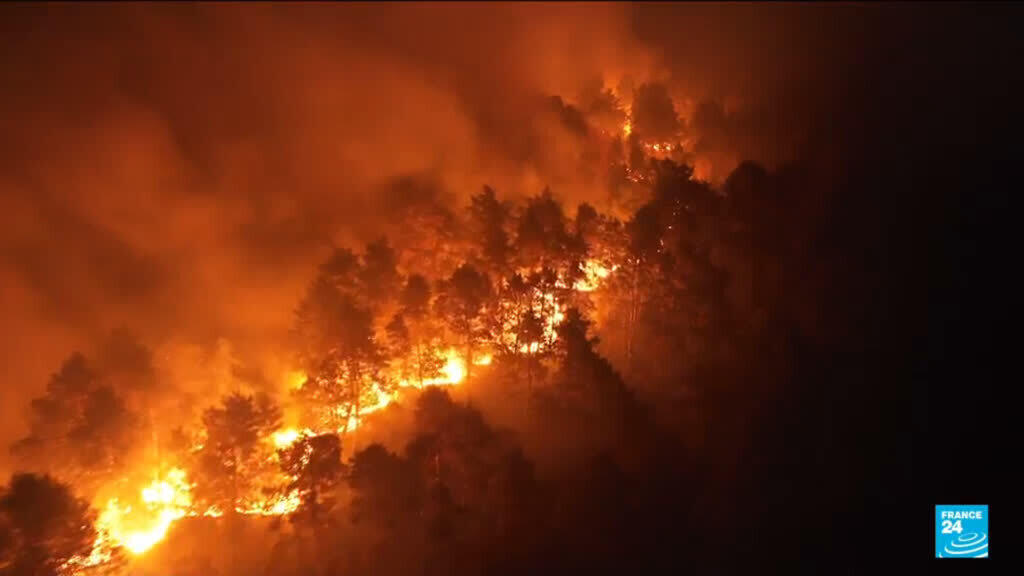
Approximately 500 firefighters were actively engaged in battling blazes around the coastal village of Porto Germeno, situated 70 kilometers northwest of Athens. The primary objective was to prevent the fire from advancing towards the western outskirts of Athens as it had recently ascended a mountain overnight. Separately, around 100 firefighters were combating another wildfire in Aigialia, located in the northern Peloponnese.
A new wildfire erupted on the Ionian Sea island of Cephalonia, Greece's renowned holiday destination, on the previous day. A 44-year-old man was apprehended on suspicion of intentionally igniting the fire, according to the Greek news agency ANA. Early estimates from the National Observatory's climate tracker meteo.gr suggest that over 6,500 hectares had been scorched in individual fires across the Gulf of Corinth, including the Porto Germeno area.
Meteorological conditions remained unfavorable, primarily due to persistent strong northerly winds that had partially subsided from previous days.
Porto Germeno and other nearby villages had already been evacuated when the fire ignited on Friday, but local authorities reported that numerous homes had been damaged or destroyed. Nikos Georgopoulos, a forest management specialist from Aristotle University of Thessaloniki, expressed astonishment at the rapid spread of the fire, stating, "We could not believe what we were seeing, the fire spread extremely rapidly."
Greek police released footage depicting officers traversing door to door in the village of Agios Nektarios, near Porto Germeno, evacuating residents as the wildfire neared. Images showed firefighters battling flames and towering clouds of smoke, alongside volunteers lending a hand in the firefighting efforts. Minas Tsotdanis, a farmer who lost his home in the blaze, lamented the destruction of more than a dozen houses, expressing his anxiety over the scorched forest that now surrounds him.
The wildfire's reach extended beyond Porto Germeno, affecting an area of over 10,000 hectares, nearly double the initial estimate, according to wildfire meteorologist Theodore Giannaros from the National Observatory. Giannaros confidently predicted that the fire would be classified as a "megafire" if not an outright certainty.
Firefighters across Greece have been grappling with a daily barrage of wildfires, with the Civil Protection Minister Evangelos Tournas admitting that the department had been "pushed to its limits." Three firefighters lost their lives in recent days, with two succumbing to injuries sustained in Crete and one in the Peloponnese. Gale-force winds created exceptionally challenging conditions, rendering it difficult for aircraft to dispense water or execute drops due to extreme turbulence.
Although the winds moderated late on the previous day, the greater Athens area, Voiotia, and the island of Evia remained highly susceptible to fires, according to the civil protection ministry. Greece, like much of the Mediterranean region, has been increasingly afflicted by wildfires during summer months, primarily attributed to soaring temperatures, frequent heat waves, and prolonged droughts.
Written by urgent.news from RTE News's reporting — not their text. Machine-written — may contain errors; check the original before relying on it.
This story
This is one outlet's version. Read the fullest account.
- Greece: fire brigade helicopters collide as wildfires spread dw.com
- Two crew killed as firefighting helicopters collide in midair in Greece en.mercopress.com
- Helicopters collide in Greece as fires spread freemalaysiatoday.com
- Two crew killed as British pilot survives after firefighting helicopters collide in Greece myjoyonline.com
- Two crew killed after firefighting helicopters collide in Greece, as British pilot survives bbc.co.uk
- Watch: Firefighting helicopters collide mid-air as Greece battles massive wildfire timesofindia.indiatimes.com