Northern Hemisphere lakes could lose 40 days of ice as warming accelerates loss
A new international study has found that lake ice across the Northern Hemisphere could shrink by about 40 days by the end of this century if emissions remain high. Researchers identified critical winter temperature thresholds beyond which ice loss accelerates sharply, raising concerns over water quality, freshwater ecosystems and communities that depend on stable winter ice.
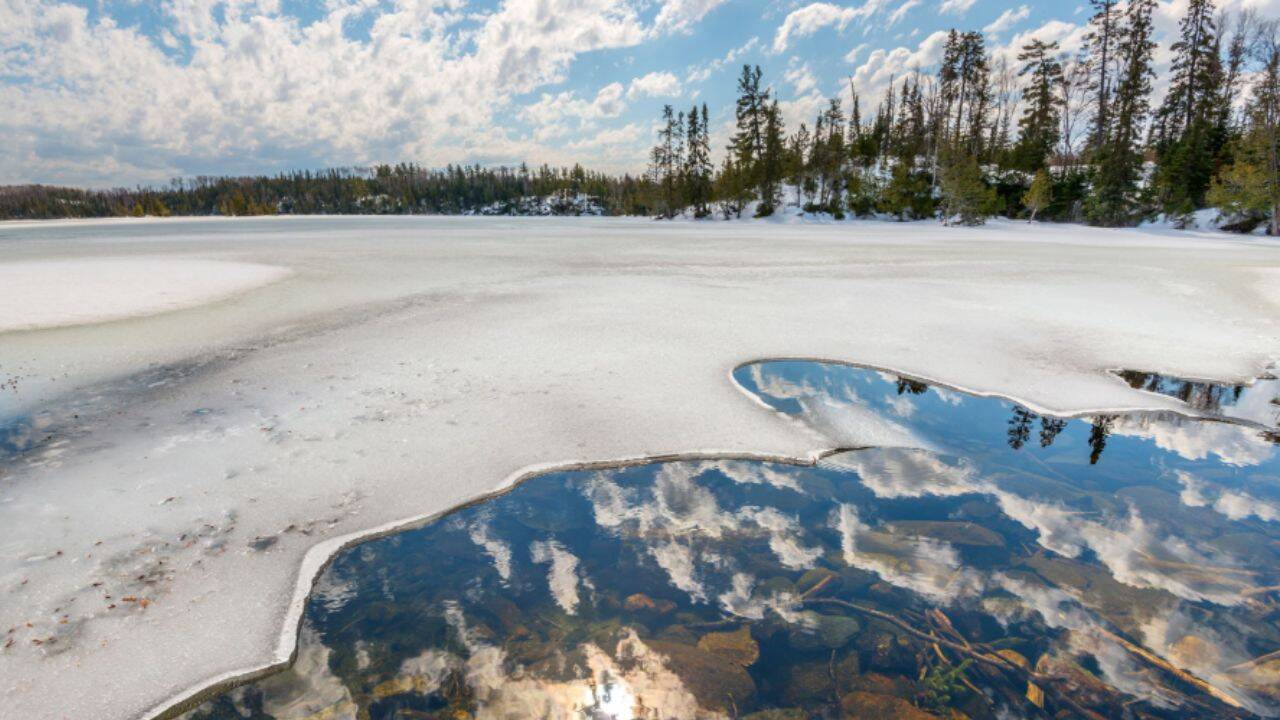
Winter ice on lakes plays a crucial role in maintaining the health of aquatic ecosystems by regulating water temperature and supporting various forms of life. However, a new international study reveals that this seasonal ice cover is disappearing much faster than anticipated due to climate change. If greenhouse gas emissions continue to rise, lakes across the Northern Hemisphere could lose approximately 40 days of winter ice cover by the end of the century.
To investigate how lake ice is changing, researchers analyzed data from over 700 lakes across the Northern Hemisphere, focusing on ice phenology - the timing of seasonal events related to lake ice, such as freezing and melting. They compared this information with air temperature records collected between 2000 and 2022.
One of the key findings was that spring ice melting is far more sensitive to rising temperatures compared to autumn freeze-up. As winters become warmer, lakes lose their ice much quicker in spring than they delay freezing in autumn, causing the overall ice-covered season to shrink more rapidly than previously thought. This uneven response indicates that warming has a stronger effect on melting than on freezing, leading to shorter lake ice seasons year after year.
The study identified winter temperature thresholds, ranging between -13.7°C and -6.8°C, at which point the amount of ice lost accelerates. Lakes behave differently before and after crossing these temperature limits. Below these thresholds, ice cover responds gradually to warming, while after crossing the threshold, even small increases in temperature trigger disproportionately large losses in ice cover. This sensitivity can increase by up to 22 times, according to the researchers.
The size, shape, or depth of a lake does not significantly impact these thresholds; instead, large-scale climate conditions, such as winter air temperature and surface albedo, play a much greater role. Surface albedo refers to how much sunlight a surface reflects back into space. Bright surfaces, like snow and ice, reflect more sunlight, while darker surfaces absorb more heat.
Using climate projections, researchers estimate that the average duration of winter ice cover across Northern Hemisphere lakes could decrease by about 40 days by the end of this century under a high-emissions scenario. Moreover, the number of lakes crossing the critical temperature thresholds is projected to rise from the current 23% to 70% by the end of the century if greenhouse gas emissions remain high.
Scientists warn that losing lake ice not only means shorter winters but also affects the health of freshwater ecosystems, potentially leading to water quality degradation, changes in aquatic plants and animals, and impacts on communities that rely on stable winter ice cover.
Written by urgent.news from Times of India's reporting — not their text. Machine-written — may contain errors; check the original before relying on it.