Migration: Controlled from Morocco? This is how Europe reacts to the mass influx into the Spanish exclave Ceuta
The incidents in Ceuta are concerning the EU. There are also indications that the influx could be politically directed. The most important questions and answers.
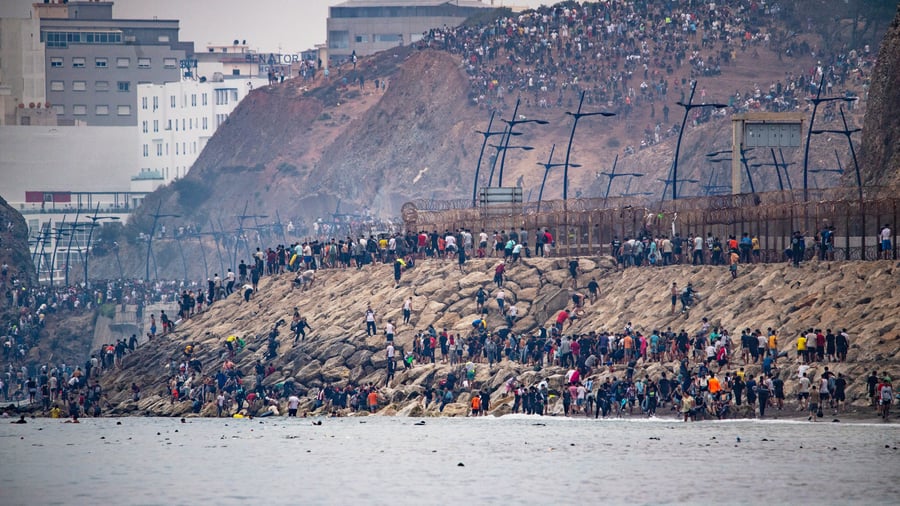
Tens of thousands of migrants attempted to enter Ceuta, a Spanish enclave in northern Morocco, over the past week. According to the Spanish government, at least 50,000 people reached the territory, with 48,300 of them voluntarily returning to Morocco by Friday evening. Hundreds more were still en route back. The Ceuta regional government reported roughly 60,000 migrants arrived, representing 70% of the region's regular population.
Most migrants swam across to Spanish territory, with at least 72 dying in the process. Others entered through land routes.
Spanish Prime Minister Pedro Sánchez described the events as an "attack, a violation of Spain's territorial integrity" on Friday. However, he also acknowledged "very prudent cooperation with the countries of origin and transit," primarily referring to Morocco. The Handelsblatt news outlet provides an overview of what has transpired since Thursday and how various EU and member state reactions have unfolded.
The Spanish Supreme Court's ruling from June 29th is seen as a likely catalyst. The court clarified that migrants arriving by sea in Ceuta or Melilla, two Spanish exclaves in northeastern Morocco, cannot be immediately sent back.
Written by urgent.news from Handelsblatt's reporting — not their text. Machine-written — may contain errors; check the original before relying on it.
This story
This is one outlet's version. Read the fullest account.
- Migration: At least 50,000 migrants reach Spanish exclave handelsblatt.com