Climate protection: Environmental aid wants to overturn new heating law in court
Already before the Bundestag's decision, there were constitutional concerns about the new heating law. The environmental aid organization now wants to go to court in September.
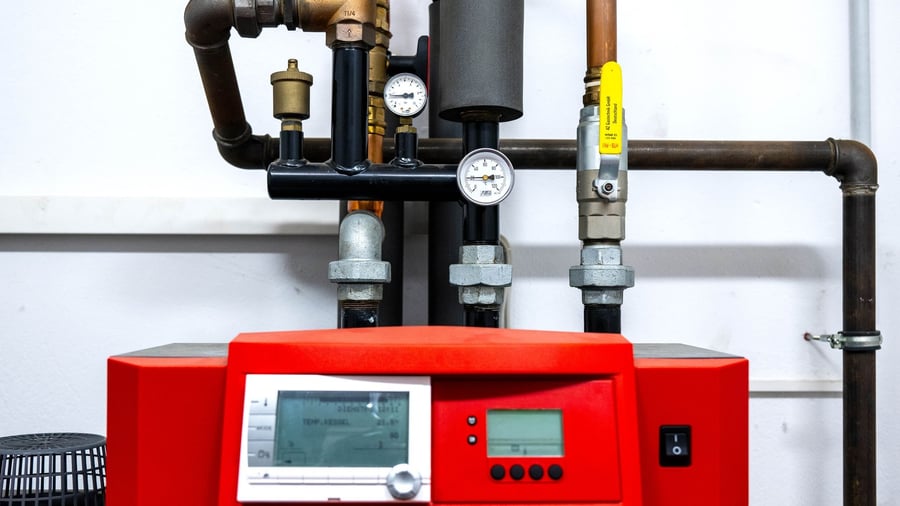
The German Environmental Aid wants to overturn the new Heating Act before the Federal Constitutional Court. Barbara Metz, the Managing Director of the organization, stated to Deutsche Presse-Agentur: "We now know how this law will ultimately appear. Our lawyer, Remo Klinger, is now drafting the constitutional complaint. By September, we should be ready to submit it to the Federal Constitutional Court."
The new Building Modernization Act, as its official name suggests, was announced last week in the Federal Gazette. "The most serious issue is: The goal of climate neutrality by 2045 cannot be achieved with this law," Metz said. "After 2044, building new oil and gas heating systems will still be possible. This prohibition has disappeared.
There was a previous Building Energy Act." The reform relaxes requirements for renewable energy shares. The new Building Modernization Act allows the installation of new gas and oil heating systems, provided they use a gradually increasing proportion of CO2-neutral fuels like biomethane from January 1, 2029. For existing heating systems, a "green gas quota" is to be introduced starting in 2028.
This will initially amount to up to 1% - details are unclear. The core of the previous Heating Act has been removed, namely the requirement that every newly installed heating system should operate with 65% renewable energy. The new Heating Act also reopened constitutional concerns expressed by other associations and experts. "Unknown costs" "Tenants and renters have no decision-making freedom regarding which technology is installed in their basement," Metz said.
"The law opens up the possibility of installing oil and gas heating systems again, with unknown costs that will fall on people. The so-called biotrend, which requires the use of increasing amounts of biogas over the years, can become very expensive because it is unclear if such biogas will be available. The biotrend is only regulated until 2040.
Everything else remains unclear." The Grundgesetz Article 20a will play a crucial role in the constitutional complaint, said Metz. "If climate neutrality in the building sector is missed, the overall achievement will be called into question, because the building sector is a significant sector." The Building Modernization Act is the heart of building policy.
"Article 20a will be questioned and thus the freedom of future generations." Article 20a stipulates that the state, even in responsibility for future generations, must protect natural living conditions. The Federal Constitutional Court must first decide whether to accept the complaint, said Metz. "We assume that will happen. If the complaint is accepted for decision, it will take about a year or one and a half years to reach a decision, if we are successful.
If we succeed, the Federal Constitutional Court will declare the law or parts of it to be unconstitutional. The law would then have to be improved." The Federal Constitutional Court ruled in a landmark decision in 2021 that Article 20a obliges the state to combat climate change. The court concluded that significant steps must be taken to reduce harmful greenhouse gas emissions without burdening younger generations.
The environmental aid had supported constitutional complaints from young people and climate change sufferers from abroad. The lawyer Klinger represented the plaintiffs.
Written by urgent.news from Handelsblatt's reporting — not their text. Machine-written — may contain errors; check the original before relying on it.