Israel's genocide has frozen a generation of Gaza's young doctors
Israel's genocide has frozen a generation of Gaza's young doctors Submitted by Shoug Mukhaimar on Sun, 08/02/2026 - 12:24 With crossings closed and hospitals destroyed, medical training is at a standstill - and the specialists Gaza needs to rebuild may never exist A doctor checks a drip at the dialysis unit of Al-Aqsa Martyrs Hospital in Deir al-Balah, Gaza, on 1 February 2026 (Eyad Baba/AFP) Off…
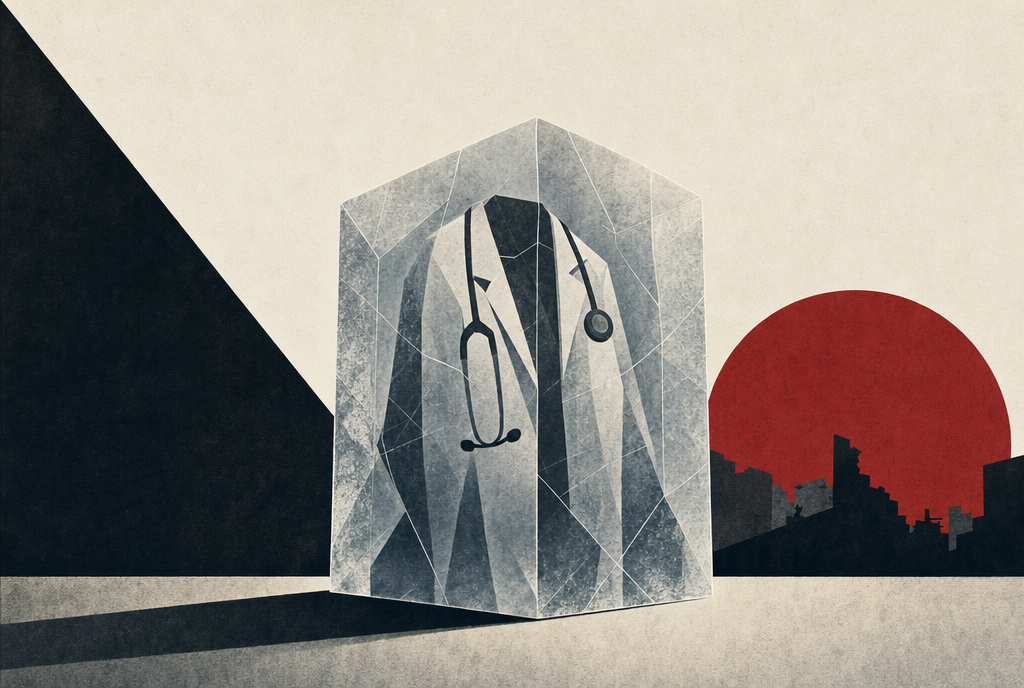
Israel's military actions have left a lasting impact on Gaza's medical community, particularly affecting the young doctors who are crucial for rebuilding the healthcare system. With crossings closed and hospitals destroyed, medical training has come to a halt, leaving the specialists needed to rebuild Gaza's healthcare system potentially lost forever.
Ahmed Shabat, a junior doctor, embodies the struggles faced by many young medical professionals in Gaza. In July 2025, when his hospital was ordered to evacuate under threat of bombardment, Dr. Shabat encountered a life-and-death situation that tested his skills. Despite the chaos, he managed to save a patient's life by clamping a ruptured artery, an action only possible through the expertise of a vascular surgeon.
However, such specialized care was unavailable, as the necessary specialists had already been forced to evacuate. Dr. Shabat's decision to intervene highlights the desperate need for trained medical professionals in Gaza. Today, Dr. Shabat's life remains suspended in the emergency department, a reflection of the "frozen generation" of young medical professionals in Gaza.
These young doctors, who should have been advancing their careers, are instead consumed by 12-hour volunteer shifts, managing a relentless influx of casualties with no foreseeable end. This situation exemplifies the broader crisis facing Gaza's healthcare system, which extends beyond the physical destruction of hospitals. The stagnation of the next generation of doctors represents a critical loss for the future of medicine in Gaza.
Before the current conflict, medical training in Gaza faced challenges such as limited resources, equipment shortages, and restricted access to advanced training programs. Many young doctors had to seek opportunities abroad to gain the specialized expertise they needed. However, the outbreak of the war has made this path virtually impossible.
With Gaza's crossings closed, hospitals overwhelmed, and the continued struggle for survival, young doctors now have no environment to continue their training required to become specialists. Despite these challenges, local initiatives like the Samir Foundation have emerged to sustain medical learning under these impossible conditions.
The foundation has established a training center for students and junior doctors, offering practical programs, including surgical suturing workshops, to help them maintain their education. While these efforts demonstrate remarkable resilience, they cannot replace the years of clinical training under specialist supervision or the formal residency programs that have been entirely disrupted.
Medicine relies on continuity, with senior consultants passing down years of experience and judgment to the next generation. However, when an entire generation of young doctors is trapped, that institutional chain is broken, and the future of medicine in Gaza is at risk. By 2026, this confinement has already stretched into its third consecutive year, not a temporary disruption but a prolonged crisis.
New batches of medical students have fought against unimaginable odds simply to graduate, studying in tents and makeshift spaces. This situation is a silent tragedy, as it represents more than just the loss of physical infrastructure—it is the loss of a generation of doctors who are meant to rebuild Gaza's healthcare system.
Written by urgent.news from Middle East Eye's reporting — not their text. Machine-written — may contain errors; check the original before relying on it.