Iranian oil smuggling drops 60pc, claim sources
KARACHI: The influx of smuggled Iranian oil has drastically declined as tankers were hit inside Balochistan, causing heavy losses to those involved in this illegal business, according to sources in the oil sector. The oil companies have been demanding that oil smuggling be stopped, but it has continued for years. However, the arrival of Iranian petroleum products increased after the US-Israeli…
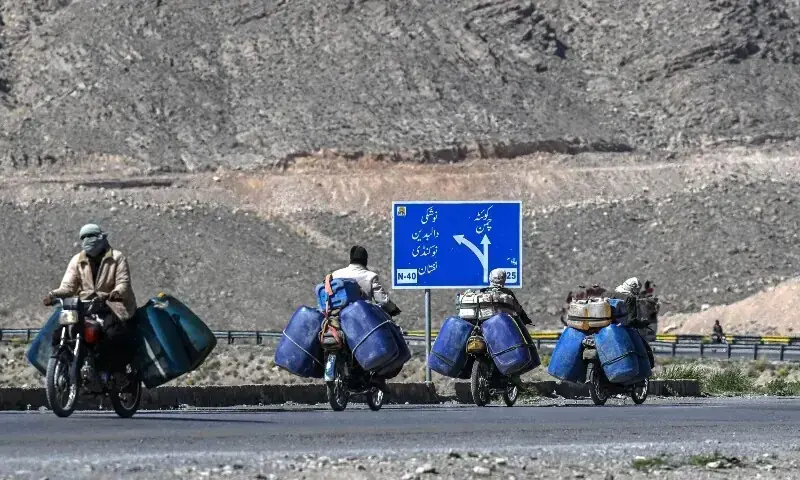
Iranian oil smuggling has plummeted by roughly 60 percent following a series of attacks on tankers within Balochistan, according to sources within the oil industry. The surge in smuggled Iranian petroleum products intensified following the commencement of the US-Israeli war on Tehran, driving crude oil prices surpassing $100 per barrel.
"At least six Iranian oil tankers have been destroyed by terrorists in the past month and a half, though the exact count remains unknown," stated a source privy to the oil business. However, this claim has not been corroborated by other sources.
The closure of the Strait of Hormuz, a vital energy transit route handling around 20 percent of global oil, 20 percent of liquefied natural gas (LNG), and about one-third of the world's fertiliser trade, ensued the US-Israeli attack on Iran on February 28. This disruption sent shockwaves throughout the world.
Pakistan, heavily reliant on imported fuel, initially grappled with declining reserves of petroleum products. However, the country managed to avert rationing of oil and gas. Reserves for 25 days were available, and additional ships arrived in Pakistan during the war. Nevertheless, the influx of Iranian oil notably increased.
Smuggled petroleum products were not only available in Balochistan but also extended to Sindh, reaching Karachi. Some speculate that Punjab also profited from these illicit oil products, helping the nation circumvent oil product rationing, similar to what transpired in India, Bangladesh, and Sri Lanka in the region.
The accuracy of previous and current smuggling quantities is challenging to ascertain, but smuggling has witnessed a significant decline, estimated at least 60 percent by a source. In the fiscal year 2026 (FY26), Pakistan allocated a record $16.86 billion to import petroleum products, constituting approximately 22 percent of the country's total import expenditure. Despite the increased prices, the share of petroleum products in the import bill remained at an average level.
Pakistan has consistently spent between 22-25 percent of its total imports on oil products annually, based on the Pakistan Bureau of Statistics. The import bill for petroleum products in FY25 was recorded at $15.94 billion. It is widely believed among trade and industry circles that the smuggling of oil products from Iran was deliberately overlooked by authorities due to the war and to preclude a crisis arising from potential oil supply shortages across the nation.
The government has consistently passed on the escalation in oil prices to consumers, successfully evading a shortage scenario.
Written by urgent.news from Dawn Business's reporting — not their text. Machine-written — may contain errors; check the original before relying on it.