From screen to crime scene: How social media is becoming trigger, tool and stage
Social media is increasingly shaping crime motives and escalating conflicts. Young offenders are particularly vulnerable to the addictive pursuit of online validation. Violent incidents are often sparked by virtual disputes and online comments. Experts note social media amplifies existing conflicts and rewards sensational behavior. Law enforcement agencies are actively tracking and cracking down…
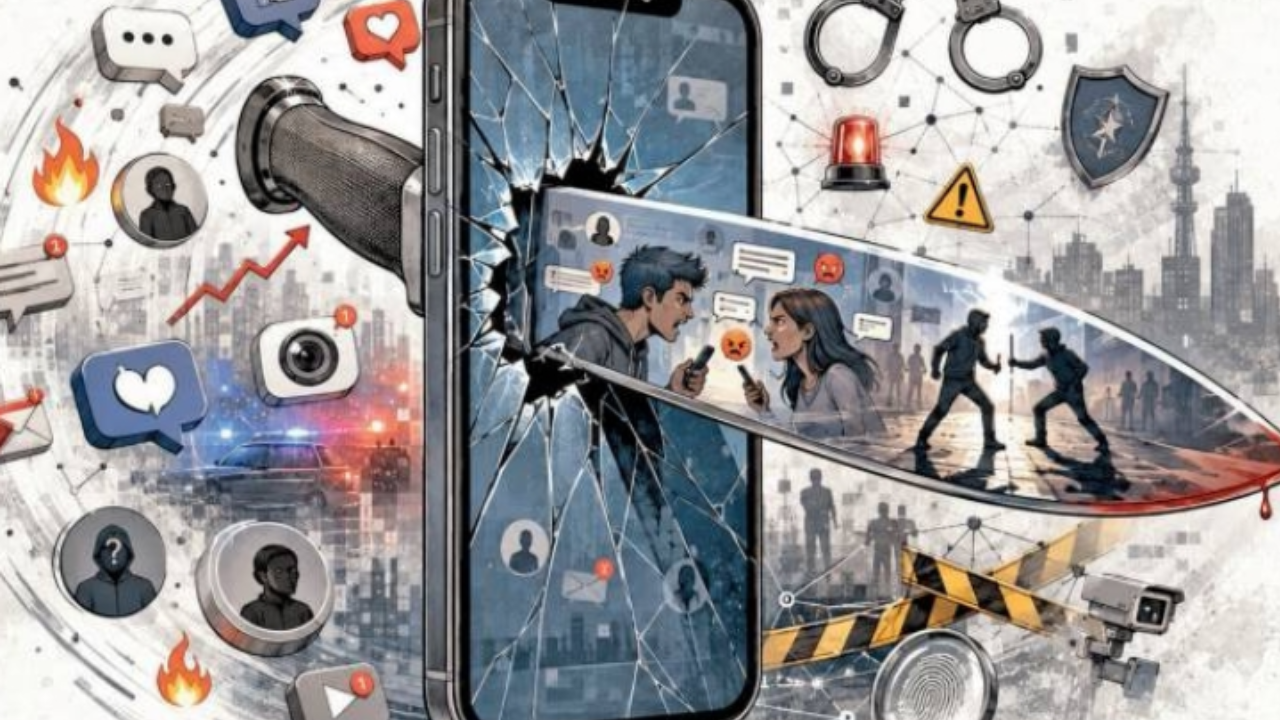
In recent months, a disturbing trend has emerged where social media has played a role in both triggering and committing violent crimes in India. An 18-year-old was stabbed to death after a dispute began over a social media comment in outer Delhi’s Paschim Vihar. Experts warn that social media is no longer just a platform, but is increasingly shaping motives, escalating conflicts, and even becoming part of crimes themselves. Young offenders are drawn to the addictive pursuit of online visibility, validation, and influence.
Examples abound: an 18-year-old confessed to a murder on social media shortly after committing the crime in Shalimar Bagh; a 24-year-old claimed responsibility for a shooting outside a café after a video surfaced online; abusive comments on a wedding post led to a fatal stabbing; five juveniles were arrested after a man was stabbed after he uploaded a photo of one of their sisters; and a 16-year-old influencer was murdered after refusing to help another teenager increase his social media following.
Counseling psychologist Sonali Mangal notes that the need for digital validation, particularly among adolescents and young adults, is increasingly shaping behavior. She explains that the instant gratification from likes, comments, and shares activates the brain's reward system. Adolescents are especially vulnerable as their prefrontal cortex, responsible for impulse control and long-term decision-making, continues to develop until the mid-20s.
Validation becomes addictive, and individuals may feel compelled to commit extreme acts to maintain attention in the form of online engagement.
Mental health expert Mitashi Pawar adds that repeated exposure to violent and abusive content on social media also plays a role in shaping behavior. Children are exposed to content where abusive language, dangerous pranks, and violence are presented as entertainment, and over time, aggression stops feeling unusual. Experts caution against blaming social media alone, describing it as an amplifier that accelerates existing conflicts, rewards sensational behavior, and offers offenders a wide audience.
While the Delhi Police are cracking down on these incidents, experts stress that the issue requires a comprehensive approach.
Written by urgent.news from Times of India's reporting — not their text. Machine-written — may contain errors; check the original before relying on it.