Dark matter’s secret force does the opposite of what scientists expected
Dark matter particles may exert a hidden force on one another, but its effects are stranger than expected. An extra attraction helps the particles cluster, yet it also makes dark matter effectively lighter as the Universe expands. That weakens its gravitational impact and usually slows the growth of cosmic structure rather than accelerating it.
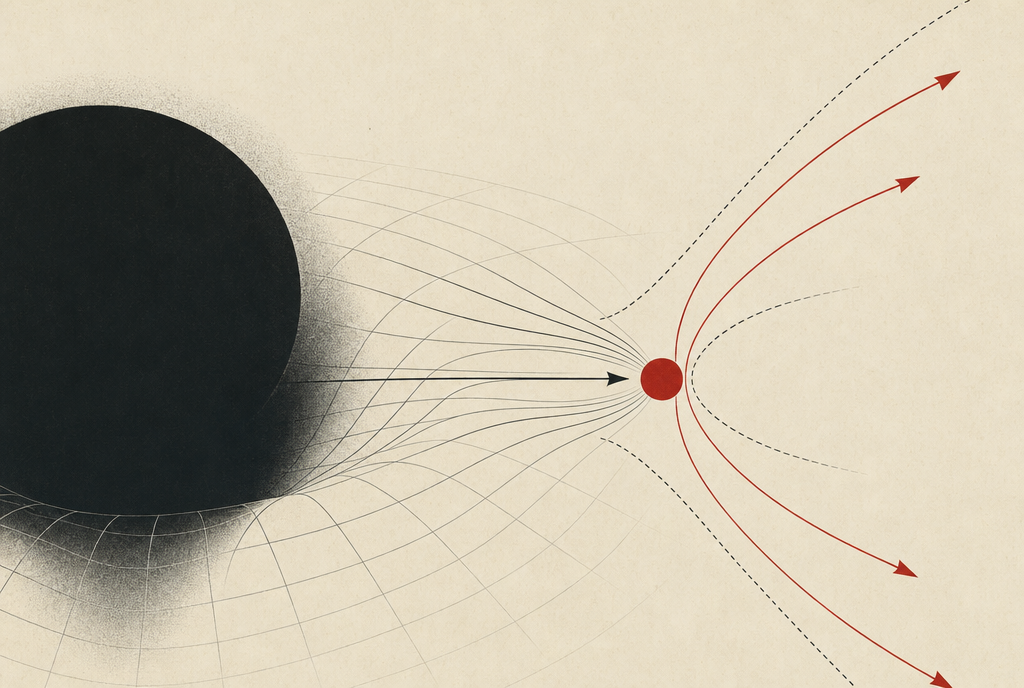
Scientists are investigating the notion that dark matter particles may interact through a hidden force, independent of gravity. A new study published in the Journal of Cosmology and Astroparticle Physics (JCAP) explored the implications of such a "dark force" and found results that defy conventional expectations. While the additional attractive force would typically lead to more efficient clustering of dark matter, it paradoxically tends to slow down the growth of cosmic structures.
This counterintuitive finding suggests that the presence of a dark force might not be the straightforward solution to discrepancies observed in the Universe's expansion and structure formation. Despite the extra force causing more effective clustering, dark matter particles also experience a decrease in mass over time due to the same process, weakening their gravitational pull and counteracting the enhanced attraction of the hidden force.
Consequently, the overall effect leads to a suppression of cosmic structure growth rather than acceleration. These findings have significant implications for theories involving dark matter beyond the standard model. Some explanations for recent measurements from the Dark Energy Spectroscopic Instrument (DESI) rely on similar interactions among dark matter particles.
Researchers recognize that any theory involving a hidden attractive force must account for the possibility that dark matter becomes lighter as the Universe evolves. Further precise measurements from upcoming observatories and cosmic surveys will help determine the extent of dark matter's hidden interactions and guide the ruling out of certain possibilities.
Written by urgent.news from ScienceDaily's reporting — not their text. Machine-written — may contain errors; check the original before relying on it.